
Last updated September 20, 2026
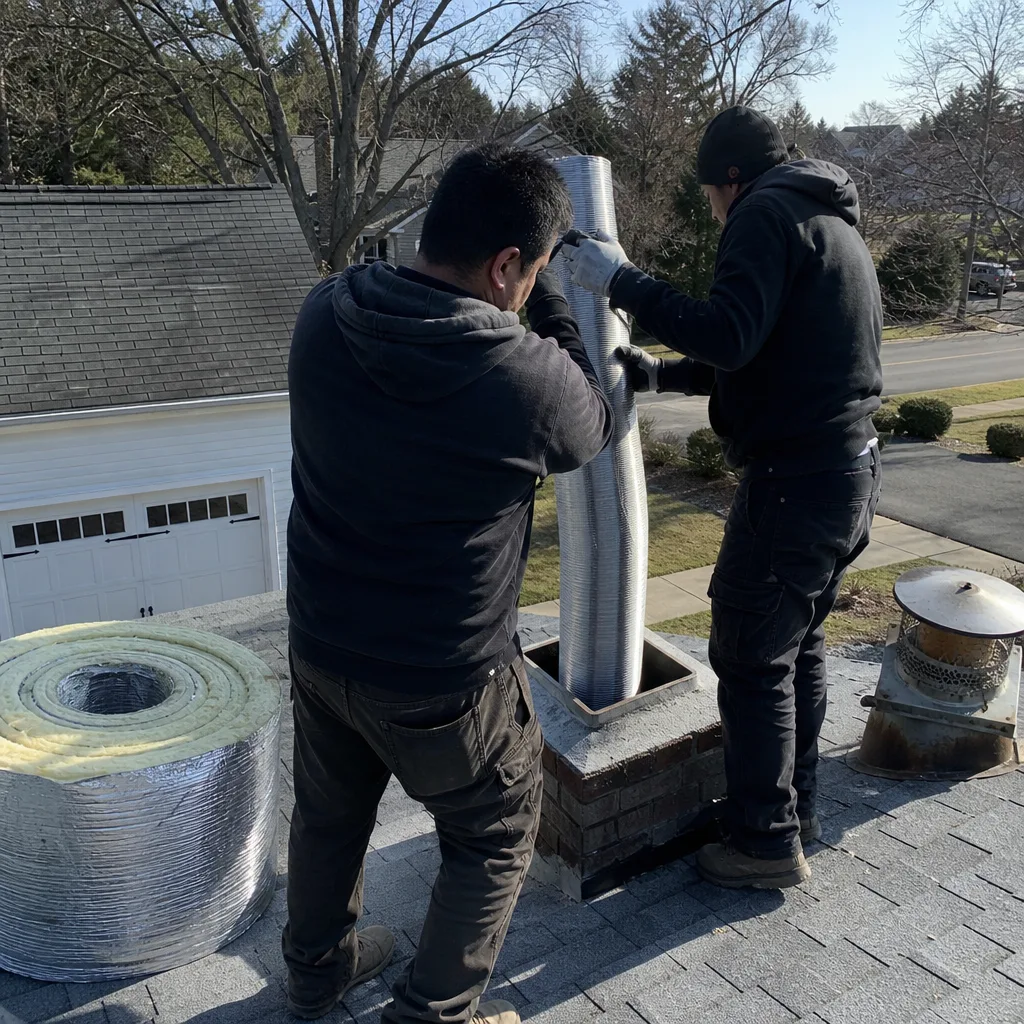
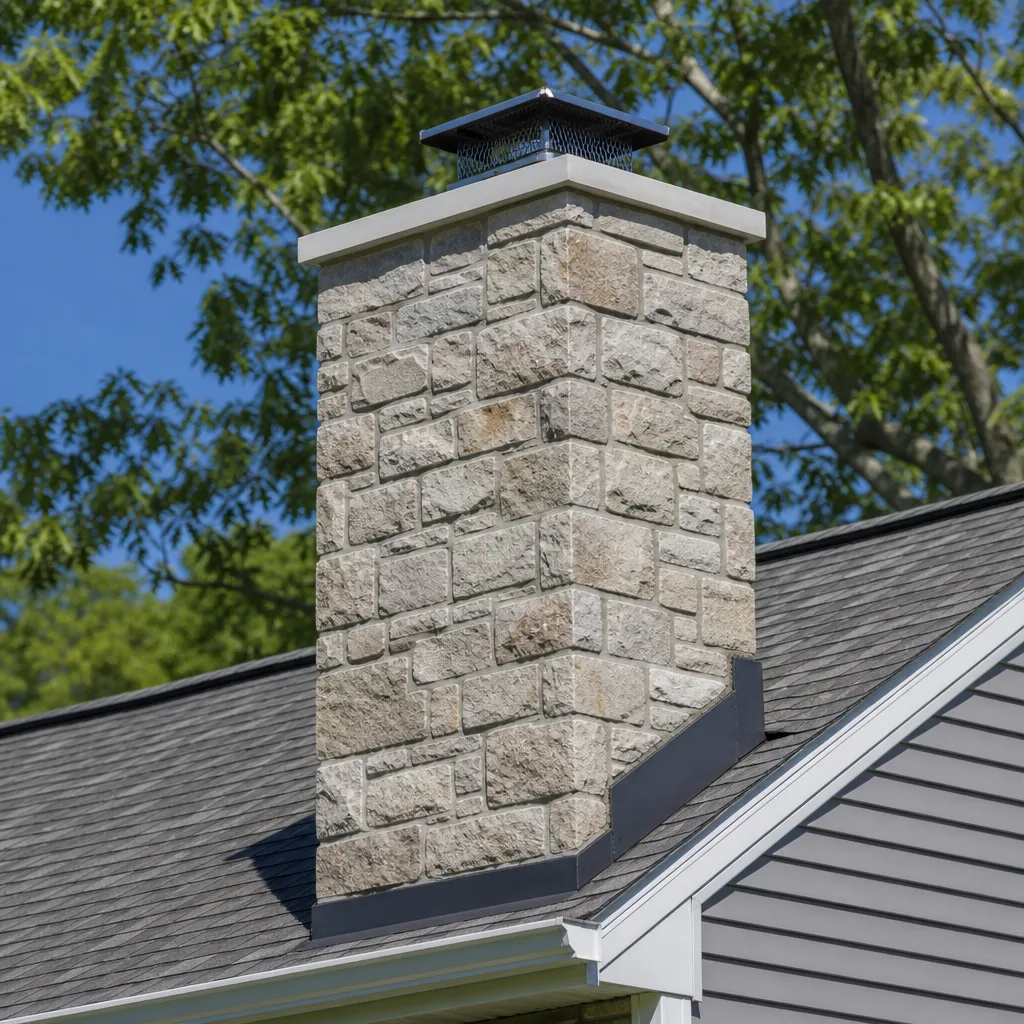
Level 1 sweep and inspection to the NFPA 211 annual standard - flue, crown, cap, and flashing checked and photographed
Chimney sweep logs do not sweep chimneys. They loosen some creosote - which then falls where a brush and vacuum still have to collect it.
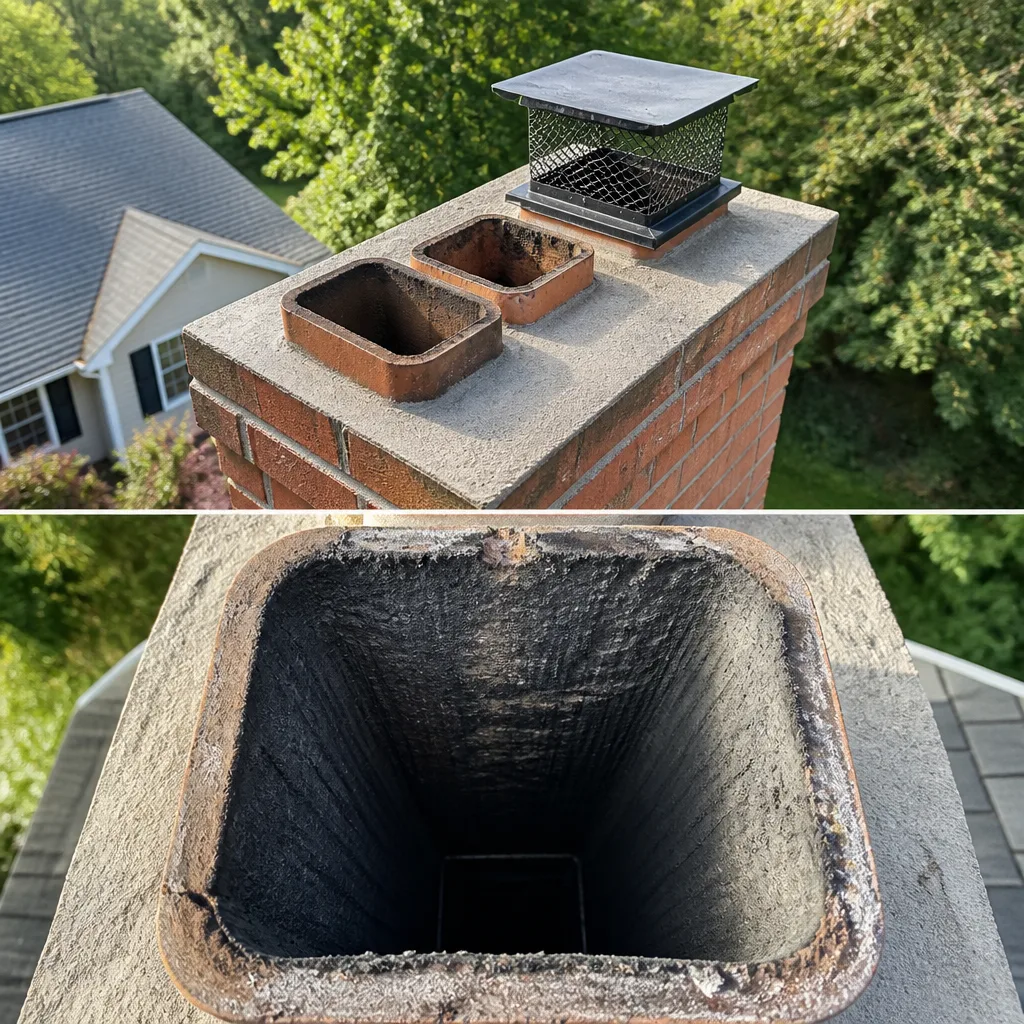
 Before
 After
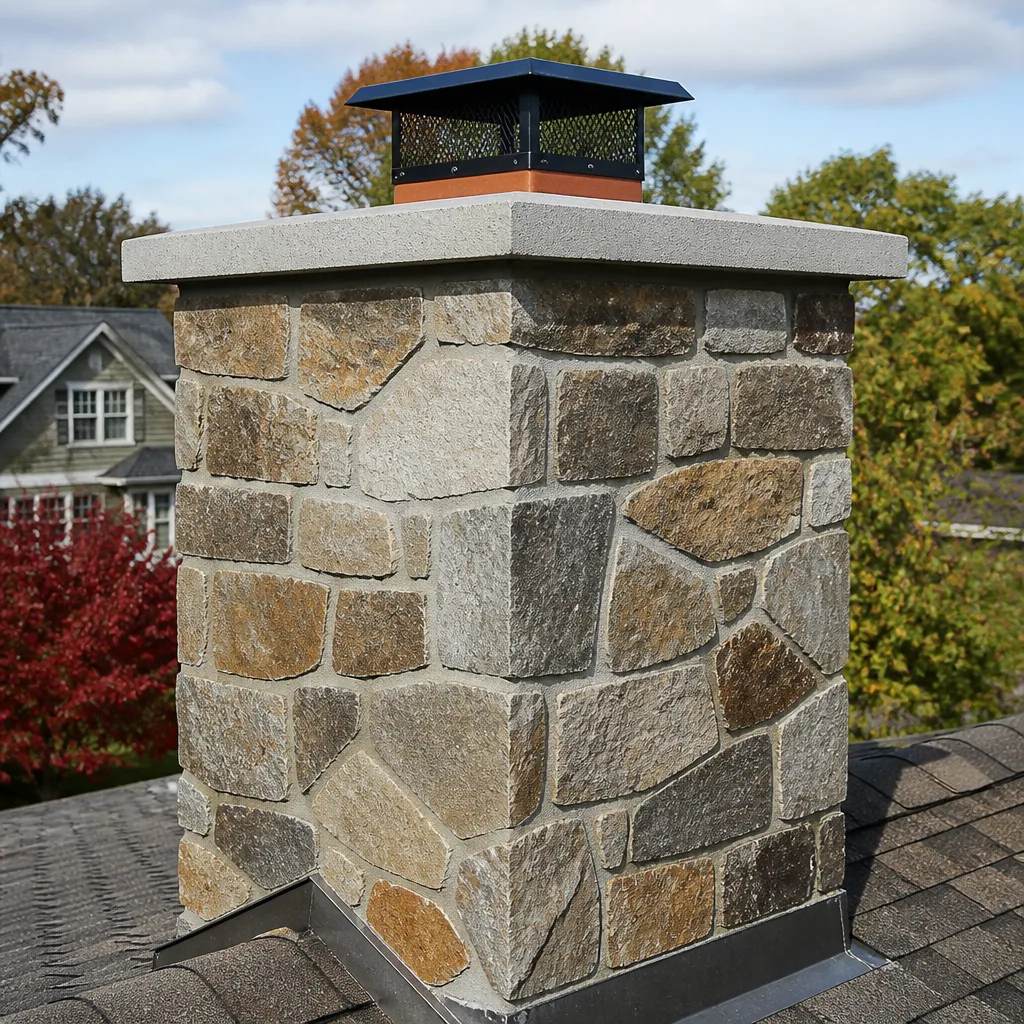
After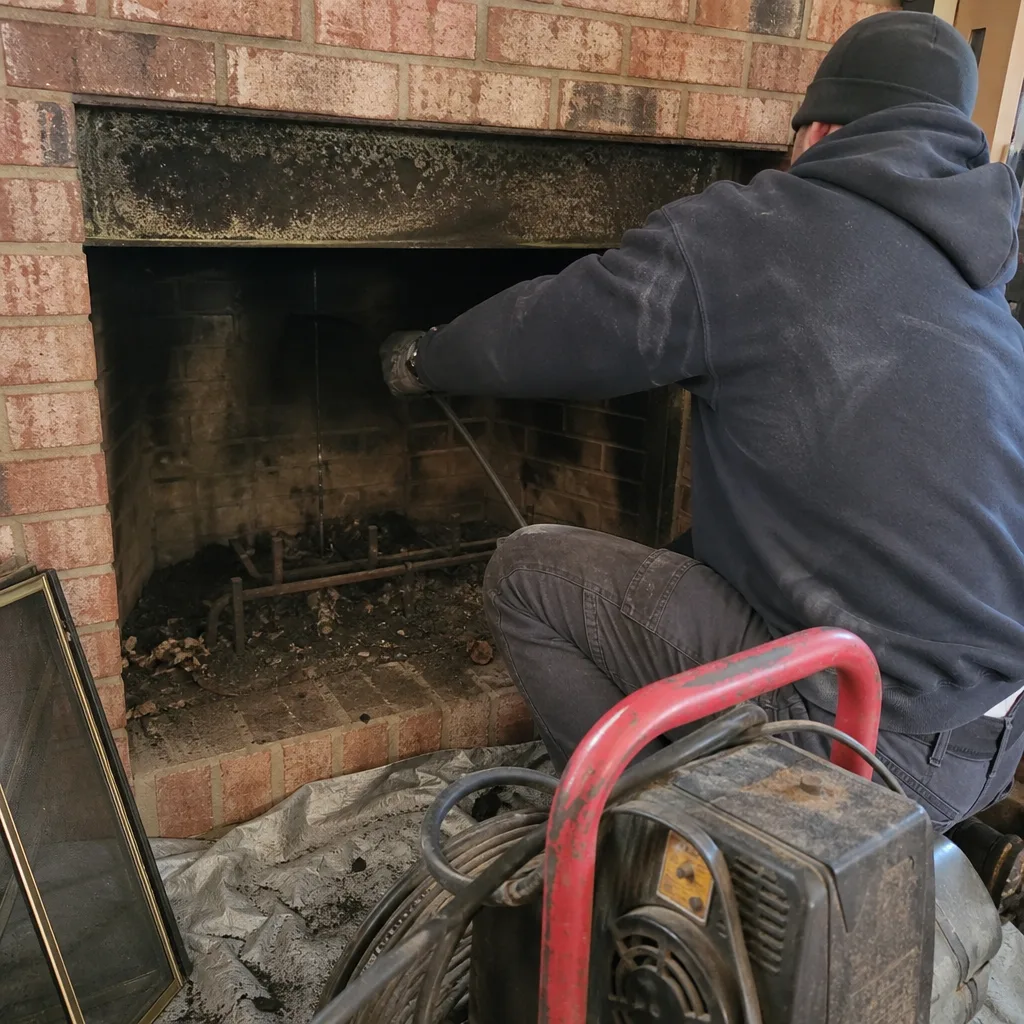 Before
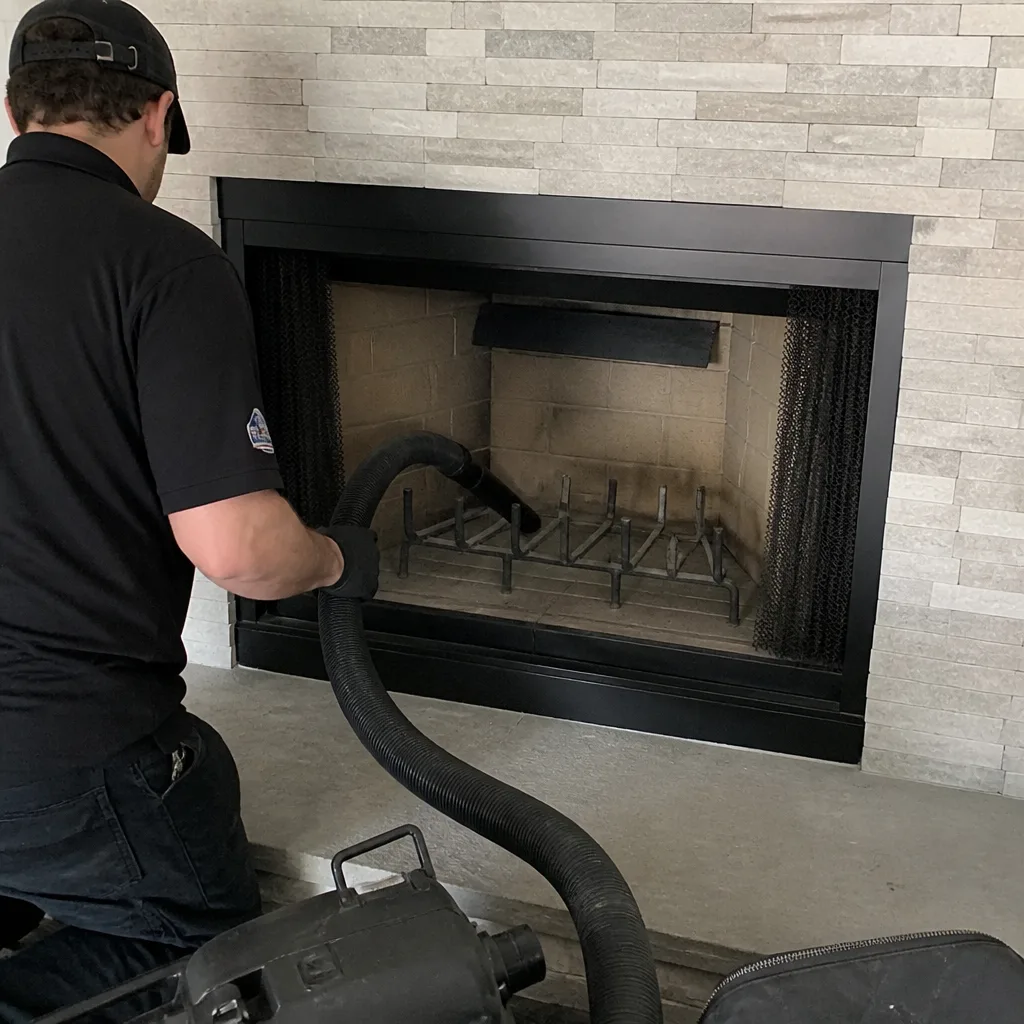 After
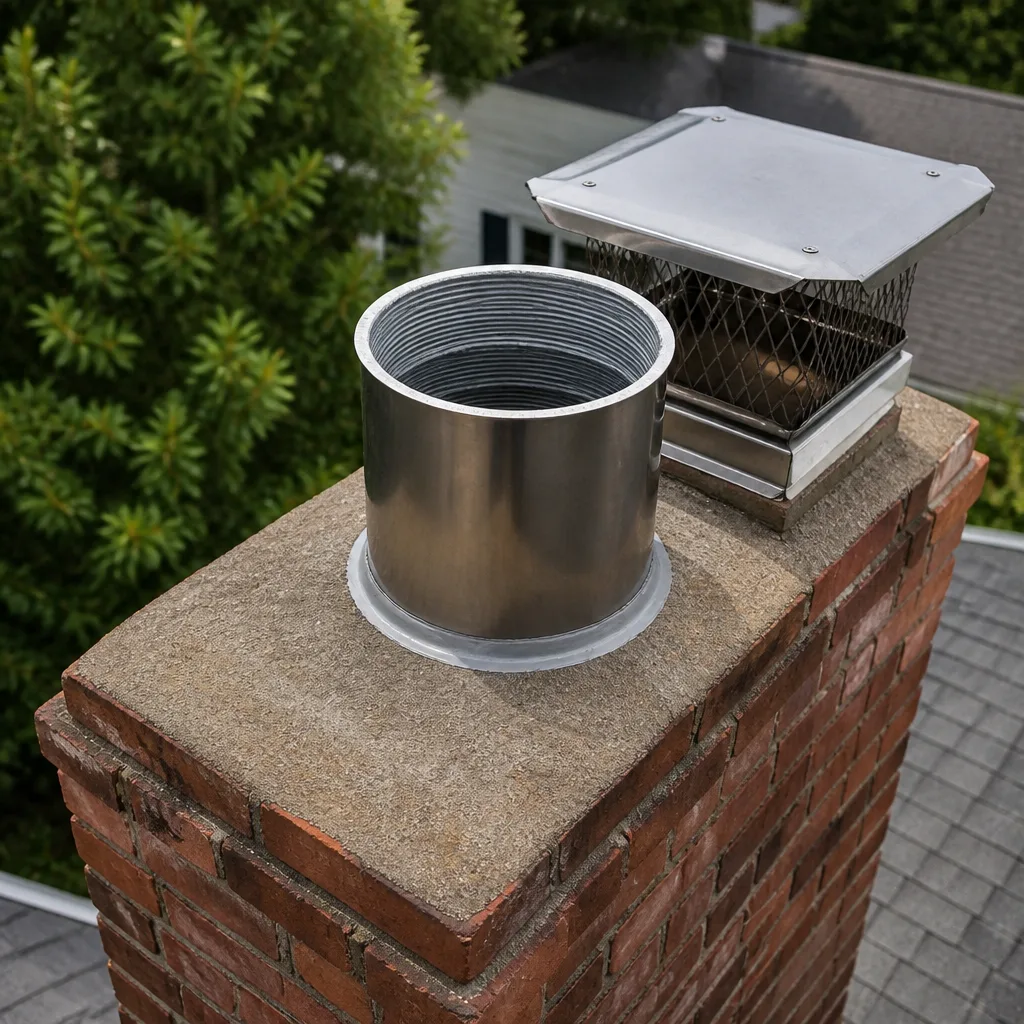
After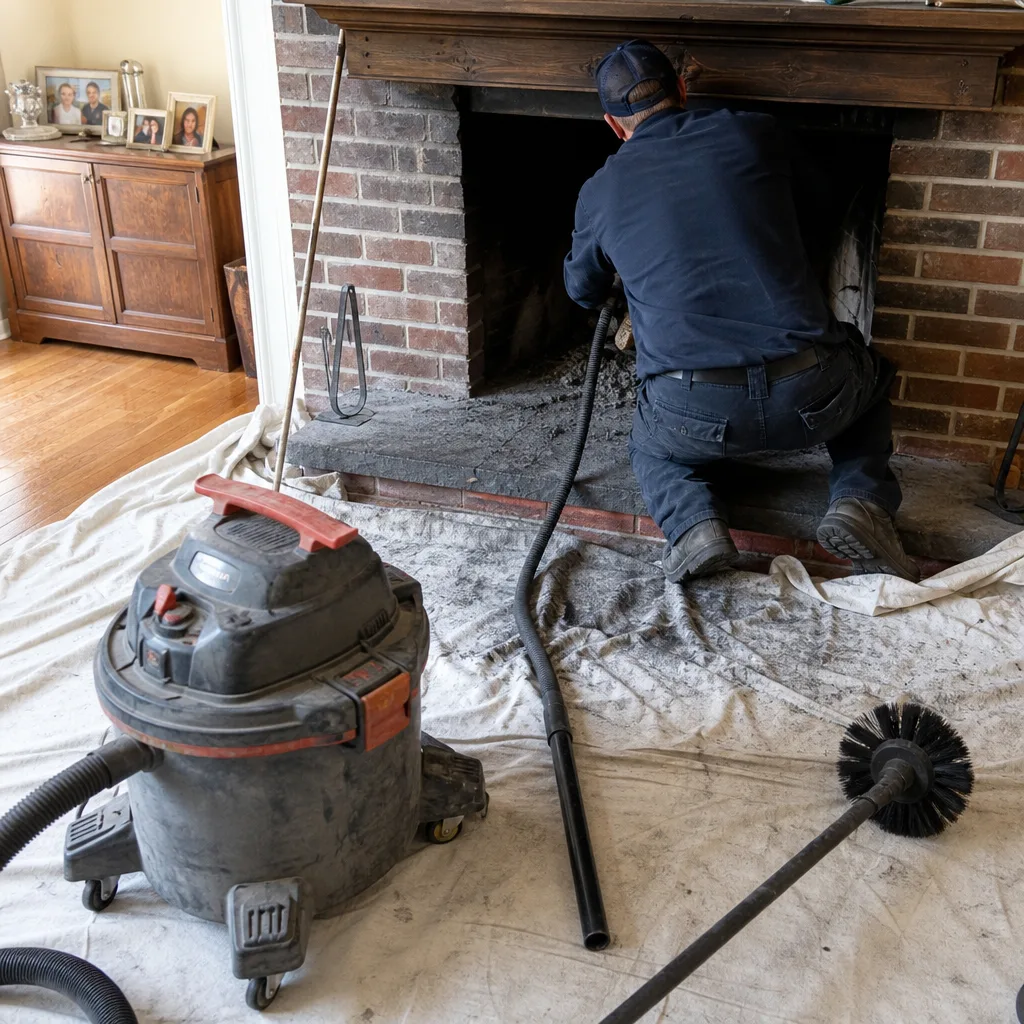 Before
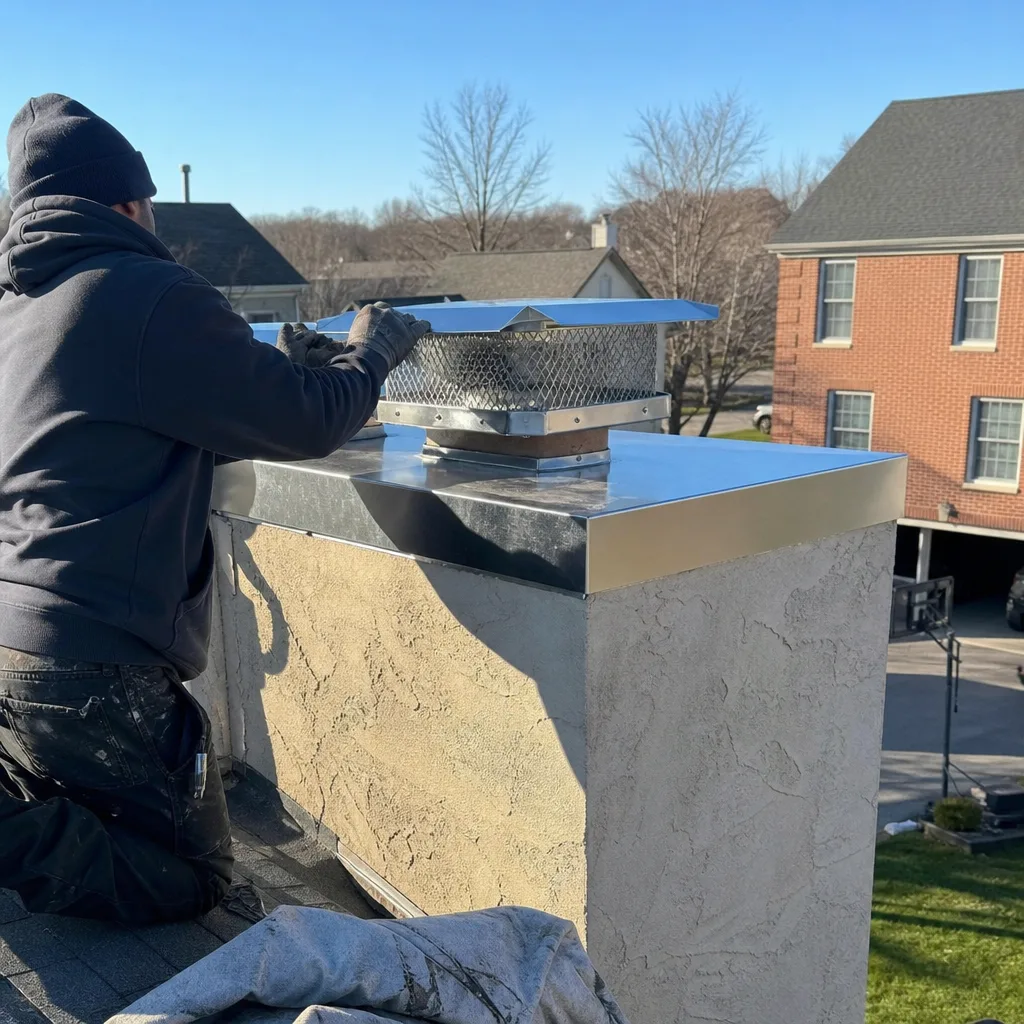 After
AfterDIY vs Professional Chimney Cleaning: The Leesburg Homeowner’s Decision Guide
Here’s the counterintuitive truth about chimney cleaning in Leesburg: the actual sweeping is the easy part. A $60 brush kit from any hardware store will scrape Stage 1 creosote off flue walls in about an hour. What that brush won’t do is tell you that the clay liner behind those walls has a hairline crack running three feet up the north face, or that the smoke chamber parging started separating two winters ago. The brush cleans. The camera finds. This guide and our Chimney Cleaning Cost Breakdown: The Leesburg Homeowner’s Reference for 2026 explain the real cost difference between those two outcomes, what your insurance policy actually requires, and when doing it yourself makes honest sense.
Quick Answer
DIY chimney cleaning works for removing accessible creosote from a straight, recently-documented flue, but it is maintenance, not inspection. In Leesburg, a professional sweep with NFPA 211 Level 2 camera inspection costs $200 to $300 and produces documentation your homeowner’s insurance may require after a chimney fire. If you DIY, you still need a professional inspection, which means you’ll pay for both.
Table of Contents
- What a DIY Brush Sweep Actually Accomplishes
- The Four Failure Modes DIY Cannot Detect
- The Insurance Documentation Gap
- Leesburg Cost Comparison: DIY vs Professional
- The Honest DIY Use Case
- Leesburg Climate and Chimney Risk
- What a Professional Sweep in Leesburg Includes: Step by Step
- Common Mistakes to Avoid
- When to Call a Professional
- Frequently Asked Questions
- The Bottom Line
BeforeAfterWhat a DIY Brush Sweep Actually Accomplishes
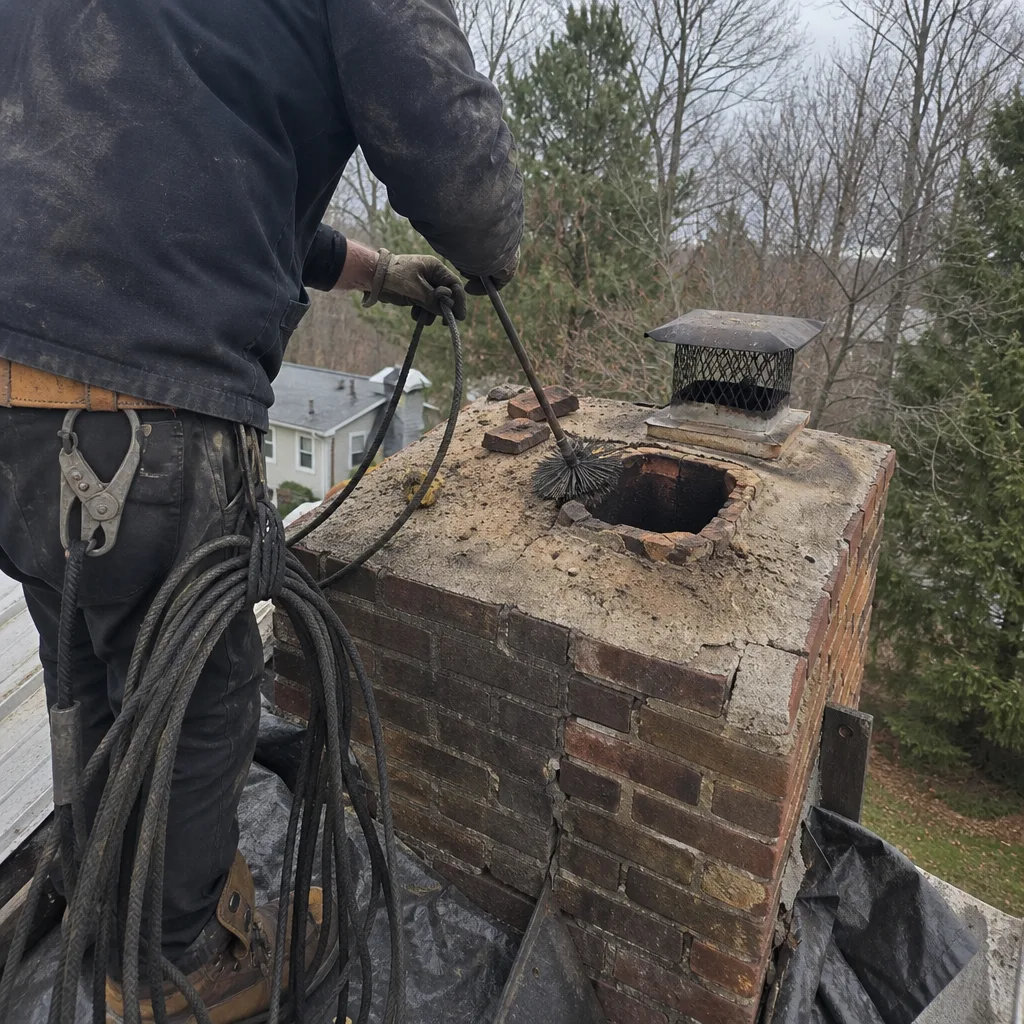
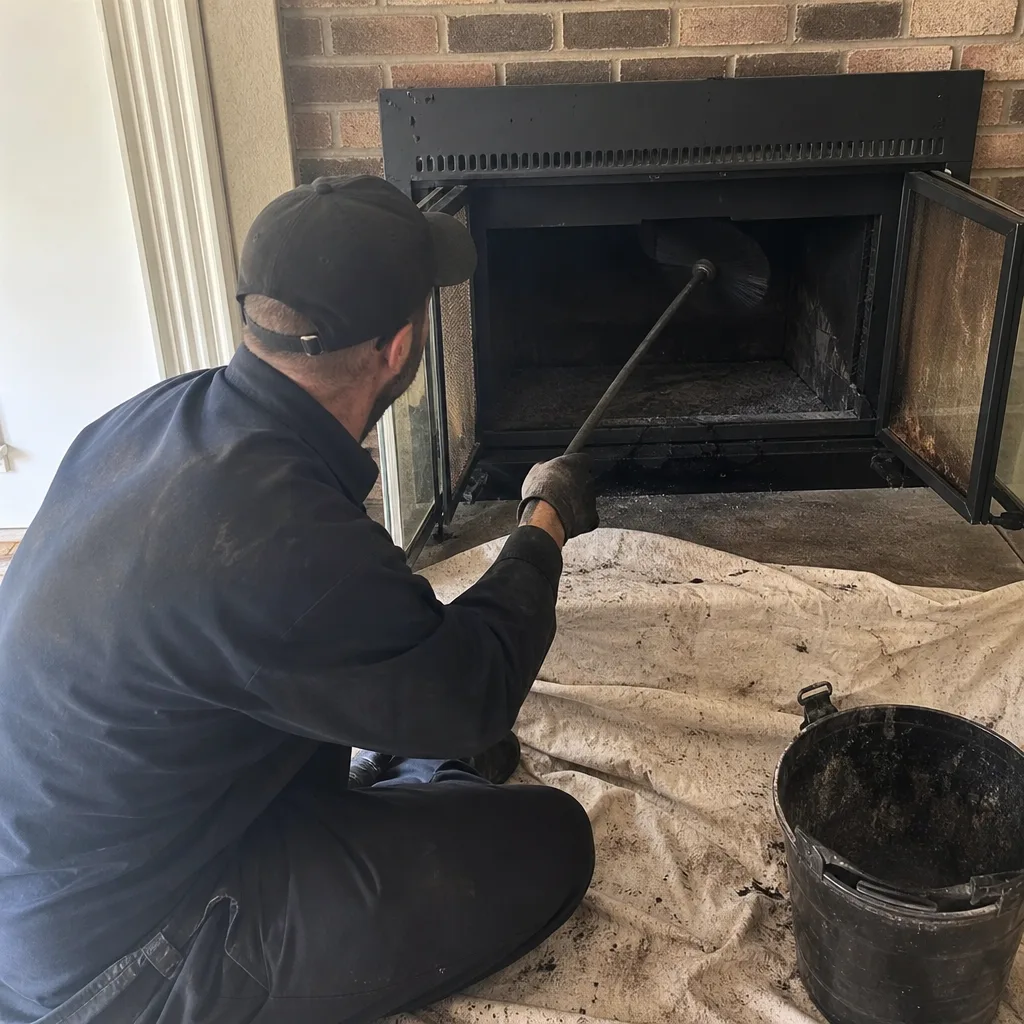
A chimney brush kit is a wire or poly brush attached to flexible fiberglass rods, connected to a drill or pushed by hand. It scrubs the flue walls in a circular motion, knocking loose creosote deposits that have accumulated from incomplete wood combustion. For a straight flue with light or moderate Stage 1 creosote, this works.
Stage 1 creosote is the flaky, soot-like residue that brushes off relatively easily. Stage 2 is the shiny, tar-like glaze that forms when flue temperatures stay low and moisture condenses. Stage 3 is the hardened, candied glaze that no consumer brush kit will remove without chemical treatment or rotary power sweeping. A homeowner with a $60 kit can handle Stage 1 on a straight run. That’s the ceiling.
What DIY does not touch:
- The smoke chamber above the damper, where creosote accumulates in uneven deposits and angles obstruct brush contact.
- The flue liner itself, meaning structural cracks, joint separation, or spalling cannot be seen from below.
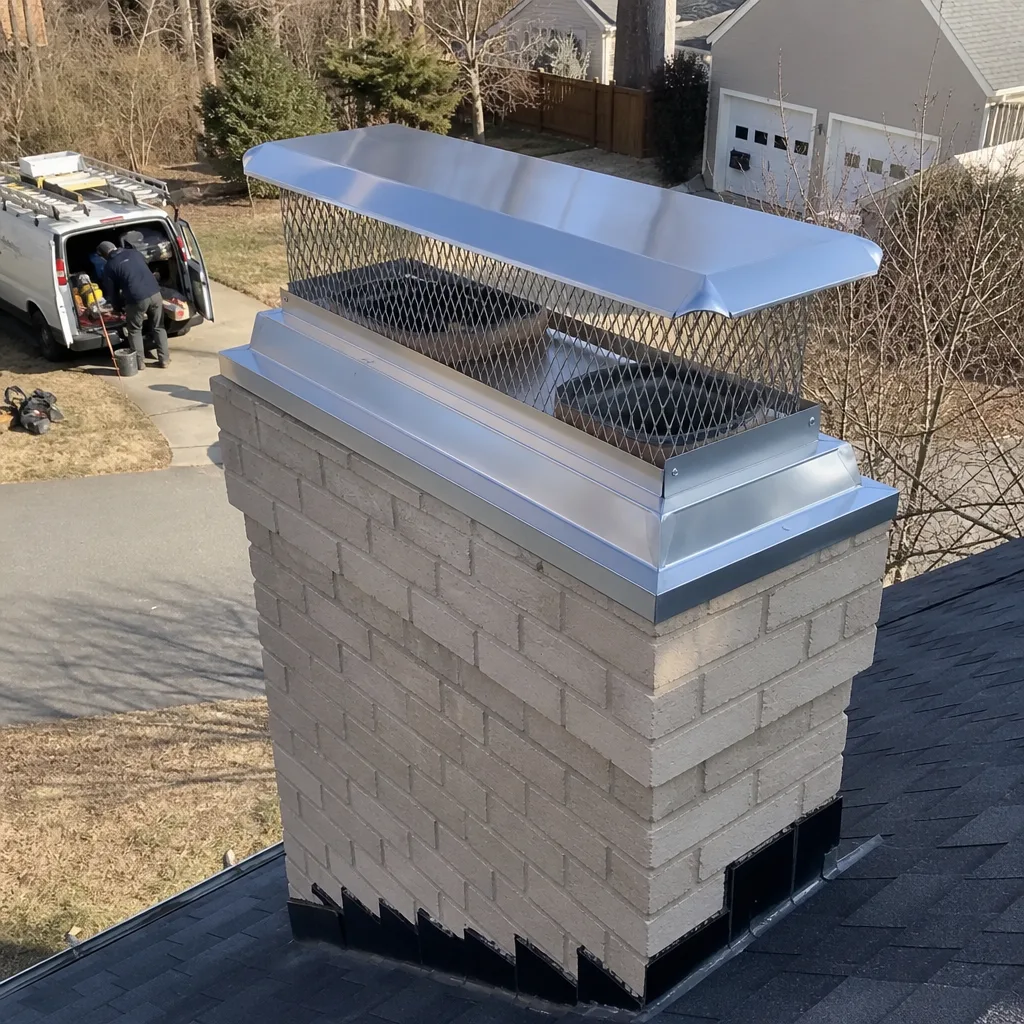
- The chimney crown and cap, which require ladder or roof access and are not visible from the firebox.
- The firebox back wall, where refractory panel cracking often starts and is impossible to spot without a light and mirror knowledge of what you’re looking at.
In Leesburg, where many homes date from the 1980s and 1990s builder boom with original clay liners, that last point matters. Clay liners crack over time from thermal stress. The brush glides over the crack. The flue looks clean. The system is compromised.
The Four Failure Modes DIY Cannot Detect
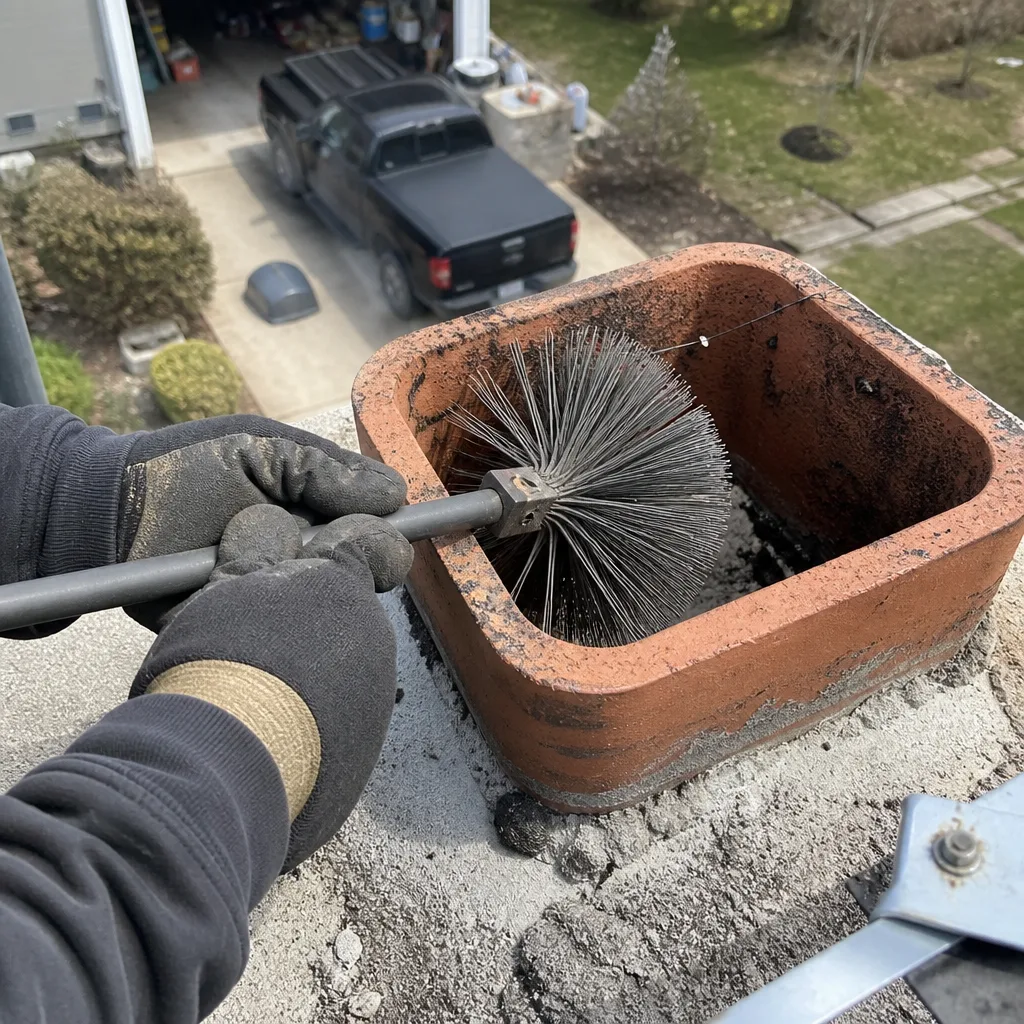
We’ve completed more than 38,000 chimney inspections and cleanings since 2009, every one with a written price before work started and a documented record when it was done. Here’s what we find on chimneys that have been DIY-maintained for years:
1. Liner Cracks and Offset Joints
Clay tile liners crack when the flue heats and cools unevenly. A crack wider than 1/8 inch allows combustion gases and heat to reach the chimney chase or surrounding framing. This is how chimney fires spread into the house structure even when the firebox fire looks contained. Detection requires a camera scan down the full flue length. Cost to catch early: minor repair or a HeatShield resurfacing. Cost to miss: flue liner replacement at $4,000 to $7,000 in Leesburg, or worse.
2. Smoke Chamber Parging Separation
The smoke chamber is the upside-down funnel above the damper. Its corbelled brickwork should be coated in smooth refractory parging. That parging cracks, delaminates, and falls away over time. The result is a rough, creosote-catching surface that cannot be inspected without pulling the damper or using a camera. DIY brush kits cannot get meaningful brush contact in the chamber’s compound curves.
3. Firebox Back-Wall Separation
The back wall of the firebox is where heat is most intense. Refractory panels expand and contract at a different rate than the brick behind them. Separation starts as a hairline gap and eventually allows flame contact with framing at the fireplace’s rear. A homeowner looking up from the firebox cannot see behind the panel. This is a drop-camera task.
4. Cap and Crown Deterioration
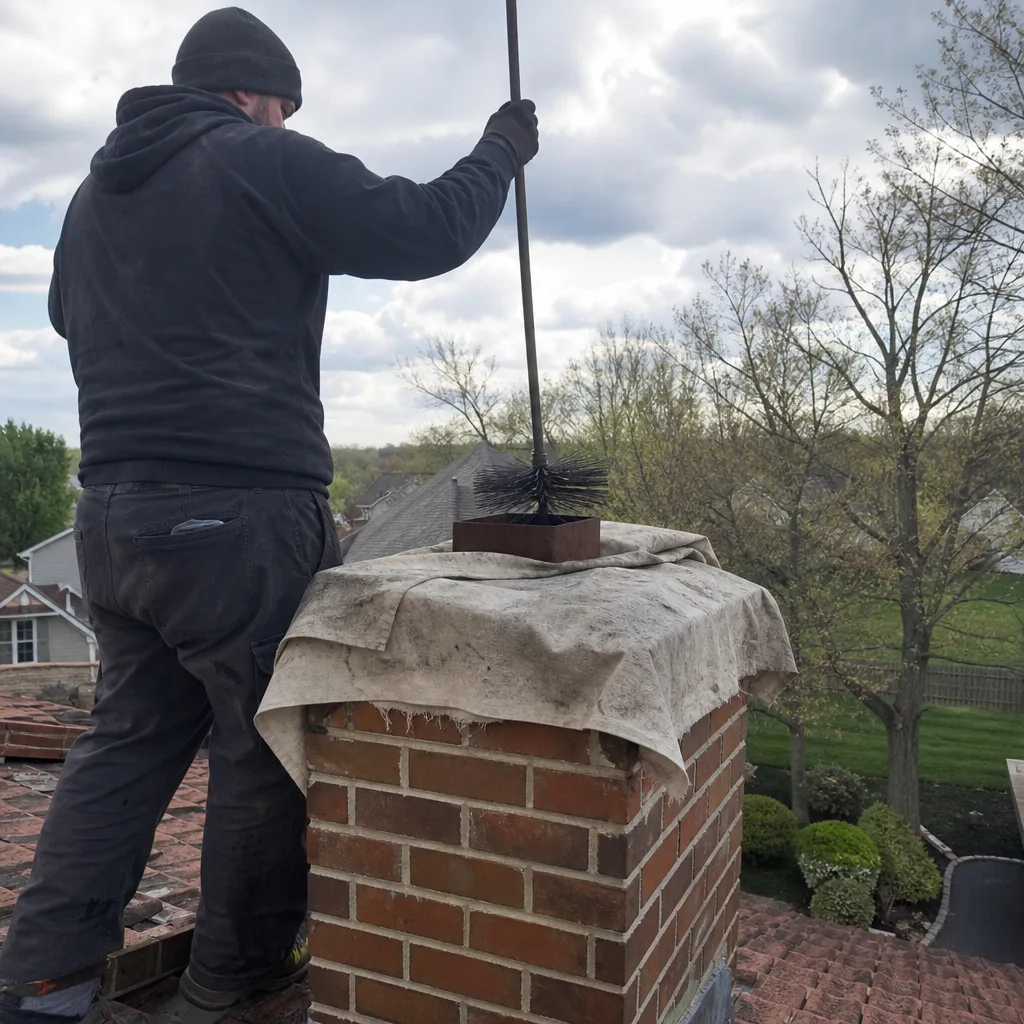
Leesburg gets 42 inches of rain annually and regular freeze-thaw cycles from November to March. Water enters through crown cracks, freezes, and expands the crack. A compromised crown becomes a water intrusion pathway that damages mortar joints below it. The crown and cap are only visible from the roof or with a camera from above. If you have not been on your roof in two years, you have not seen your crown.
The Insurance Documentation Gap
Most homeowner policies in Virginia cover chimney fire damage, but many claims get denied for lack of documented maintenance. If you have a chimney fire and the adjuster asks for proof of inspection and cleaning, a credit card receipt from Amazon for a brush kit does not answer the question.
What an insurer typically wants:
- A written inspection report that identifies the system’s condition before the fire.
- Photo documentation of the flue liner, smoke chamber, cap, and crown.
- A service date within a timeframe that demonstrates reasonable maintenance.
- The inspecting company’s credentials and contact information.
A DIY cleaning produces none of this. A professional sweep with camera inspection produces all of it. At Level Two Chimney Leesburg home, we made camera-scan documentation the default on every visit in 2009, years before insurers or regulators began asking for it. That practice became Clause 4 of the Haven Standard: a documented photo record on every job, not an optional add-on.
The insurance reality in Leesburg is straightforward: if you can afford to rebuild a chimney chase out of pocket, skip the inspection. If you expect the policy to pay after a fire, you need the paper trail that only a professional inspection produces.
Leesburg Cost Comparison: DIY vs Professional
Here’s what each scenario actually costs in the Leesburg market today:
- DIY kit: $60 to $120 (brush, rods, drop cloths, shop vac rental, time)
- Professional Level 2 inspection alone: $200 to $300 (camera scan, written report, photo record)
- Full-service sweep with camera inspection: $250 to $350 (cleaning plus inspection, one visit, one written price)
- Flue liner replacement after missed crack: $4,000 to $7,000 (DuraFlex or comparable stainless liner)
- Chimney crown replacement after missed deterioration: $800 to $1,800
- Smoke chamber parging repair after missed separation: $1,200 to $2,500
The math: DIY plus inspection runs $260 to $420. Professional sweep-plus-inspection runs $250 to $350. You pay more to DIY and still have to clean the soot out of your living room.
Our Chimney Cleaning & Sweep in Leesburg pricing is always quoted in writing before work starts. That is Haven Standard Clause 1: written price, written scope, written warranty, delivered before anyone touches the chimney. You leave with a camera-scan report showing liner condition, creosote classification, and crown status, plus a photo archive you can hand to an insurer.
The Honest DIY Use Case
We’re not here to tell you DIY is always wrong. It is not. Here is the scenario where it makes sense:
- The flue has been professionally inspected within the last 12 months. You know the liner is intact. You have the camera report.
- The system is a straight-run flue. No offsets, no major bends, no complicated smoke chamber geometry.
- You burn seasoned hardwood only, less than 30 fires per year. This keeps creosote in Stage 1 territory.
- You are doing a mid-season maintenance clean between professional inspections. Use DIY as a supplement, not a substitute.
- You accept the documentation gap. If a fire occurs, you have no professional record for that period.
If all five are true, a DIY cleaning is a reasonable maintenance act. It is not an inspection. It never was, and it never will be. The brush removes what it can reach. It cannot assess what it cannot see.
One note from experience: Leesburg homeowners who DIY mid-season still book a professional inspection before heavy burning season, as covered in our Seasonal Chimney Cleaning Care for Leesburg: Year-Round Homeowner’s Guide. They treat the brush kit as a stopgap between documented sweeps. That’s the honest use case.
Leesburg Climate and Chimney Risk
Leesburg sits in USDA Zone 7a, with winter lows averaging 24°F in January and regular freeze-thaw cycles from late November through March. That matters for chimneys in two ways.
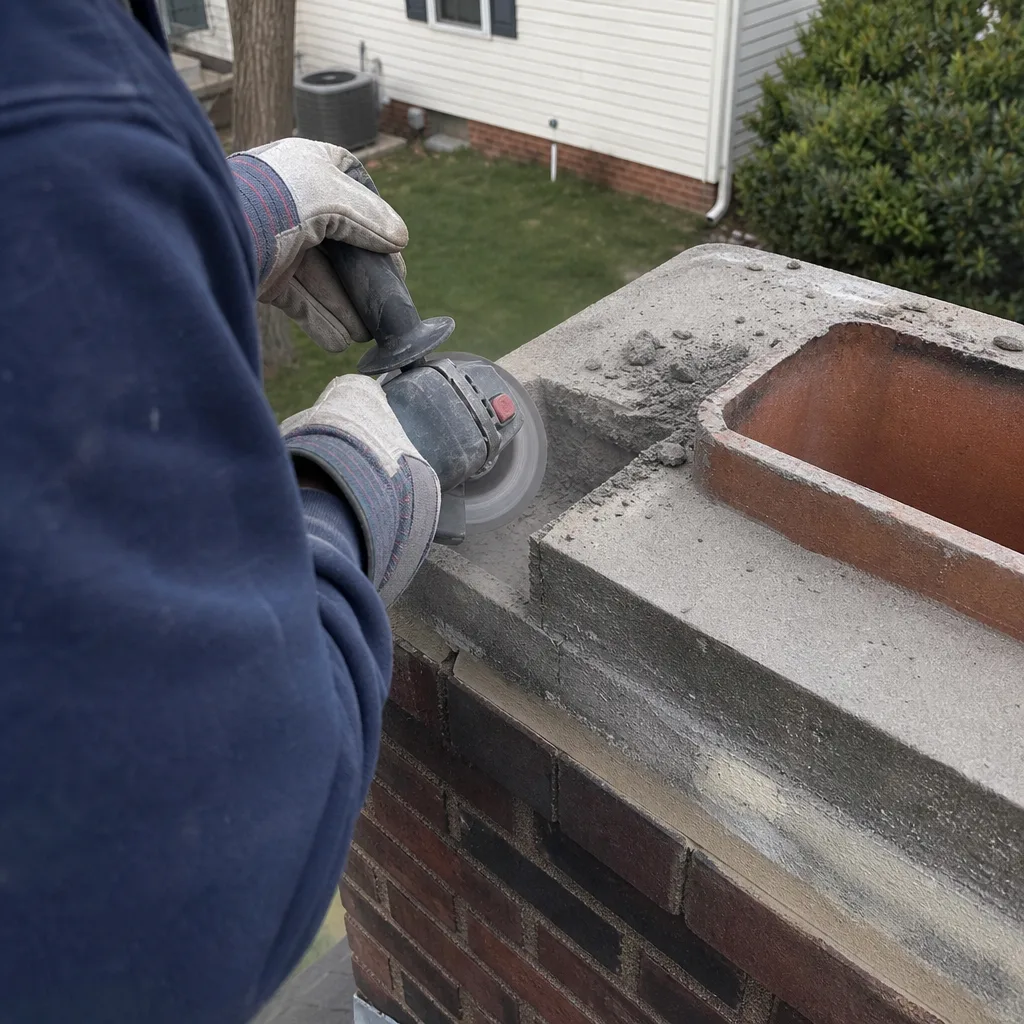
First, freeze-thaw cycling accelerates crown and mortar deterioration. Water enters micro-cracks, freezes, expands, and widens the gap. Over a Leesburg winter, a crack that was cosmetic in October can be structural by March. Homes in the Exeter and Stratford neighborhoods, many built in the 1990s with original clay liners, are now hitting the 25-to-30-year mark where liner fatigue shows up.
Second, our burning season is condensed. Most Leesburg homeowners burn from late October to early March, roughly five months. That means creosote accumulates faster in a shorter window than in milder climates where burning stretches across eight months. A flue that was clean at the end of March can be glazed by January.
The local code reality: Loudoun County adopts the Virginia Residential Code, which references NFPA 211 for chimney and fireplace standards. NFPA 211 requires that chimneys be inspected at least once per year and cleaned as needed based on creosote accumulation. A Level 2 inspection, with camera, is required when the system is changed, after a chimney fire, or before a new appliance is connected. The word “inspection” in that standard means visual and camera assessment, not a brush pass.
What a Professional Sweep in Leesburg Includes: Step by Step
When you book a professional chimney cleaning with us, here’s what happens, in order:
- Arrival and floor protection. Drop cloths and a HEPA vacuum setup before any work starts. Your floors are protected, not an afterthought.
- System inspection from the firebox. We remove the damper plate or look through the combustion chamber to assess smoke chamber condition and creosote class.
- Top-down camera scan. The camera goes down from the crown, not up from the firebox. This catches crown cracks, cap damage, and the top few feet of liner that an upward view misses.
- Mechanical sweeping. Rotary power sweeping or brush sweeping removes creosote from flue walls. The method depends on creosote class and liner material.
- Smoke chamber cleaning. We access the smoke chamber with specialized tools. This is the area DIY cannot reach.
- Firebox and damper cleaning. Removing ash, debris, and surface creosote from the firebox.
- Post-sweep camera scan. A second pass documents the cleaned flue, confirms liner condition, and shows the before-and-after difference.
- Written report delivery. You receive a written inspection report, photo documentation, and a written warranty. This is Clause 4 of the Haven Standard: a documented record on every job, not an optional add-on.
The entire visit typically takes 90 minutes to two hours. There is no second visit needed for the inspection. That’s the point of a full-service sweep.
Common Mistakes to Avoid
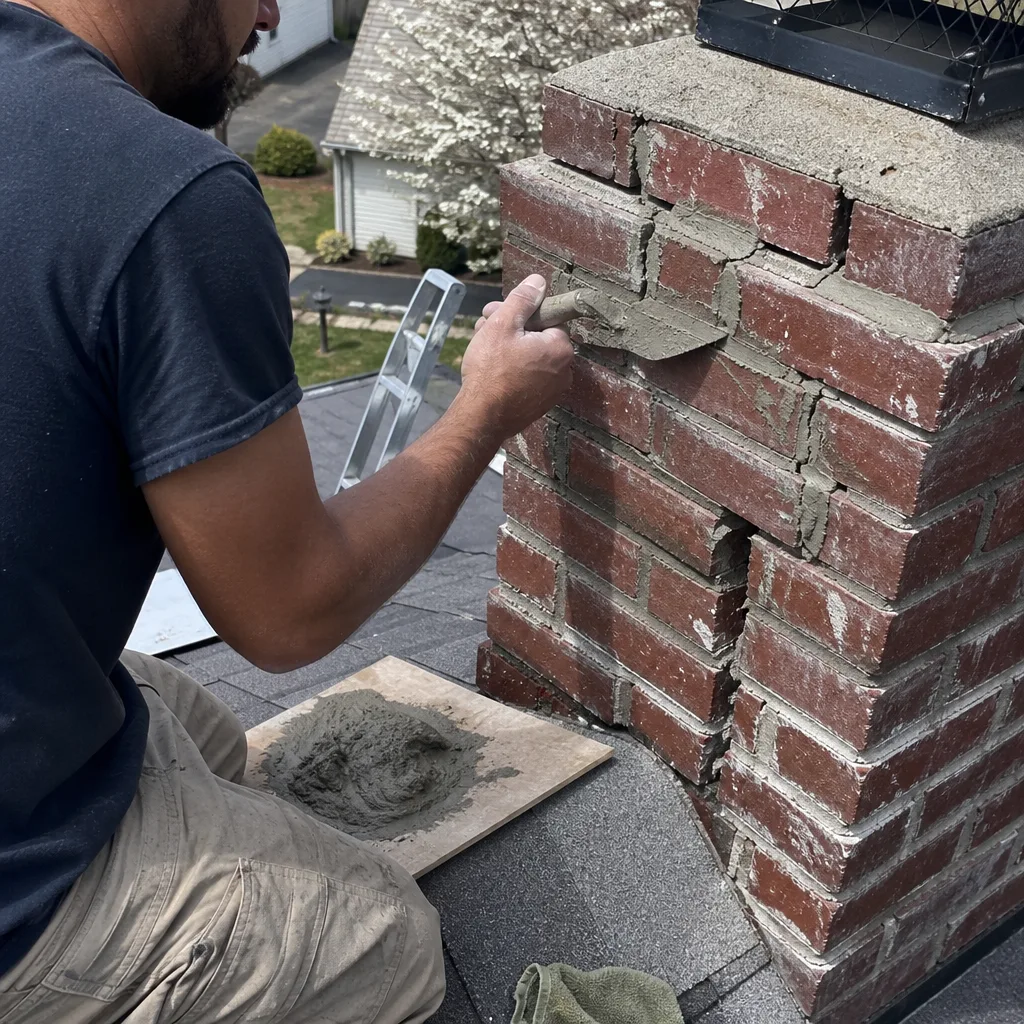
- Assuming a clean flue means a safe flue. A brush removes creosote. It cannot assess liner cracks, joint offset, or crown deterioration. A clean chimney with a cracked liner is still a hazard.
- Skipping the inspection because the fire “burned fine last year.” Chimney deterioration is not always visible from the firebox. The fire burns fine until it doesn’t.
- Using chemical creosote logs “instead of” a sweep. Creosote sweeping logs convert Stage 2 creosote to a more brittle form, but they do not remove it. The debris still needs mechanical removal.
- Burning unseasoned wood to save money. Wet wood produces lower flue temperatures and more creosote. In Leesburg, green wood from a downed tree in your yard can be over 30% moisture. You want below 20%, dried 6 to 12 months.
- DIY cleaning on a flue you have never had inspected. If you do not know the liner condition, pushing a brush down the flue can worsen an existing crack or dislodge a damaged tile. First inspection, then maintenance.
- Ignoring the cap. A missing or damaged cap lets in rain, birds, and squirrels. In Leesburg, where oak and maple canopies overhang many chimneys, cap damage is common and visible only from above.
- Waiting until November to book. Our schedule fills by early October. The chimney you meant to have cleaned in summer becomes the February emergency when the flue is glazed and the fireplace is your backup heat source.
When to Call a Professional
If any of the following describes your situation, stop researching How to Hire a Chimney Cleaning Contractor in Leesburg: A Step-by-Step Guide and make the call:
- You have never had a camera inspection of your flue liner.
- Your last documented inspection was more than 24 months ago.
- You notice loose bricks, crumbling mortar, or water stains near the chimney.
- You smell smoke in the house after the fire is out.
- You see white staining (efflorescence) on the chimney’s exterior brick.
- You are buying a home in Leesburg and the seller has no chimney documentation.
- You had a chimney fire, even a small one.
Level Two Chimney Leesburg offers free estimates in Leesburg and throughout Loudoun County. Call (571) 601-3174 and we’ll give you a written price over the phone after a brief description of your system. No visit required for a quote. No pressure. Just the price.
Frequently Asked Questions
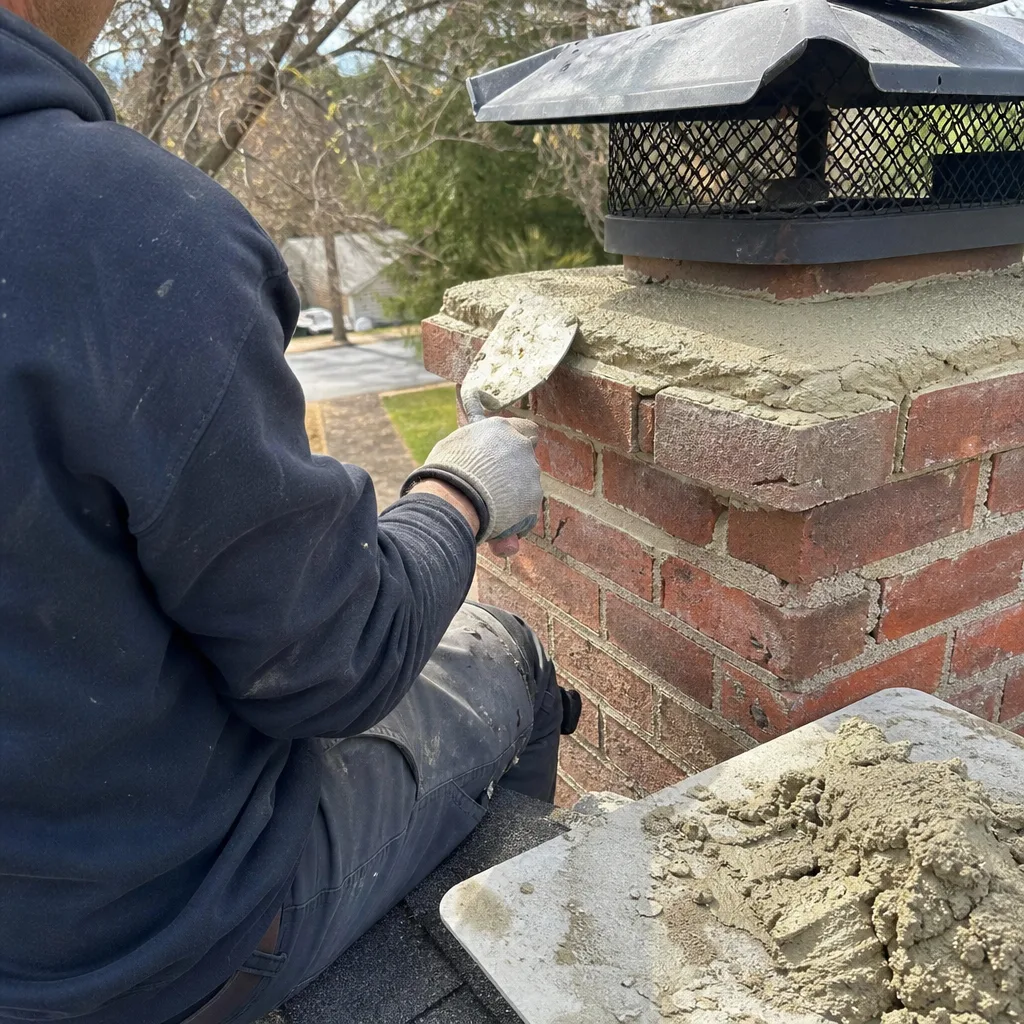
NFPA 211 says inspect annually and clean as needed based on creosote accumulation. In practice, homeowners who burn more than 30 fires per season in Leesburg should schedule a sweep every fall, before burning season starts. If you burn less than that and use seasoned hardwood, every 18 to 24 months may be adequate, but the annual inspection is still required by the standard most insurers reference. Call (571) 601-3174 for an exact recommendation based on your burning habits and we’ll quote your cleaning in writing before work starts.
A professional sweep with camera inspection runs $250 to $350 in Leesburg, depending on system height, creosote class, and accessibility. That’s one visit, one written price, and includes the documented photo record required by Clause 4 of the Haven Standard. A standalone Level 2 camera inspection without cleaning runs $200 to $300. All pricing is delivered in writing before any work begins, never as a “call for quote” range.
Yes, physically, if you have a straight flue, mild creosote, and basic tool competence. The brush will remove accessible Stage 1 creosote from flue walls. What it will not do is inspect the liner, smoke chamber, crown, or cap, and it produces no documentation for insurance purposes. If you DIY, you should still have a professional camera inspection once per year. Call (571) 601-3174 to schedule just the inspection, and you’ll get a written report and photo record without the upsell.
Maybe. A liner is required by code whenever the original clay liner is cracked, deteriorated, or absent. If your camera inspection shows cracks wider than 1/8 inch, significant spalling, or joint separation, a stainless liner from one of our suppliers (DuraFlex, for example) is the standard fix. If the liner is intact, no one should be selling you a replacement. We always show you the camera footage before recommending liner work, and we tell you plainly when repair can wait. That’s Chimney Repair in Leesburg done with evidence first.
Stage 1 creosote becomes Stage 2 glaze, then Stage 3 hard candied deposits. As creosote thickens, it reduces draft, which lowers flue temperature, which accelerates more creosote formation. Eventually, a hot fire can ignite the accumulation, causing a chimney fire that reaches 2,000°F. Those temperatures crack clay liners, warp metal liners, and can ignite framing through the chase. If you catch it late, a $300 sweep becomes a $7,000 liner replacement or a structural repair. Call (571) 601-3174 and we’ll tell you honestly whether your system can wait another season.
Most Virginia homeowner policies do not require it as a condition of coverage, but many deny chimney fire claims when the homeowner cannot produce a documented inspection and cleaning history. The adjuster’s question is: “Did you reasonably maintain this system?” A professional inspection with camera documentation is the answer. A DIY brush receipt is not. Our Fireplace Services in Leesburg include a written report and photo archive on every visit, specifically so you have a paper trail when you need it.
The Bottom Line
DIY chimney cleaning is a maintenance act. It removes what it can reach and ignores what it cannot see. In Leesburg, where freeze-thaw cycles stress clay liners and the burning season is short and intense, what a brush cannot see is exactly what fails first: liner cracks, smoke chamber separation, cap deterioration. The cost math favors the professional: DIY plus inspection costs more than a full-service sweep that gives you both. And the insurance math is not close. If you have a chimney fire and no documented inspection, you’re self-insured. We’ve done 38,000-plus documented inspections and cleanings since 2009, every one with a written price before work started. For more guides & resources, visit our blog. Call (571) 601-3174 for a free estimate. You’ll get a written price, a written scope, and a written warranty before anyone starts. That’s the standard.
Written by Corrine Halstead, Owner at Level Two Chimney Leesburg, serving Leesburg since 2009.