
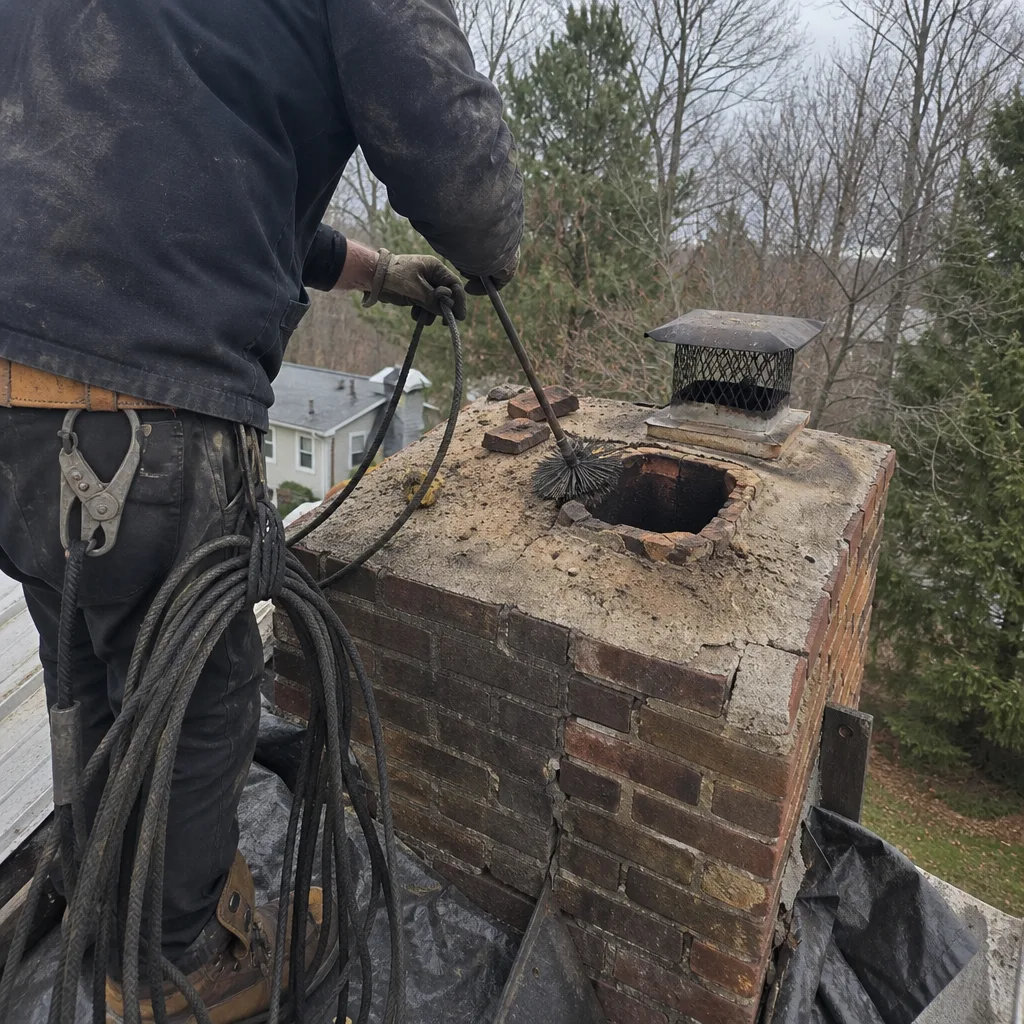
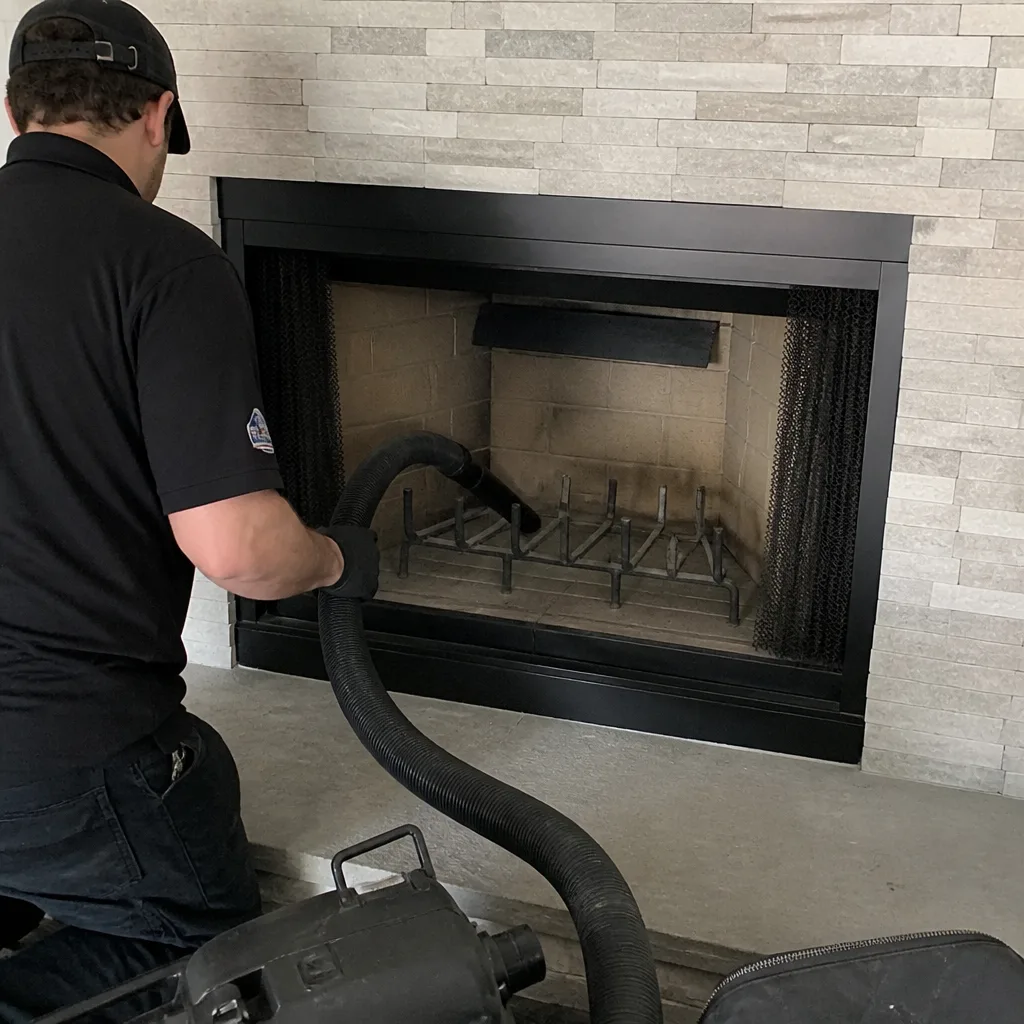
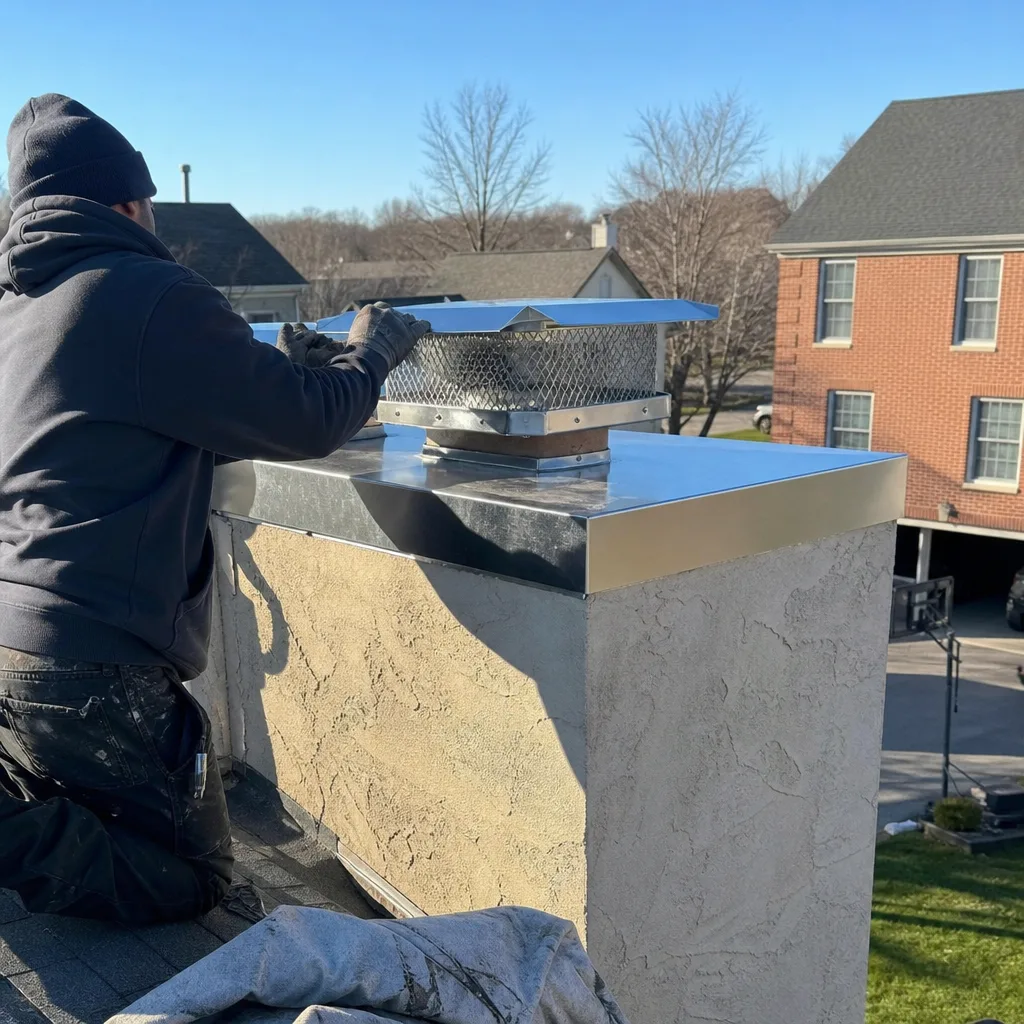
Level 1 sweep and inspection to the NFPA 211 annual standard - flue, crown, cap, and flashing checked and photographed
Chimney sweep logs do not sweep chimneys. They loosen some creosote - which then falls where a brush and vacuum still have to collect it.
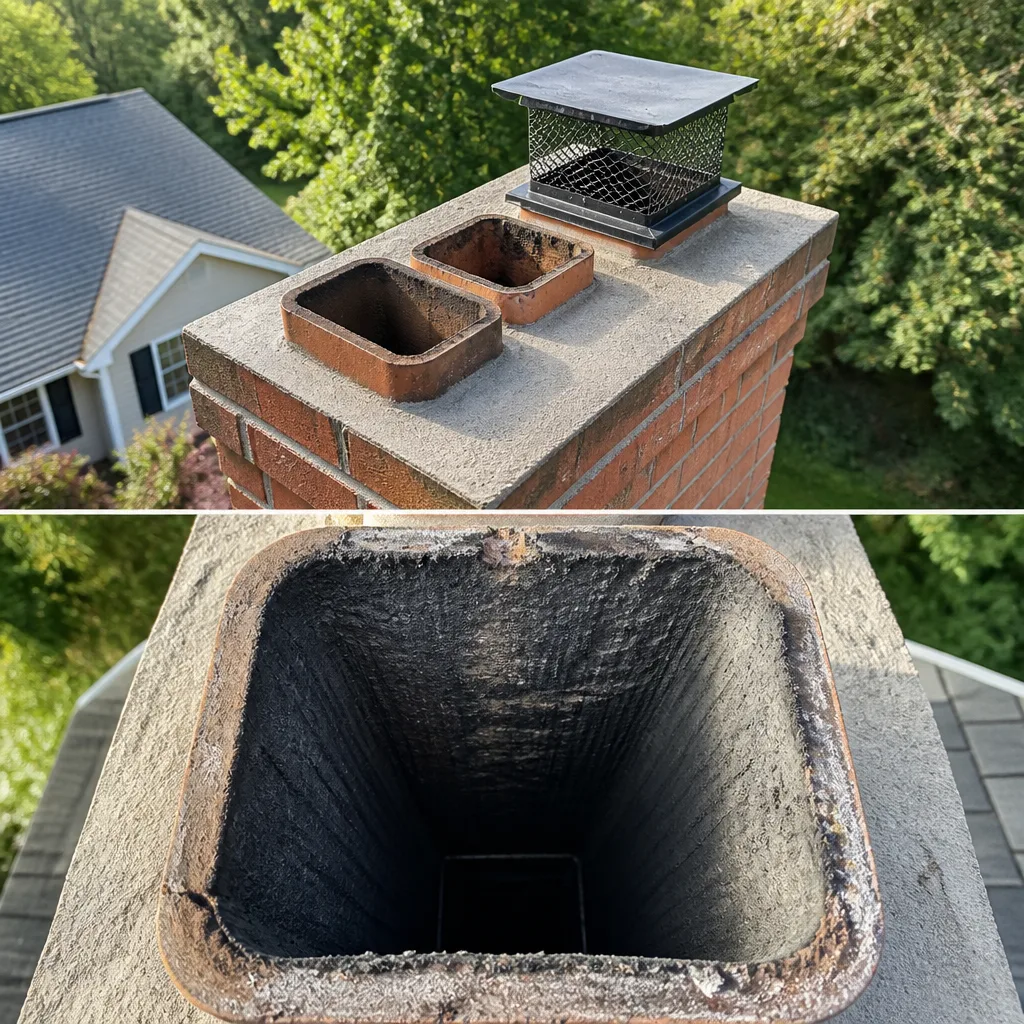
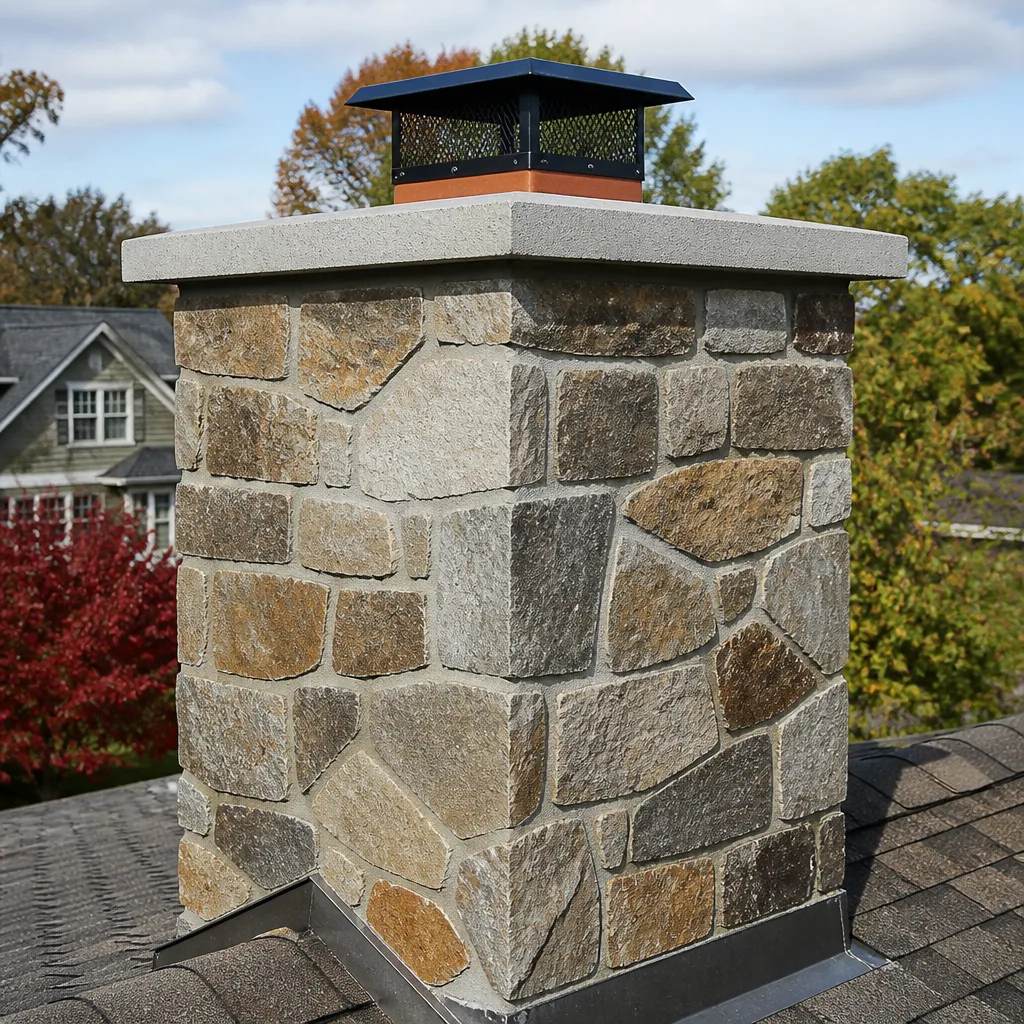
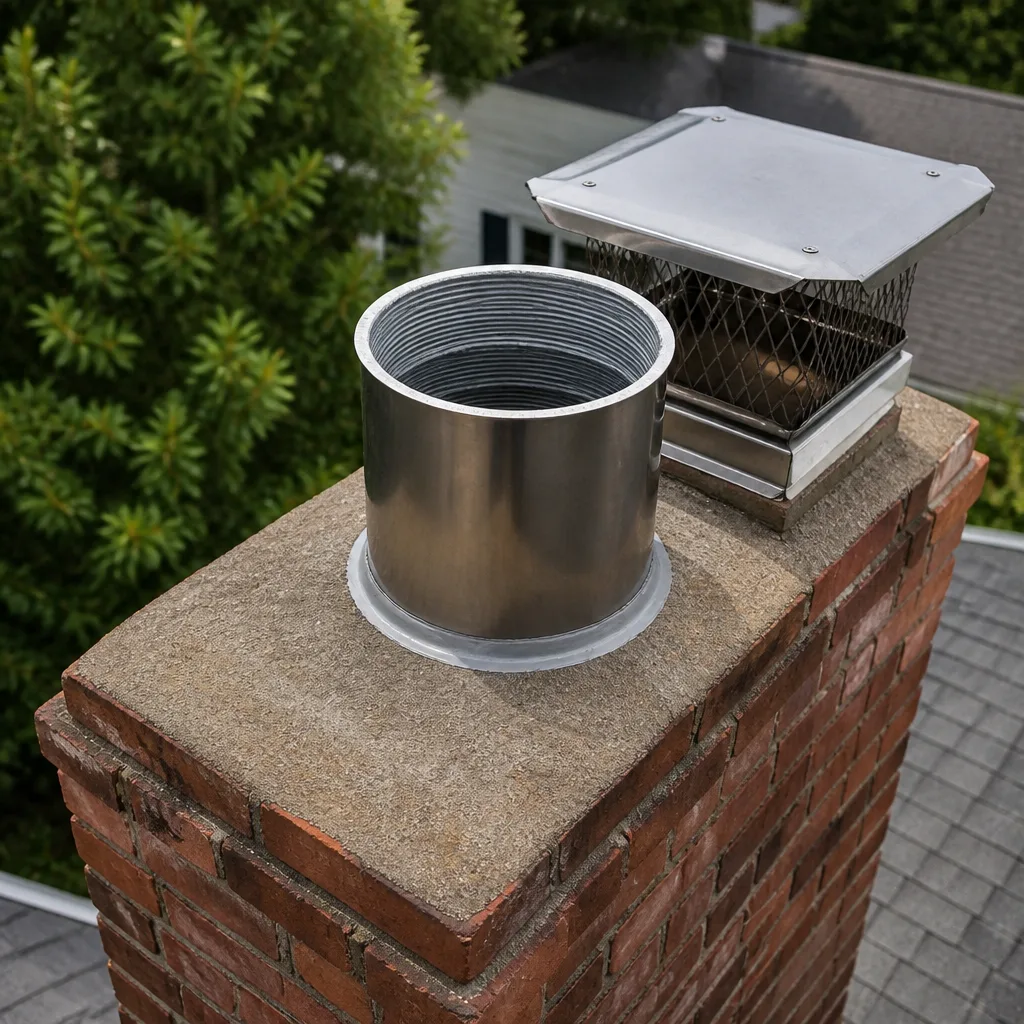
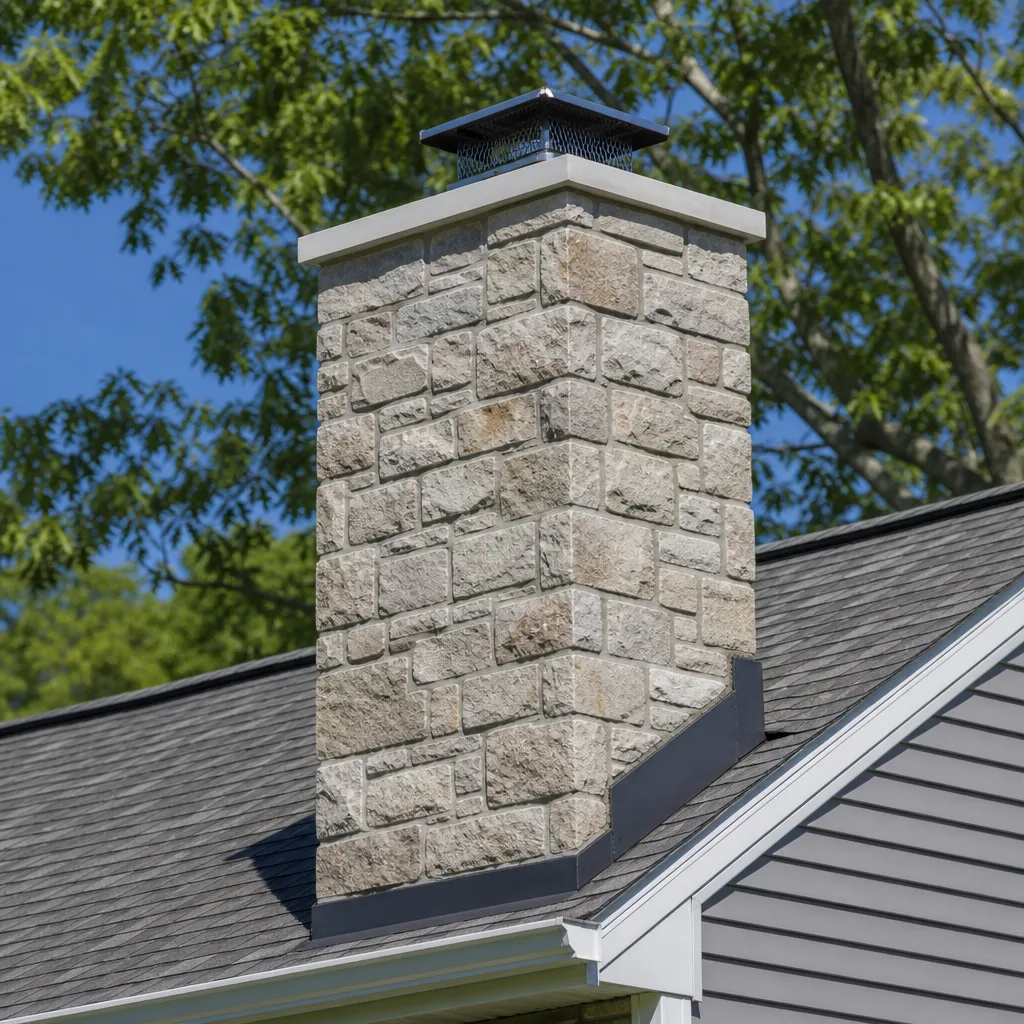
 Before
 After
After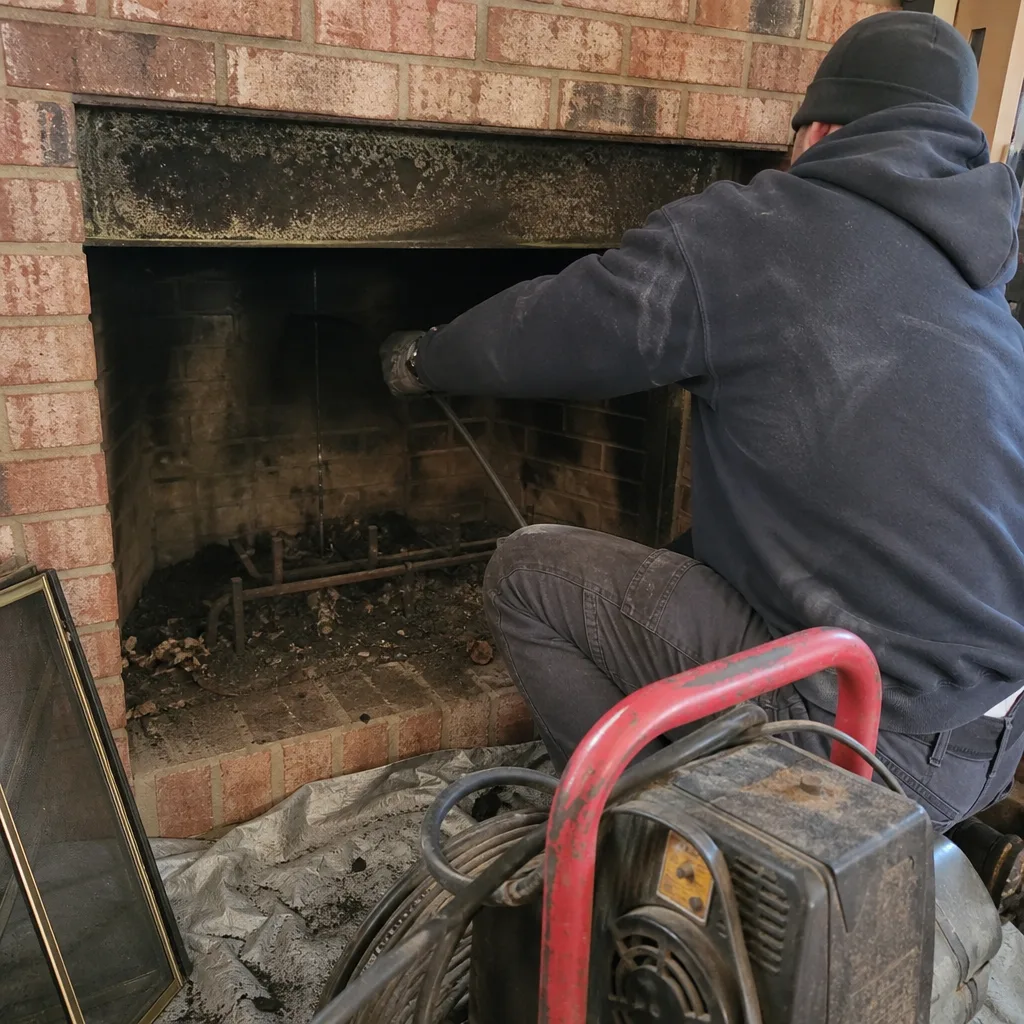 Before
 After
After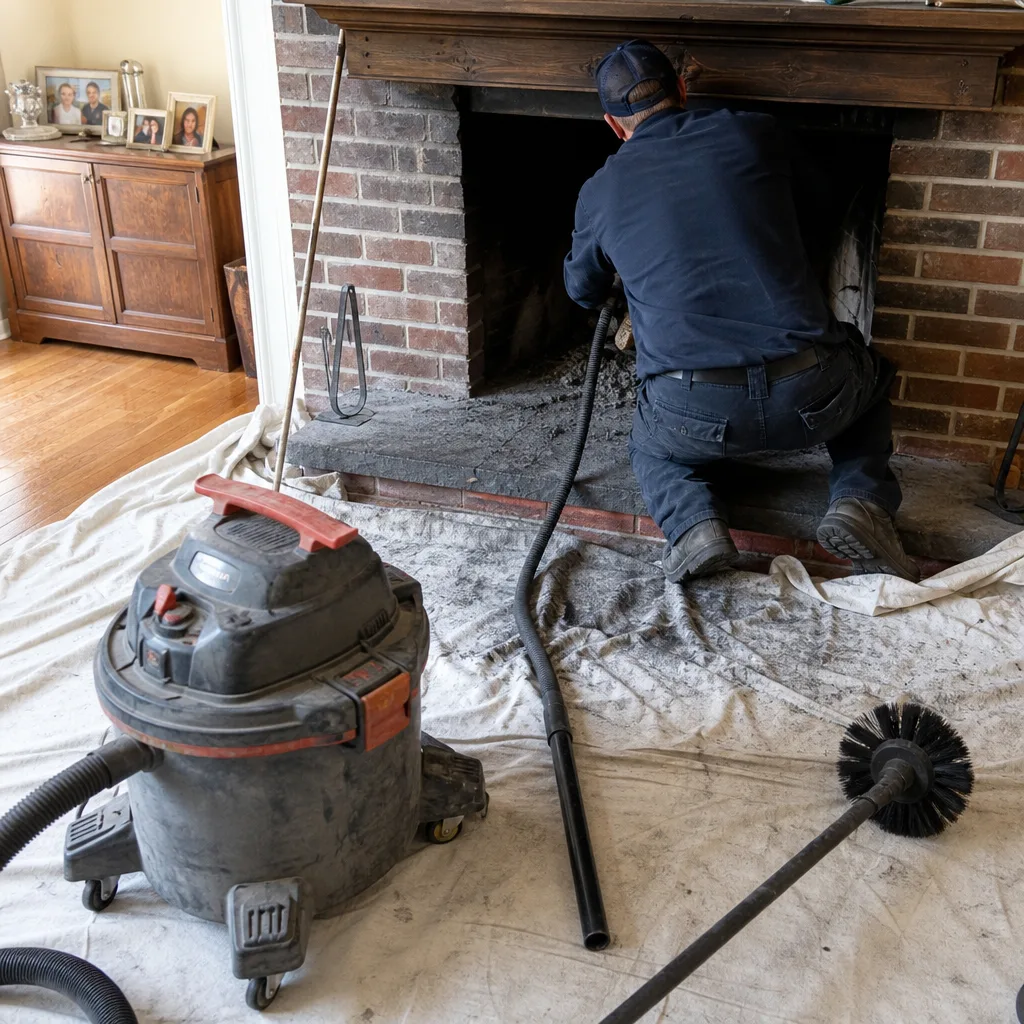 Before
 After
AfterGelco Flue Liner Replacement: The Leesburg Owner’s Guide
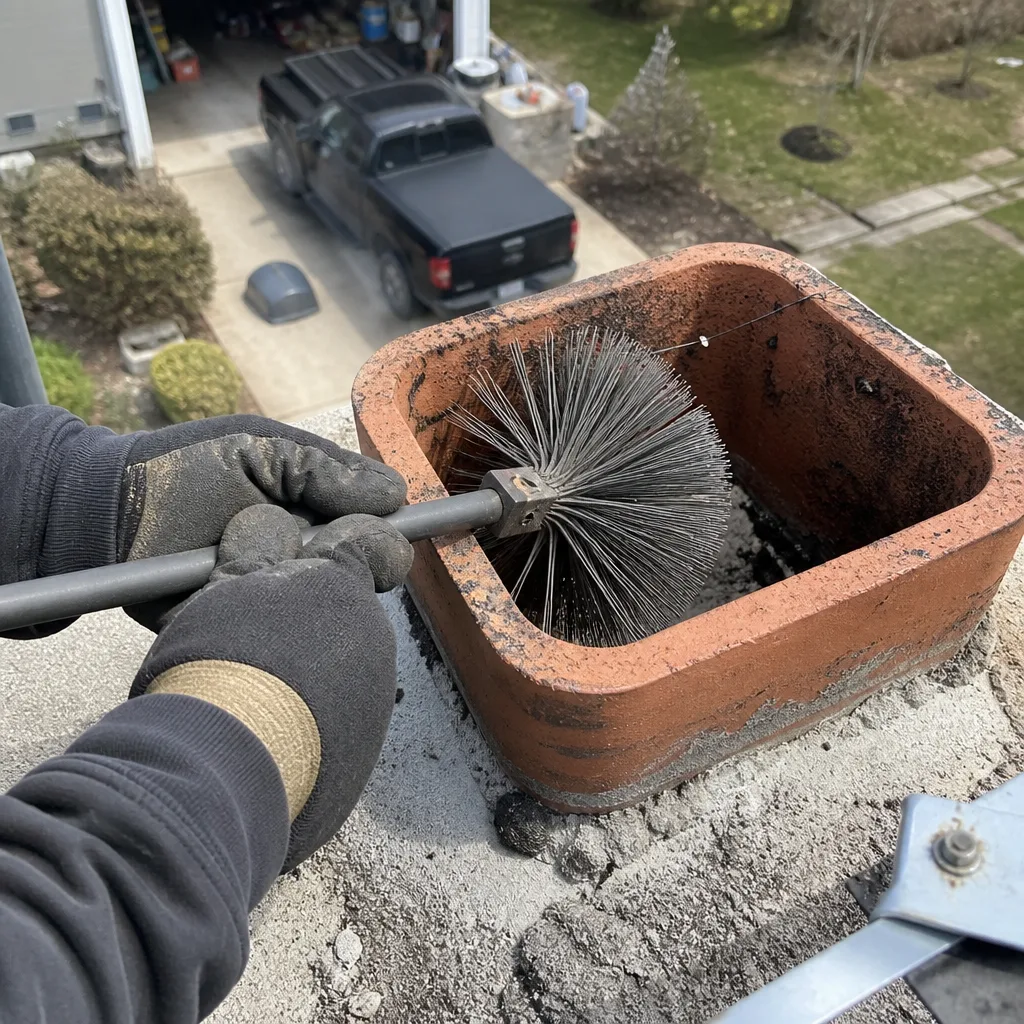
Gelco flue liner replacement in Leesburg typically runs $2,650 to $4,200 installed for a standard single-story chimney, and we stock Gelco liner on our trucks, so most replacements are done the same day we inspect. You’ll usually discover the problem one of two ways: a chimney sweep flags it during a routine cleaning, or you notice fine sandy grit at the base of your firebox and thin flakes of clay tile that used to be your liner. Either way, the fix is the same - measure the existing flue, match the Gelco liner to the appliance and the chimney’s interior dimensions, and document every step so you can see exactly what was replaced.
Level Two Chimney Leesburg is an independent service provider, not affiliated with Gelco, but we’ve installed and retrofitted their liner systems throughout Loudoun County since we opened in 2009. Corrine Halstead has pulled more failed clay tile liners out of Leesburg chimneys than she cares to count, and she’ll tell you the same thing she tells every customer: the camera doesn’t lie, and neither does the price she writes down before she starts.
Which Gelco Models This Applies To
The Gelco flue liners we replace in Leesburg fall into two broad families: the 300-series rigid stainless liners that come in 24-inch interlocking sections, and the flexible 316L alloy liners used for relining existing masonry chimneys without tearing them apart. The largest compatibility gotcha we see is diameter: Gelco liners are sized to the appliance’s BTU output and the flue’s interior cross-section, not to whatever the previous owner happened to have lying around. A liner that’s one inch too narrow creates draft restriction; one that’s too wide never gets hot enough to establish proper draft in the first place. We measure both the appliance collar and the flue interior before we recommend anything, because matching a liner to an existing chimney in a 1990s Leesburg colonial is not a guess-and-hope job.
You can usually identify what’s in your chimney by checking the cleanout door at the base of the flue or the top termination cap. Gelco stamps their liner sections with a size marker, usually a designation like “GL300-6” for a 6-inch 300-series rigid section. Aftermarket equivalents made from the same 316L stainless exist, and they can work, but we stock Gelco on the truck because the interlocking seams are more forgiving to work with in chimneys that have shifted slightly - which is common in Leesburg when you’re dealing with older homes near Balls Bluff Battlefield where the stonework and original clay tile liners still turn up surprises.
Signs Your Gelco Flue Liner Replacement Is Failing
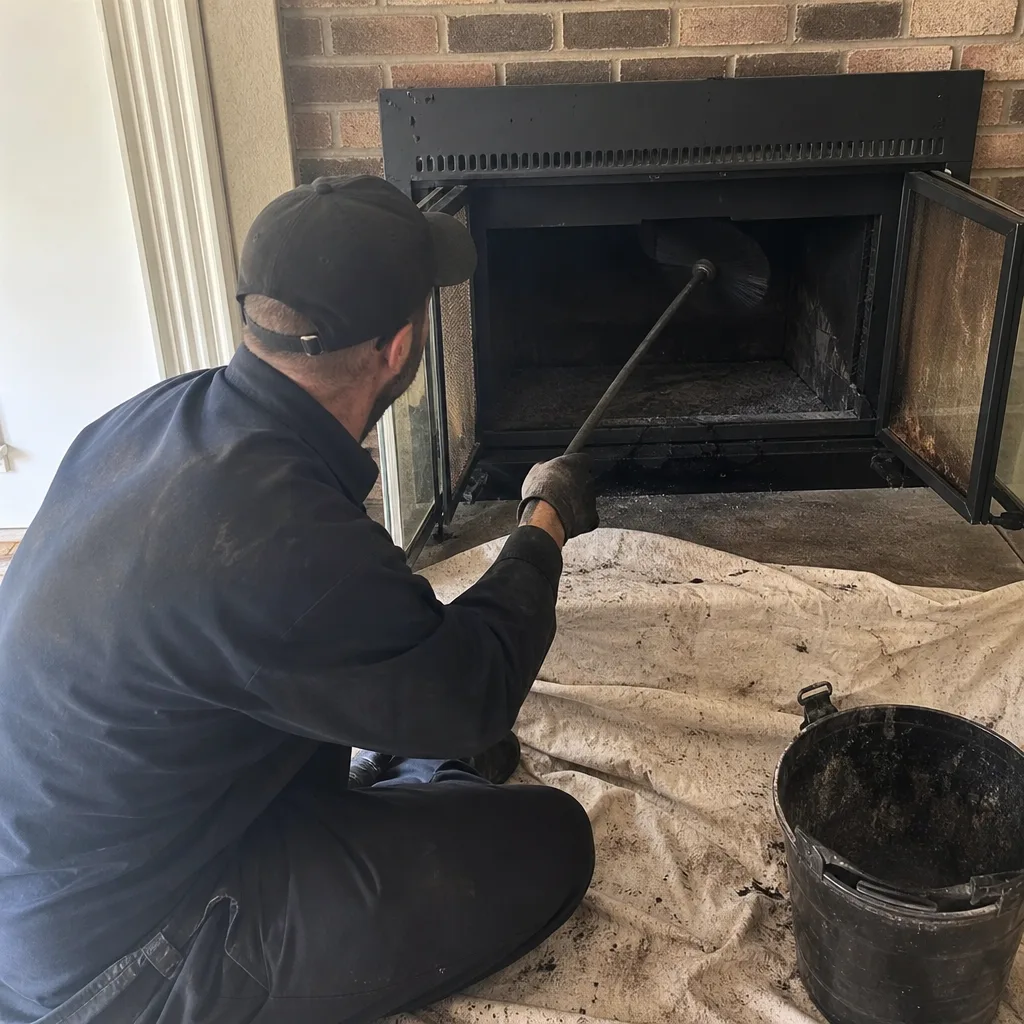
Most liner failures we see in Leesburg are not dramatic. They accumulate slowly, and by the time a homeowner notices, the liner has usually been compromised for a season or two. Here’s what we actually find when the camera goes down the flue:
- Flakes of clay tile in the firebox or at the cleanout door. This means the original clay liner above the Gelco section is spalling - shedding thin, curved shards. Heat cycling does it. A Gelco replacement is usually sized to fit inside the damaged clay liner, not replace it entirely, so this is often the first physical sign that something above or below the stainless section has moved.
- A hairline crack running vertically along the flue tile, visible during a bright-light inspection. Cracks open and close with temperature. When they’re open during a burn, hot gases and creosote vapor get into the void between the flue and the surrounding masonry. That’s how chimney fires start in walls.
- Water staining on the chimney breast or ceiling near the flue chase. A liner that has separated at a seam or rusted through at the bottom lets condensation and weather into the chimney’s interior structure, not just out of it. In Leesburg’s freeze-thaw winters, trapped moisture expands and accelerates masonry decay.
- A persistent campfire-smoke smell in the room, even with the damper closed. When a liner no longer pulls a proper draft, combustion byproducts find the path of least resistance. That path is sometimes your living room.
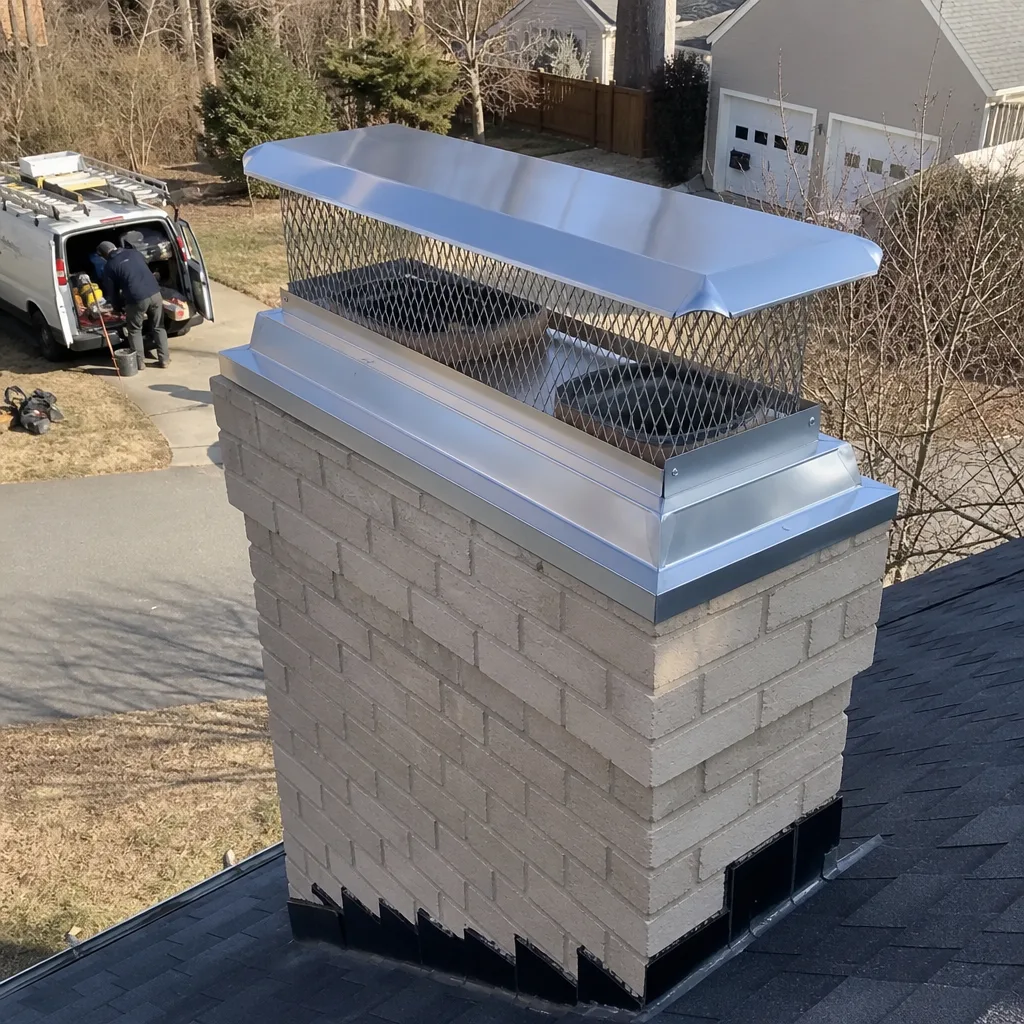
- Visible rust or scaling on the outside of the Gelco section when viewed from the top down. 316L stainless resists corrosion well, but the alloy is not invincible. We see rust more often on liners that were installed without a proper top plate or rain cap, which lets rain run directly down the outside face of the liner for years.
BeforeAfterReplacement Cost & What’s Included
For a standard one-story masonry chimney in Leesburg, a Gelco flue liner replacement runs $2,650 to $3,600 installed. For a two-story chimney or one with an offset flue configuration that requires a pull cone and extra rigging, expect $3,600 to $4,200. The range breaks down simply: the liner itself is a known cost that we pass through without markup, and the labor is the variable. We quote a written price before any work begins, and that price includes the liner section or flexible length matched to your flue, the top plate and rain cap, the connector and seal at the appliance, and a full documented photo record of the finished installation. No surprise charges, no “we discovered something” phone calls mid-job. If we find additional damage once the old liner is out, we show you the camera footage, tell you what it costs to fix now, and you decide. Clause 1 of the Haven Standard: a written price, written scope, and written warranty before anyone starts.
Every Gelco liner replacement we install in Leesburg is covered by the 365-Day Done Right Promise. If it’s not done right, we make it right.
DIY or Call Us?
We’re going to be honest with you: removing and replacing a flue liner is not a weekend project. It involves working at height, handling stainless sections that are sharp and awkward, and in many Leesburg chimneys, dropping a liner down a flue that has a surprise bend or offset that you cannot see from either end. If you get the diameter wrong, the liner jams. If you force it, the liner tears. If you don’t seal the top plate correctly, water gets in. We’ve repaired enough DIY liner attempts to know that the $800 saved usually becomes a $2,400 correction. What you can safely do yourself is identify that something is wrong: check the cleanout door for fallen debris, look for staining on the chimney breast, and note whether the smell in the room gets worse when the wind blows from the east. Then call us at (571) 601-3174. We’ll put a camera down the flue and show you what’s there.
FAQs
A properly installed Gelco 316L liner in a Leesburg chimney typically lasts 20 to 30 years, but that assumes the top plate is sealed, the cap is intact, and the chimney is swept annually to prevent corrosive creosote buildup. We see Gelco liners fail in half that time when they were installed without a proper rain cap or when the homeowner burned unseasoned wood that produced Class III creosote - the thick, shiny, tar-like coating that eats through stainless from the inside out. A 15-minute camera inspection tells you where your liner sits on that timeline. Call (571) 601-3174 to schedule one.
Small repairs are possible at seams or at the top connection, but once the liner wall itself shows cracks, rust-through, or separation, patching is a temporary fix we won’t sell you as permanent. We will tell you plainly when a repair can safely wait and when it can’t. The deciding factor is whether combustion gases have a path into your home or your chimney’s masonry, because that’s not a liner problem anymore - it’s a safety problem. Bring us a photo or written estimate from another company and we’ll give you a free second opinion.
Most single-story replacements take 3 to 5 hours from setup to final camera verification. Two-story chimneys with offsets run 5 to 7 hours. We schedule the job with a named technician, call or text when we’re on the way, and leave you with a full photo record of the installed liner, the top plate, and the appliance connection. You’ll see the same footage we see.
Yes. We carry Gelco rigid sections and flexible 316L liner on our Leesburg trucks for the most common diameters we see in Loudoun County - 6-inch and 7-inch primarily, with 8-inch available next-day through our Leesburg supplier. We also stock equivalent materials from DuraFlex and HeatShield when a specific job calls for a different alloy or build specification. If your flue needs a size we don’t have on hand at the moment, we’ll have it within one day, and your written quote still stands.
Written by Corrine Halstead, Owner, Level Two Chimney Leesburg at Level Two Chimney Leesburg, serving Leesburg and nearby areas.