
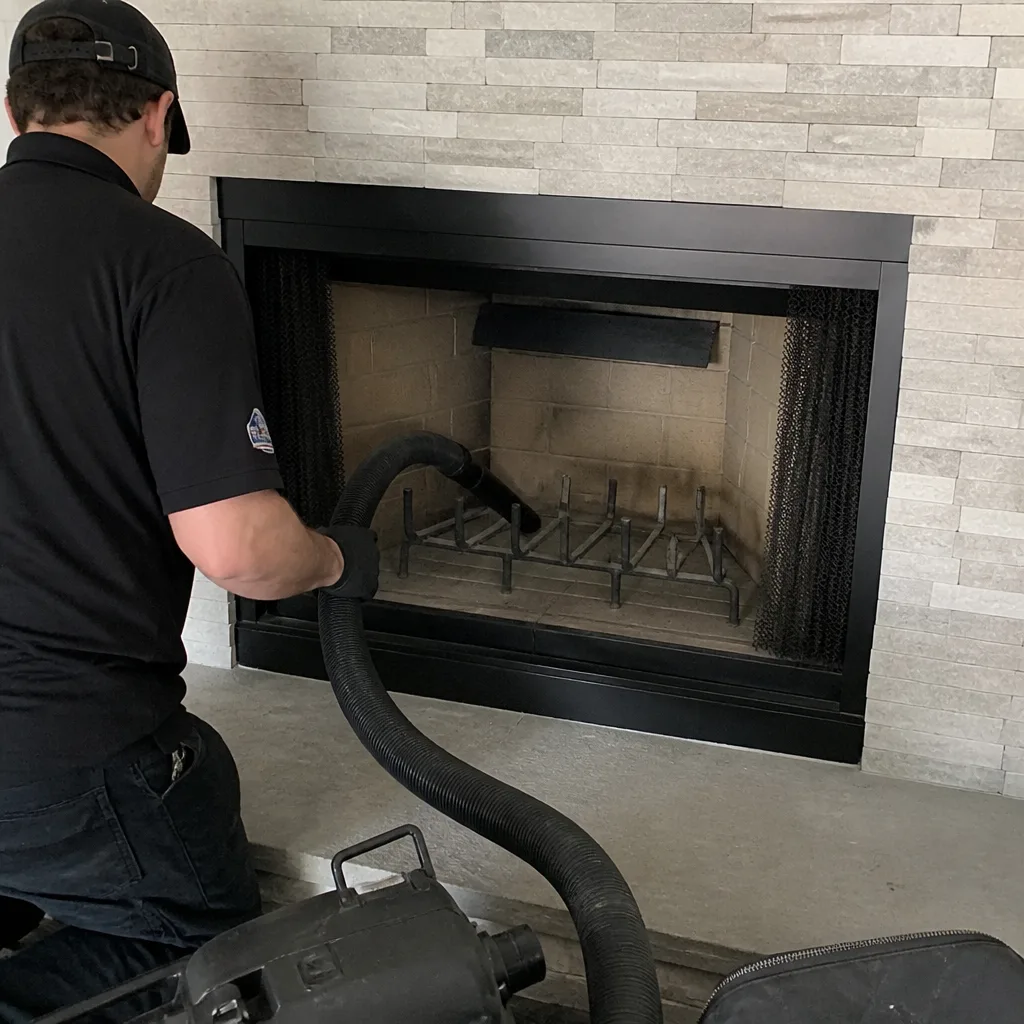
Level 1 sweep and inspection to the NFPA 211 annual standard - flue, crown, cap, and flashing checked and photographed
Chimney sweep logs do not sweep chimneys. They loosen some creosote - which then falls where a brush and vacuum still have to collect it.
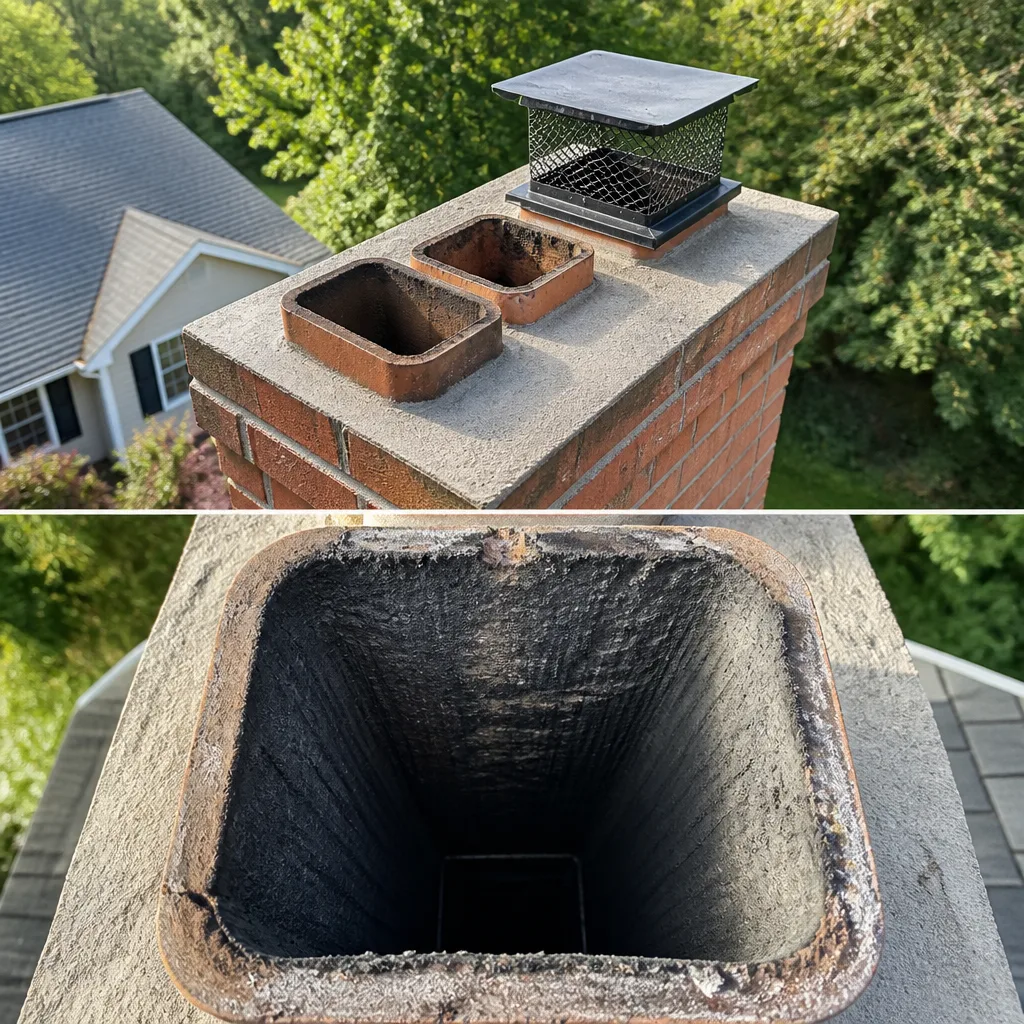
 Before
 After
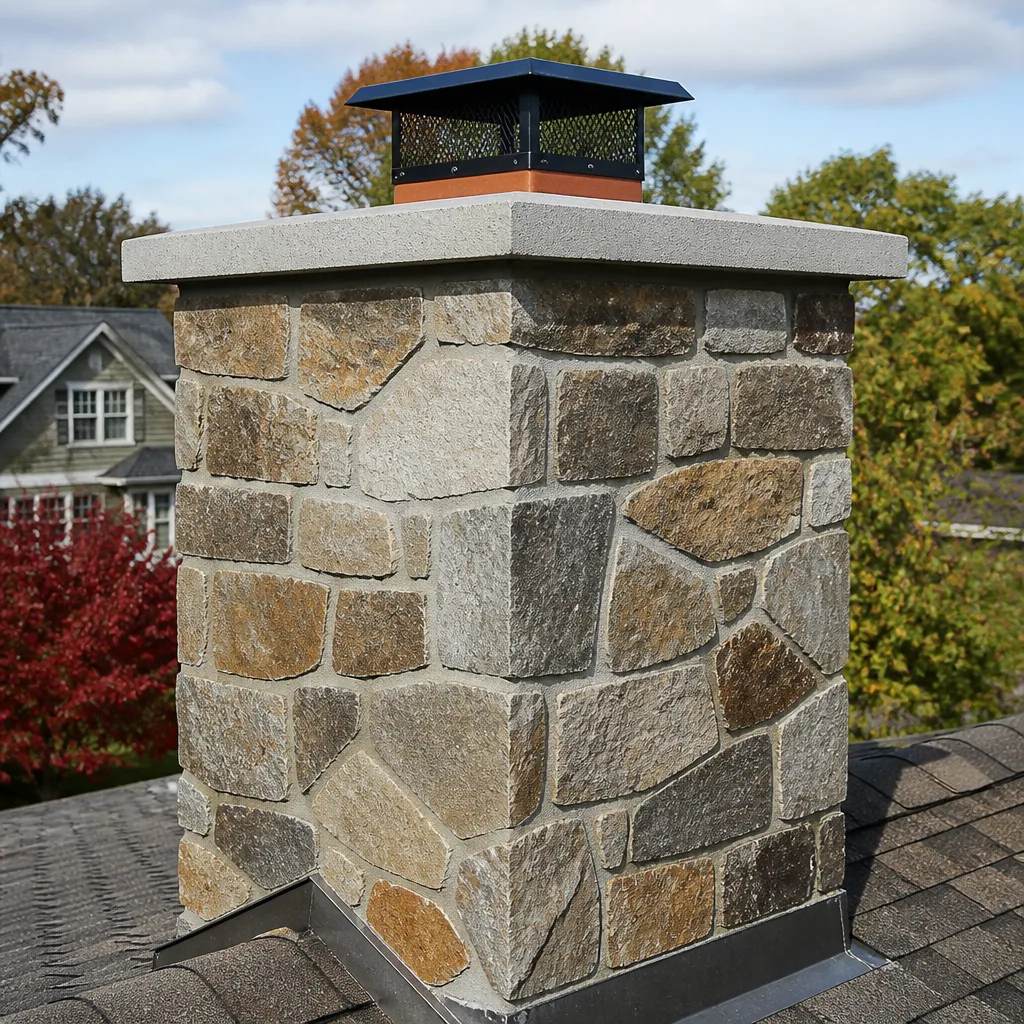
After Before
 After
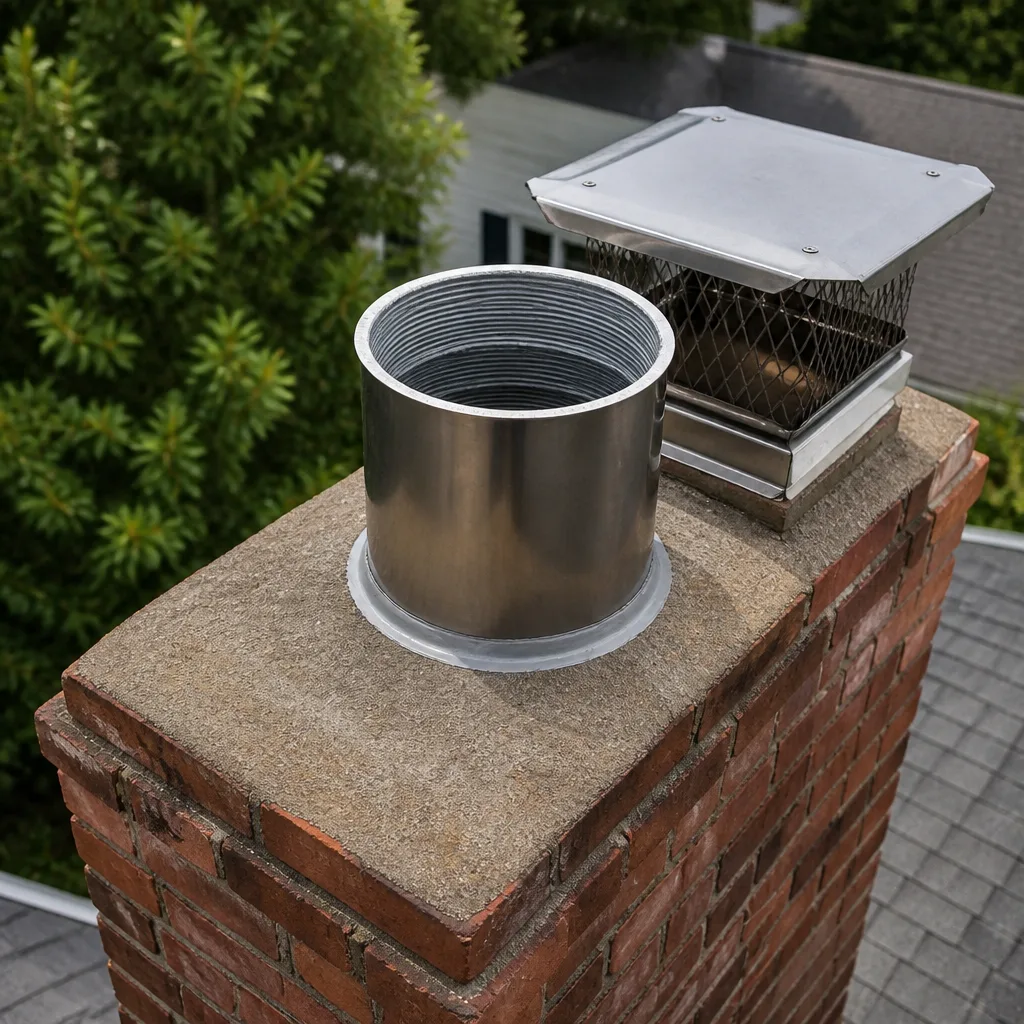
After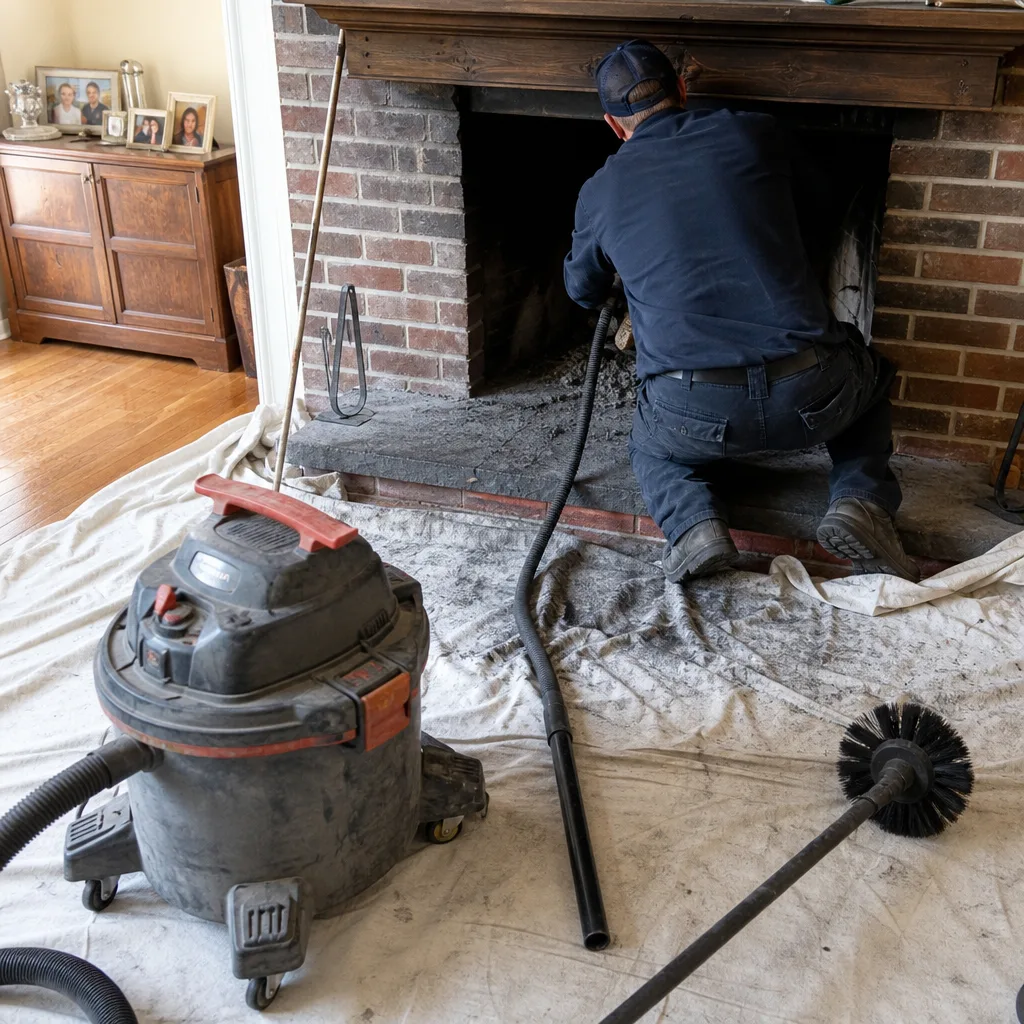 Before
 After
AfterDuraFlex Flue Liner Replacement: The Leesburg Owner’s Guide
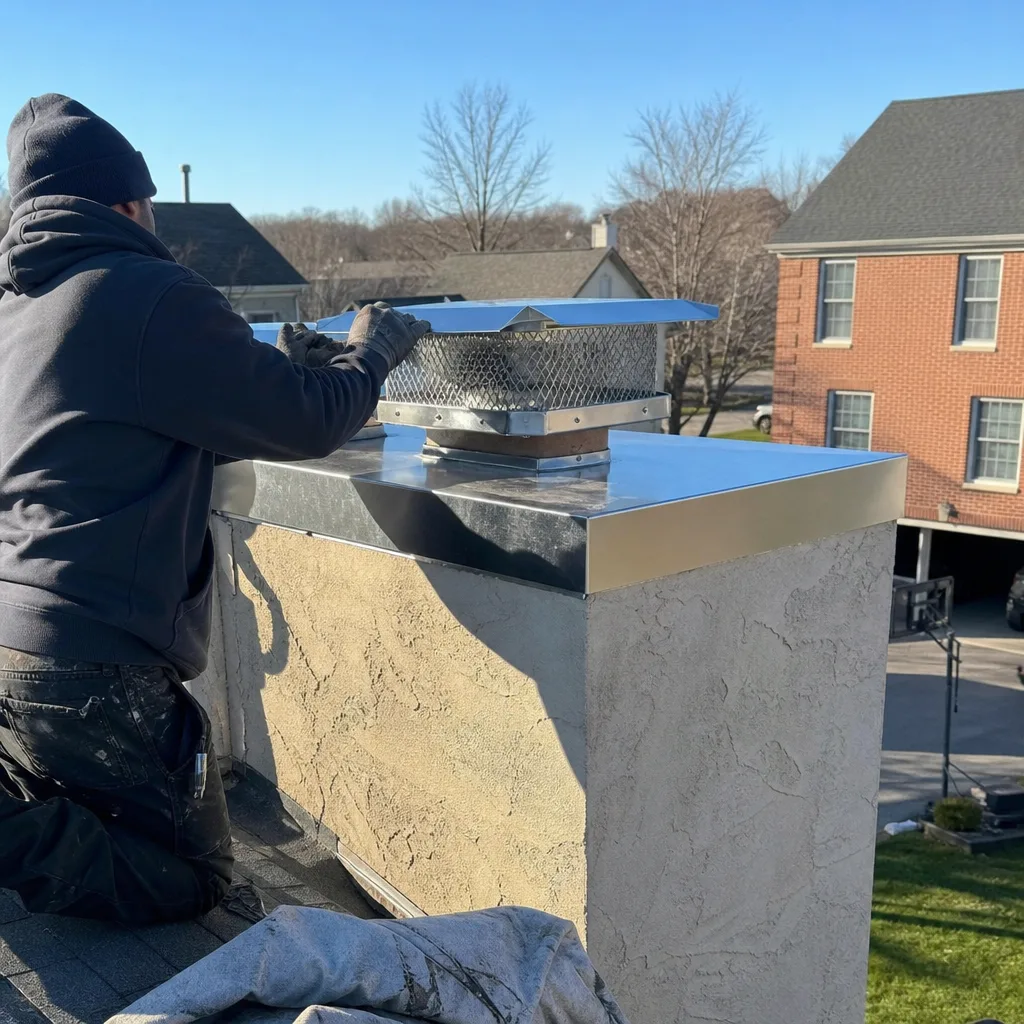
A DuraFlex flue liner replacement in Leesburg typically runs $2,800 to $4,600 installed, depending on flue height, liner diameter, and whether the old liner comes out cleanly or fights us on the way up. We stock DuraFlex-compatible liners and the matching connectors, top plates, and rain caps on our trucks, so most replacements in Leesburg happen in one visit, usually three to five hours.
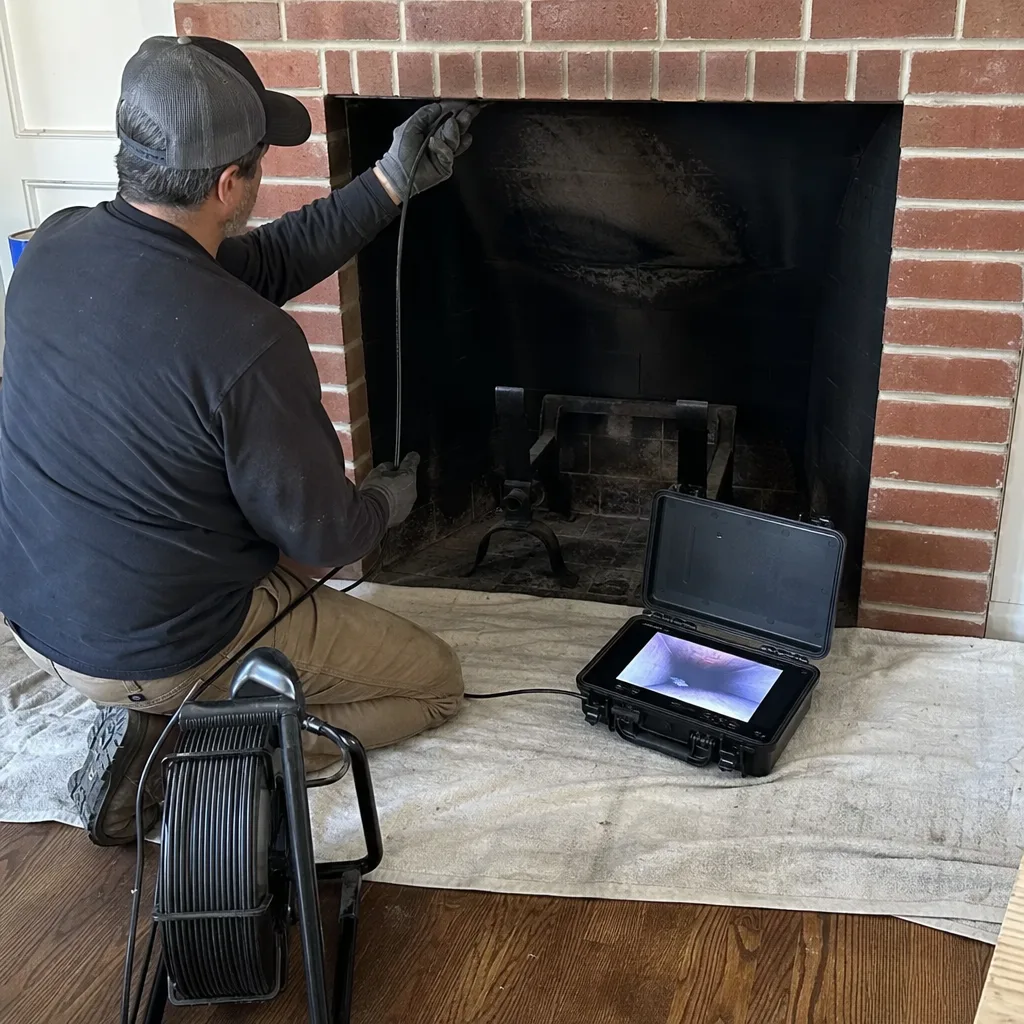
Most homeowners find out their DuraFlex liner has failed the hard way: a home inspector flags it during a pre-sale check, or a sweep finds a tear during an annual cleaning, or the furnace starts venting into the house instead of up the flue. The common thread is that the failure was invisible from the outside until someone put a camera down there.
Key takeaways:
- We stock DuraFlex-compatible flue liners in 4″, 5″, 5.5″, 6″, and 8″ diameters, with aluminum and 316L stainless options
- Every replacement includes a camera-scan inspection before and after, with the photo record delivered to you
- Written price before work starts, no exceptions (Haven Standard Clause 1)
- 365-Day Done Right Promise on every liner replacement we install
Which DuraFlex Models This Applies To
DuraFlex makes two primary liner lines in the residential market: the aluminum DuraFlex (sometimes labeled AF or AL series) for gas appliances, and the 316L stainless DuraFlex Pro or 316 series for oil, wood, and higher-temperature applications. Most Leesburg homes built between 1985 and 2015 that have a retrofitted liner are running one of these two.
Here’s the compatibility gotcha nobody tells you until the liner is already out: DuraFlex aluminum and DuraFlex stainless use different connector kits and different top plate assemblies. An aluminum liner’s connector will not seat properly on a stainless liner, and vice versa. If a previous contractor mixed brands or mixed series, that’s often the exact point where the failure starts. We see it regularly in older Leesburg neighborhoods like Exeter and Potomac Station, where liners were installed in the early 2000s by whoever was cheapest that week.
Identifying your liner: look for the etched label on the first few feet of liner visible from inside the firebox or at the top termination. If the label is gone (it usually is after ten years), we match by measuring the inside diameter and checking the corrugation pitch. DuraFlex uses a specific 7/8-inch corrugation spacing that differs from HeatShield and Gelco liners, which we also stock and install, so matching isn’t just about diameter.
For replacement, we recommend 316L stainless even when the original was aluminum. In Virginia’s freeze-thaw cycle, aluminum liners run through expansion and contraction every winter, and condensation from gas appliances accelerates pitting. Stainless costs more up front but outlasts aluminum by a factor of two to three in our experience. That said, if your original was aluminum and you’re not planning to stay in the house beyond five years, aluminum is still a defensible choice for a gas-only flue.
We’re an independent chimney service company in Leesburg, not a DuraFlex dealer or affiliate. We source DuraFlex-compatible parts because they’re consistent and available, not because anyone pays us to prefer them.
Signs Your DuraFlex Flue Liner Replacement Is Failing
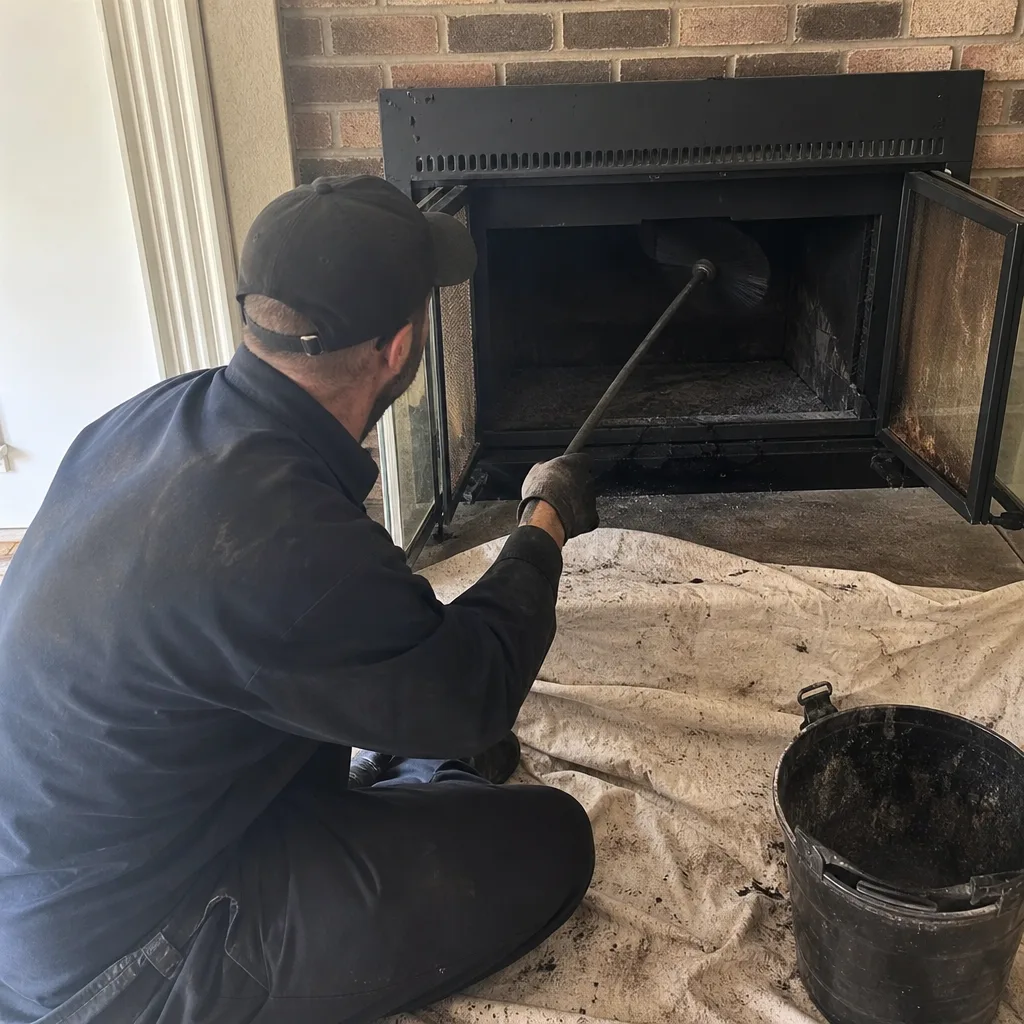
- Water in the firebox after heavy rain. This usually means the top plate or rain cap seal has failed, letting water run down between the liner and the chimney wall. The liner itself may still be sound, but the termination hardware has let go. Caught early, this is a $200 to $400 fix instead of a full liner replacement.
- Rust flakes or pinholes visible in the liner during a camera scan. Aluminum liners in particular show this after eight to twelve years in Leesburg’s humid summers. The pinholes start at the corrugation valleys where condensation pools. Once you can see daylight through a pinhole, combustion gases are escaping into the chimney cavity.
- A “gassy” or exhaust smell in the house when the furnace or water heater runs. That means flue gases are back-drafting or leaking through a breach. This is the symptom we hear about most often on the phone before anyone has looked at anything, and it should stop you from using the appliance until it’s inspected.
- Soot or staining at the cleanout door at the base of the chimney. This tells you the liner has a breach somewhere below and creosote or soot is falling into the gap between the liner and the original flue tile instead of going up and out.
- The liner has shifted or sagged visibly at the top termination. A liner that moves means the top plate or the support clamp failed, which often means the liner has been flapping in the wind and abrading itself against the old clay tile for months. By the time it’s sagging, the wall is usually thin enough to tear by hand.
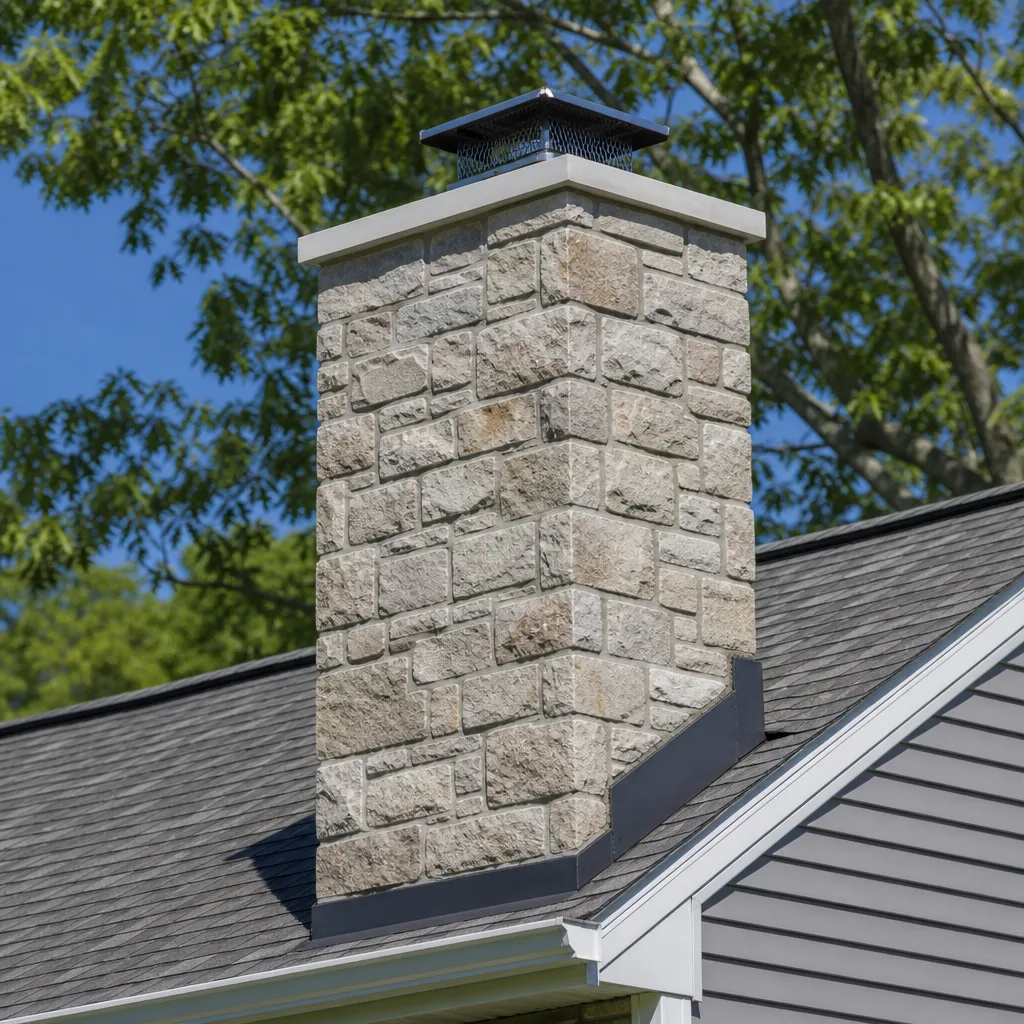
BeforeAfterReplacement Cost & What’s Included
In Leesburg, a full DuraFlex flue liner replacement runs $2,800 to $4,600 installed. Here’s what moves the number:
- Flue height: a one-story ranch in Exeter versus a three-story colonial in Raspberry Falls doubles the liner footage and the labor to pull and set it
- Liner diameter: 8-inch liners cost about 40% more per foot than 4-inch
- Material: 316L stainless runs $12 to $18 more per foot than aluminum, installed
- Old liner removal: some come out in one pull. Some have been cemented into the clay tile by a previous contractor and take an extra hour or two of careful extraction, which we’ll quote before we start
Every replacement we write in Leesburg includes: the liner, connector, top plate, rain cap, and any adapters needed to match your appliance. It includes camera-scan before and after, with photos added to your file. It includes cleanout of any debris in the flue cavity. And it includes a written warranty on the parts and the work, delivered before we touch anything, as Haven Standard Clause 1 requires.
The 365-Day Done Right Promise applies to every liner replacement. If it’s not right, we make it right.
DIY or Call Us?
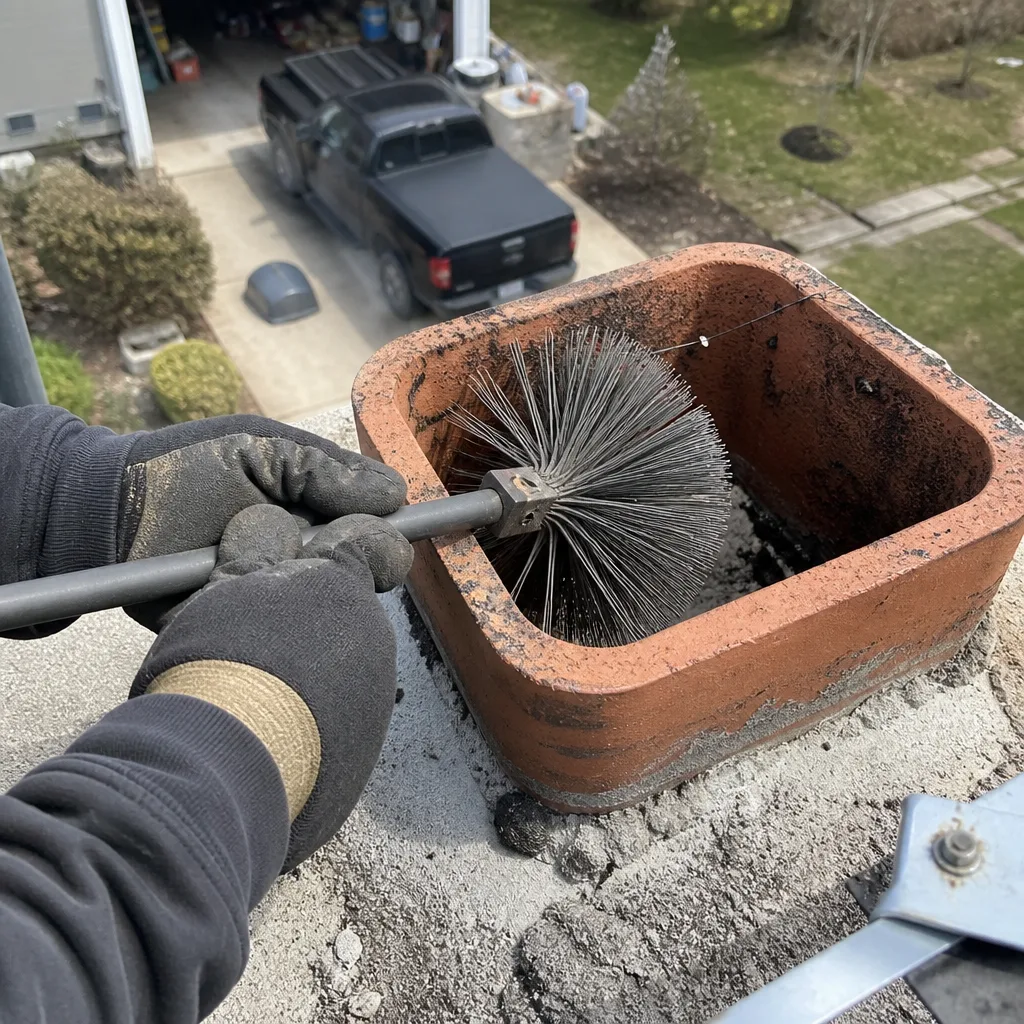
Here’s our honest split. You can safely inspect the top of your chimney from the roof to check whether the rain cap is missing or the liner has visibly separated. You can look at the cleanout and note any debris pile. You can note smells, stains, and sounds and write them down. That’s the extent of what we’d tell our own neighbors to do themselves.
The actual liner replacement is not a DIY job, and this is the part where we get direct with you. You’re working from a roof, pulling a twenty- to forty-foot flexible metal tube up through a confined masonry channel, and if it snags halfway and you yank it wrong, you can tear the new liner before it’s ever been fired. If you get the connection to the appliance wrong, you have what looks like a working fireplace but is actually venting carbon monoxide into the living space. That’s not a handyman-level job. That’s not even a general-contractor-level job. It’s a flue liner replacement, and it needs to be camera-verified when it’s done. Corrine Halstead has always told customers the same thing: the camera doesn’t lie, and neither does the price I write down before I start. We run a camera down every liner we replace and show you the footage before we call the job finished.
If you’re on the fence about whether your DuraFlex liner actually needs replacing, call (571) 601-3174 and we’ll camera-scan it and tell you what we see. If it needs work, you’ll get a written price. If it doesn’t, you’ll get the photos and we’ll go away. Free estimates, no pressure.
FAQs
A 316L stainless DuraFlex liner in a Leesburg chimney typically lasts 20 to 25 years with annual cleaning, while an aluminum liner typically lasts 10 to 15 years, due to condensation pitting and Virginia’s freeze-thaw cycling. The single biggest factor is whether the appliance is sized correctly to the flue, because an oversized liner runs cooler and condenses more, which kills it faster. Call (571) 601-3174 for a camera-scan inspection and we’ll tell you exactly where yours is in its lifespan.
Small tears at the top or bottom, near the connector, can sometimes be addressed with a resized connector or a short splice section, but a tear anywhere in the middle of the liner means full replacement, because mid-run splices create a new failure point and violate the liner’s UL listing. We’ll only tell you repair is an option if the damage is at a termination point and the rest of the liner is structurally sound on camera.
A typical single-family DuraFlex flue liner replacement in Leesburg takes three to five hours, including old liner removal, new liner installation, and the after-job camera-scan verification. We schedule one replacement per crew per day so we’re never rushing to get to the next house, and you’ll have a named technician and a text when they’re on the way.
We stock DuraFlex-compatible aluminum and 316L stainless liners in 4″, 5″, 5.5″, 6″, and 8″ diameters on our Leesburg trucks, plus the matching connectors, top plates, and rain caps, so most replacements are one-visit jobs. We also carry HeatShield and Gelco systems for cases where a poured-in-place or hybrid solution is the better call, and we’ll explain the difference in writing before you choose.
If your DuraFlex liner is showing signs of age or failure, call (571) 601-3174. We’ll camera-scan it, show you what we found, and put a written price in your hand before any work happens. That’s Clause 1 of the Haven Standard, and we’ve worked that way on more than 38,000 chimneys since 2009.
Written by Corrine Halstead, Owner, Level Two Chimney Leesburg at Level Two Chimney Leesburg, serving Leesburg and nearby areas.