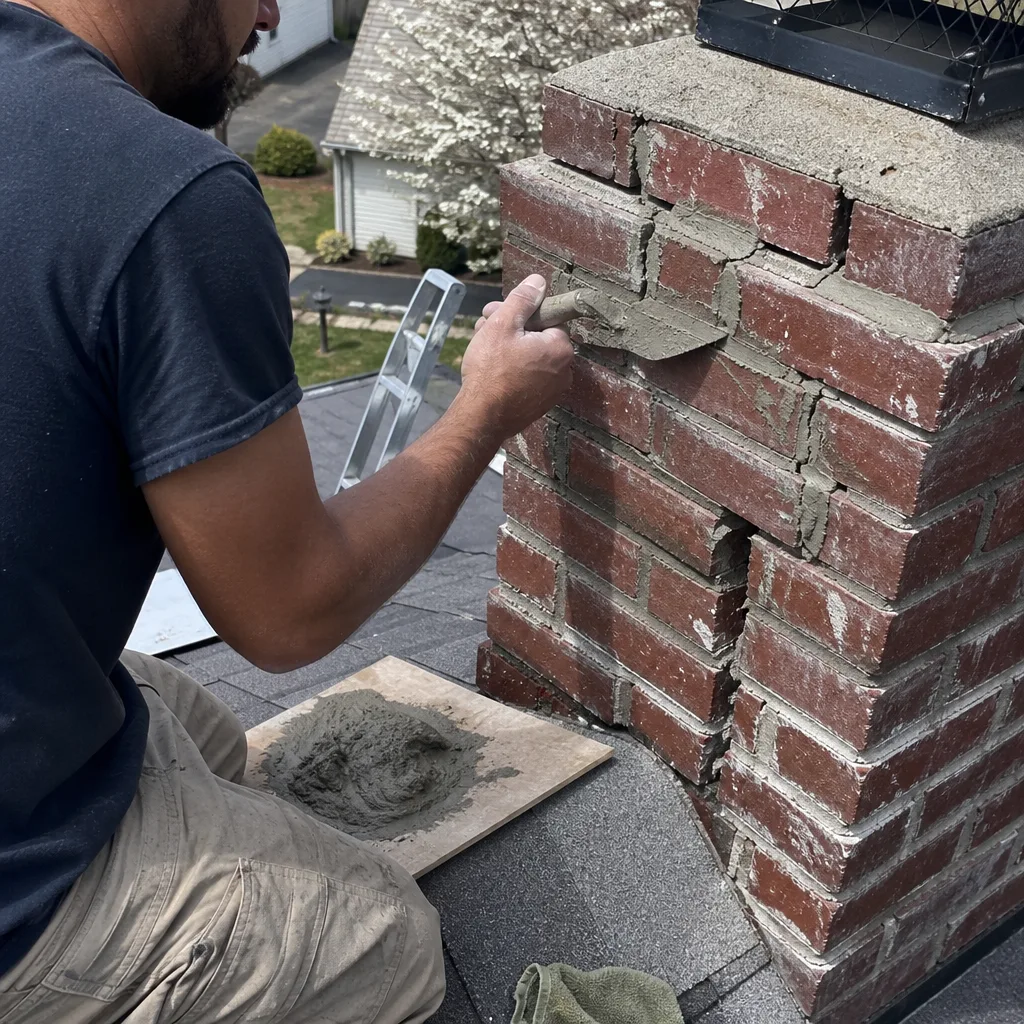
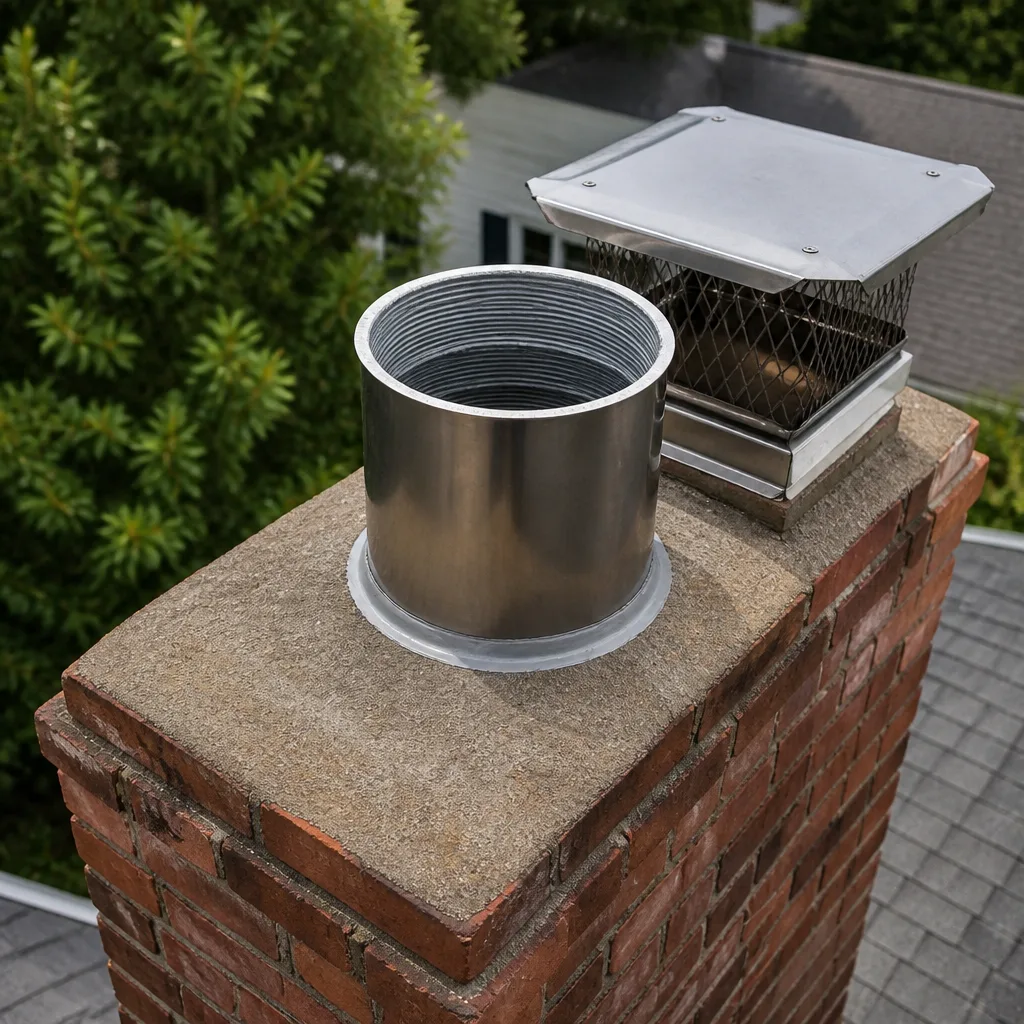
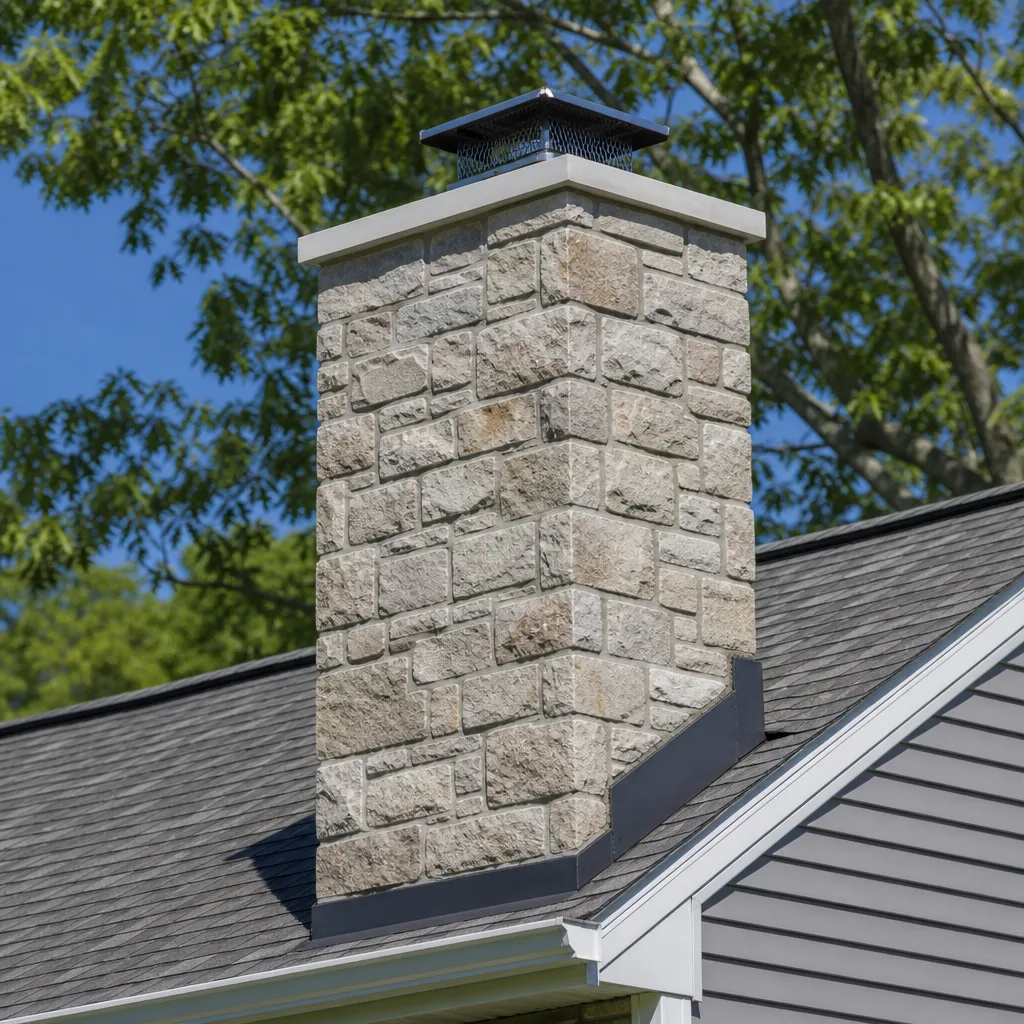
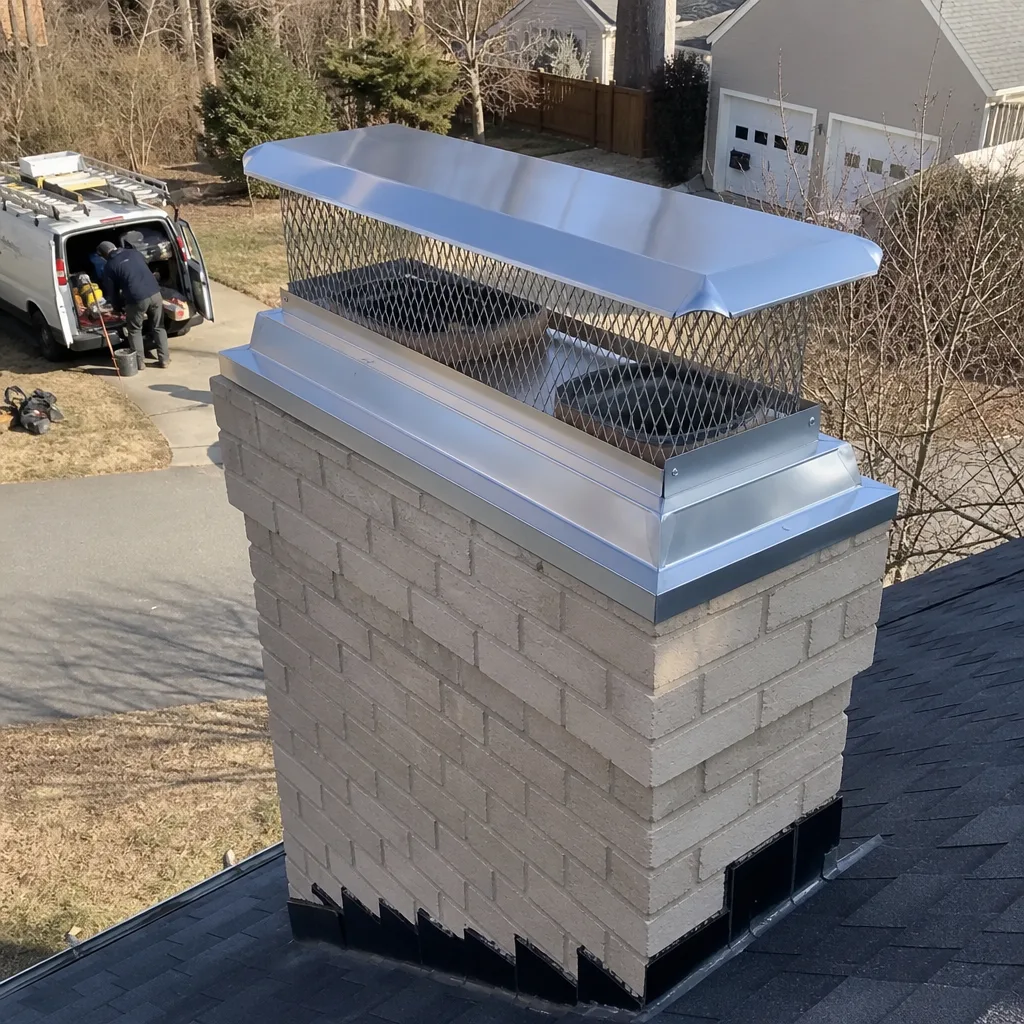
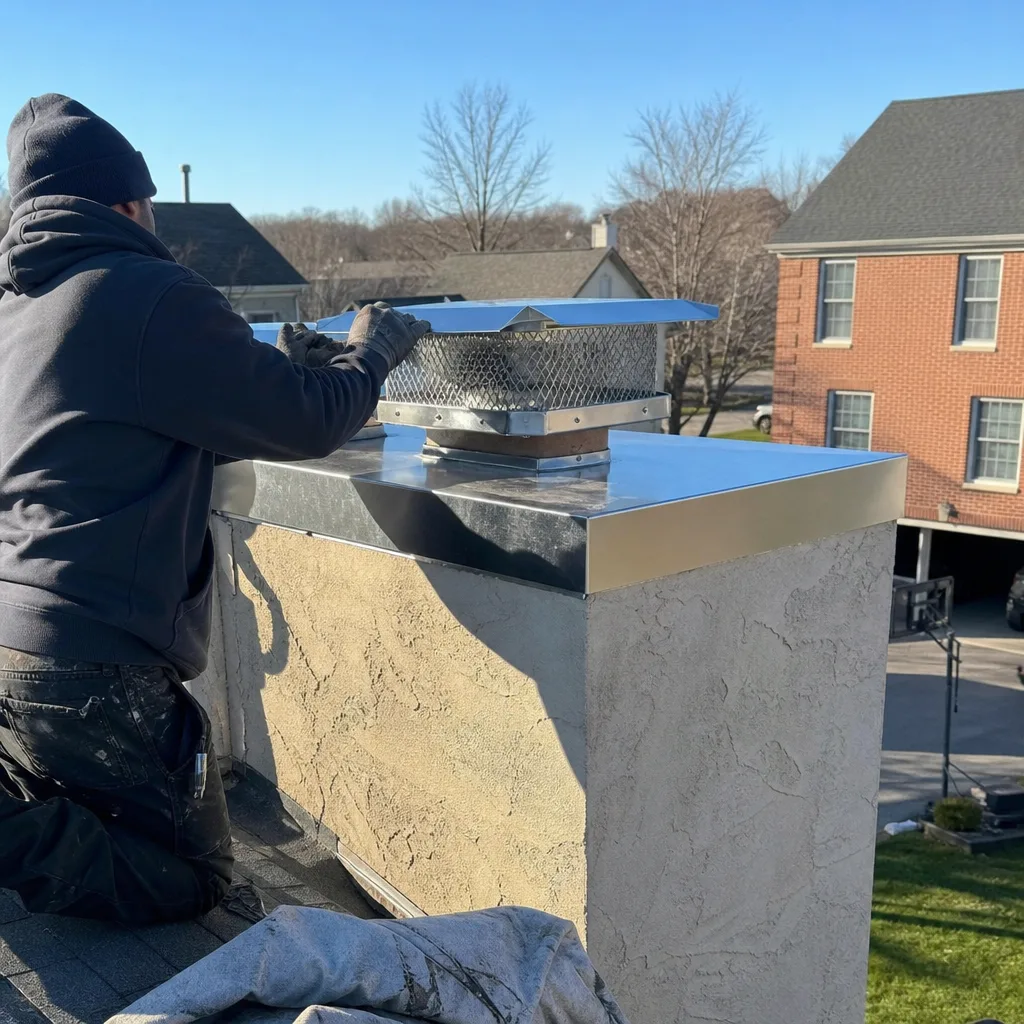
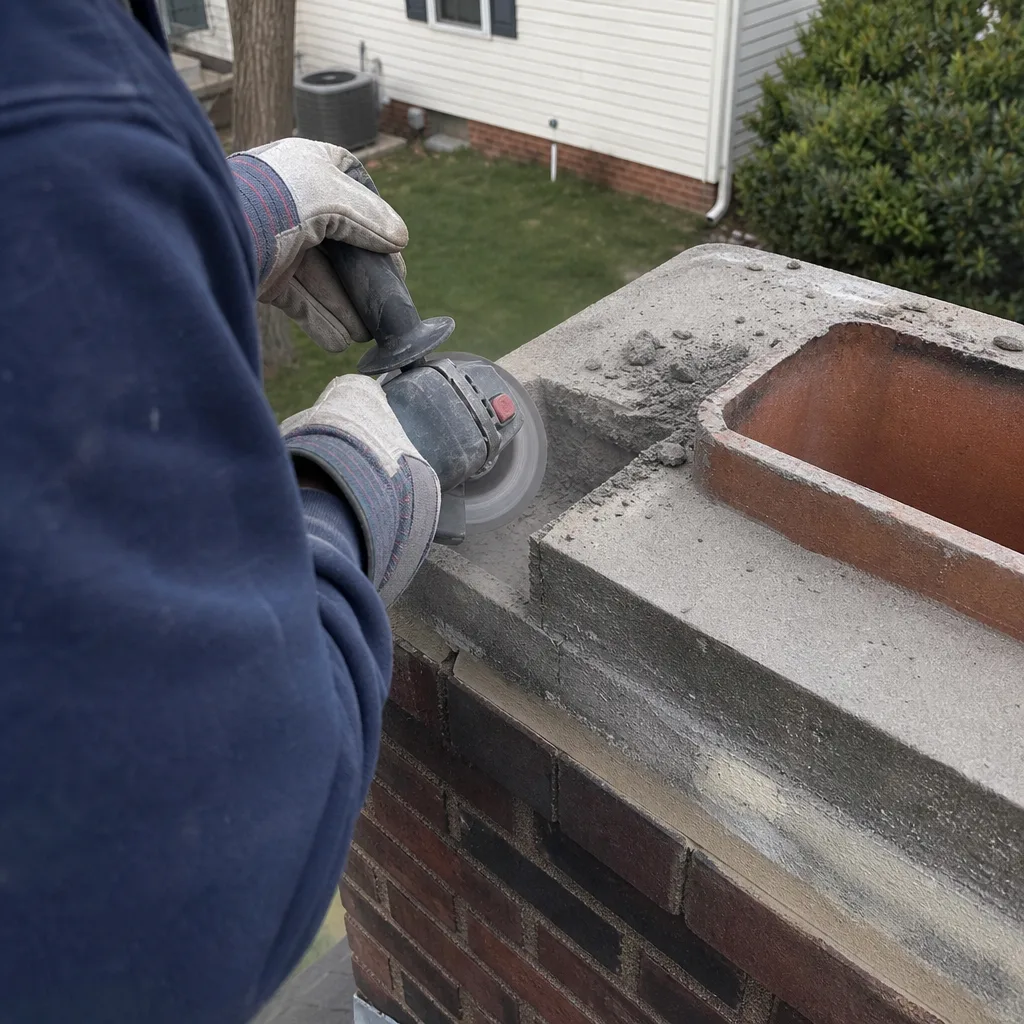
Level 1 sweep and inspection to the NFPA 211 annual standard - flue, crown, cap, and flashing checked and photographed
Chimney sweep logs do not sweep chimneys. They loosen some creosote - which then falls where a brush and vacuum still have to collect it.
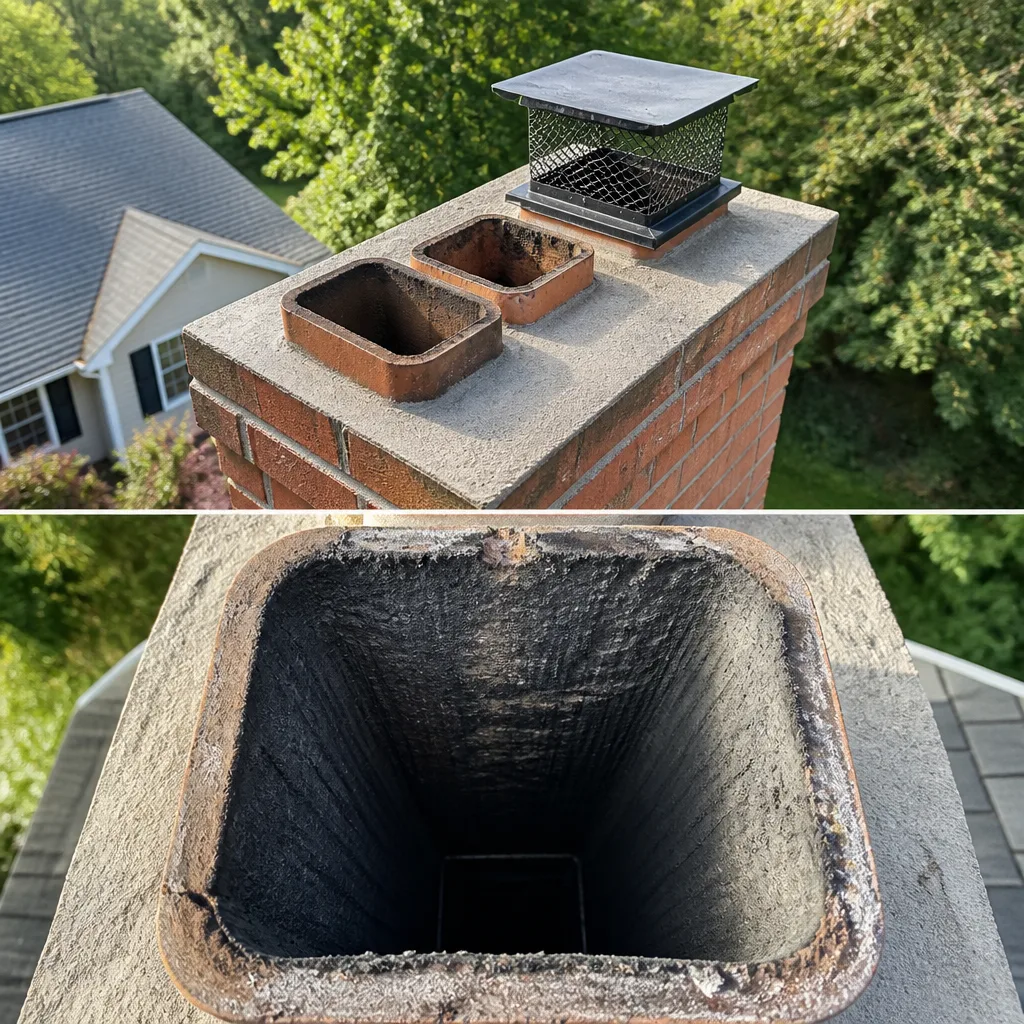
 Before
 After
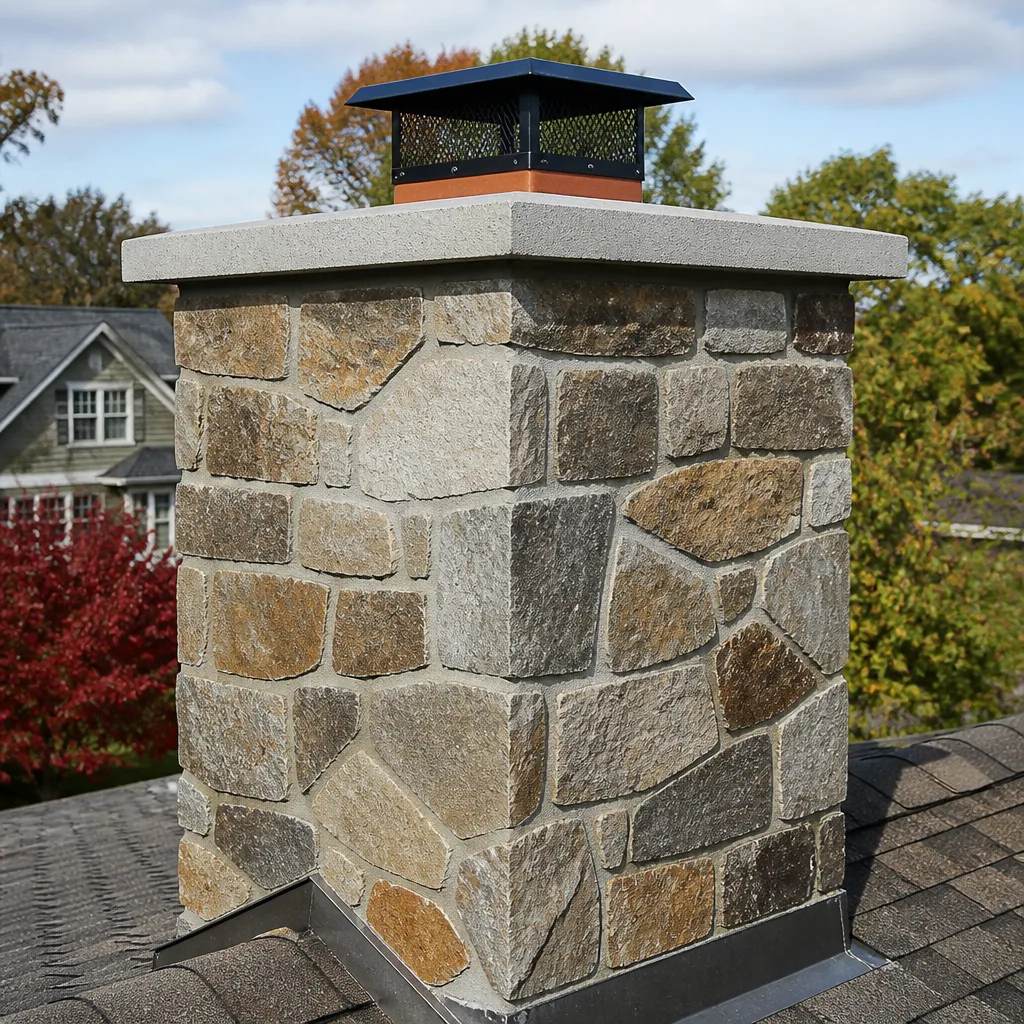
After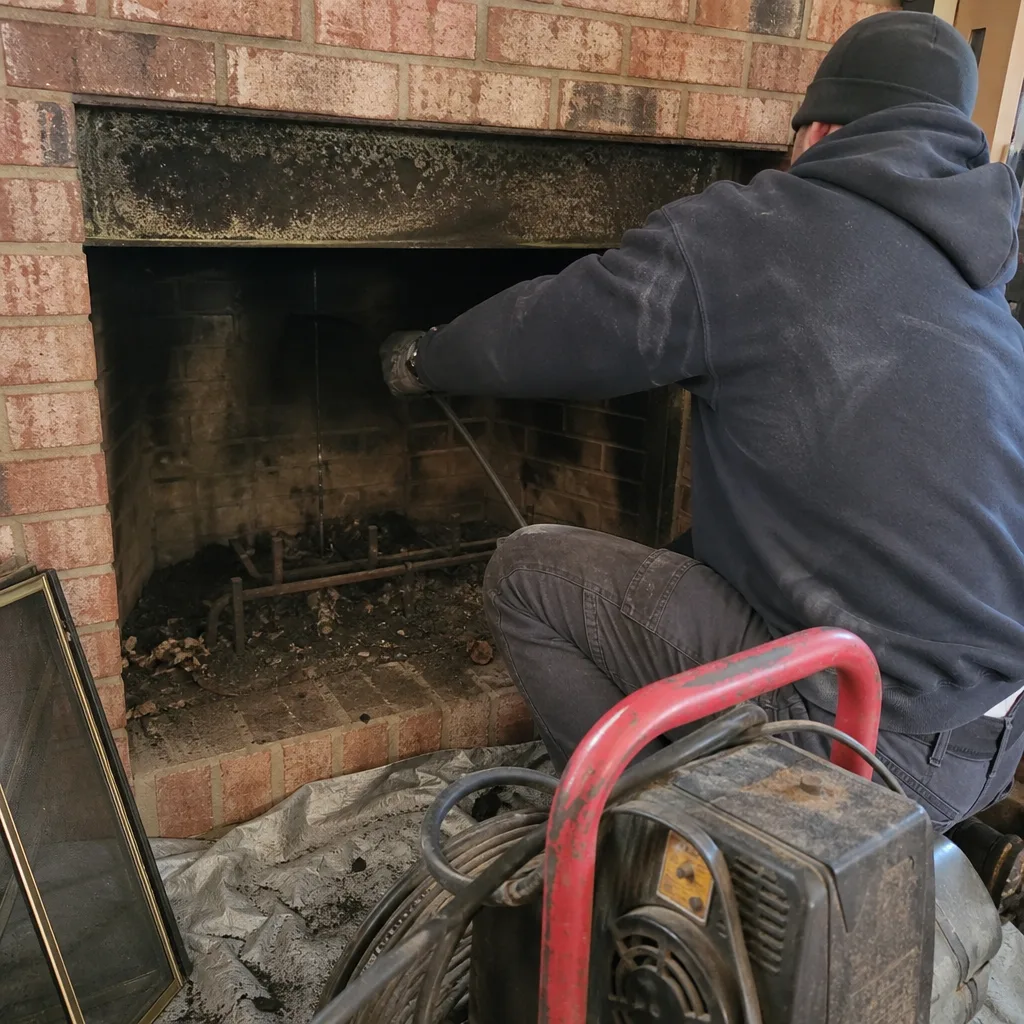 Before
 After
After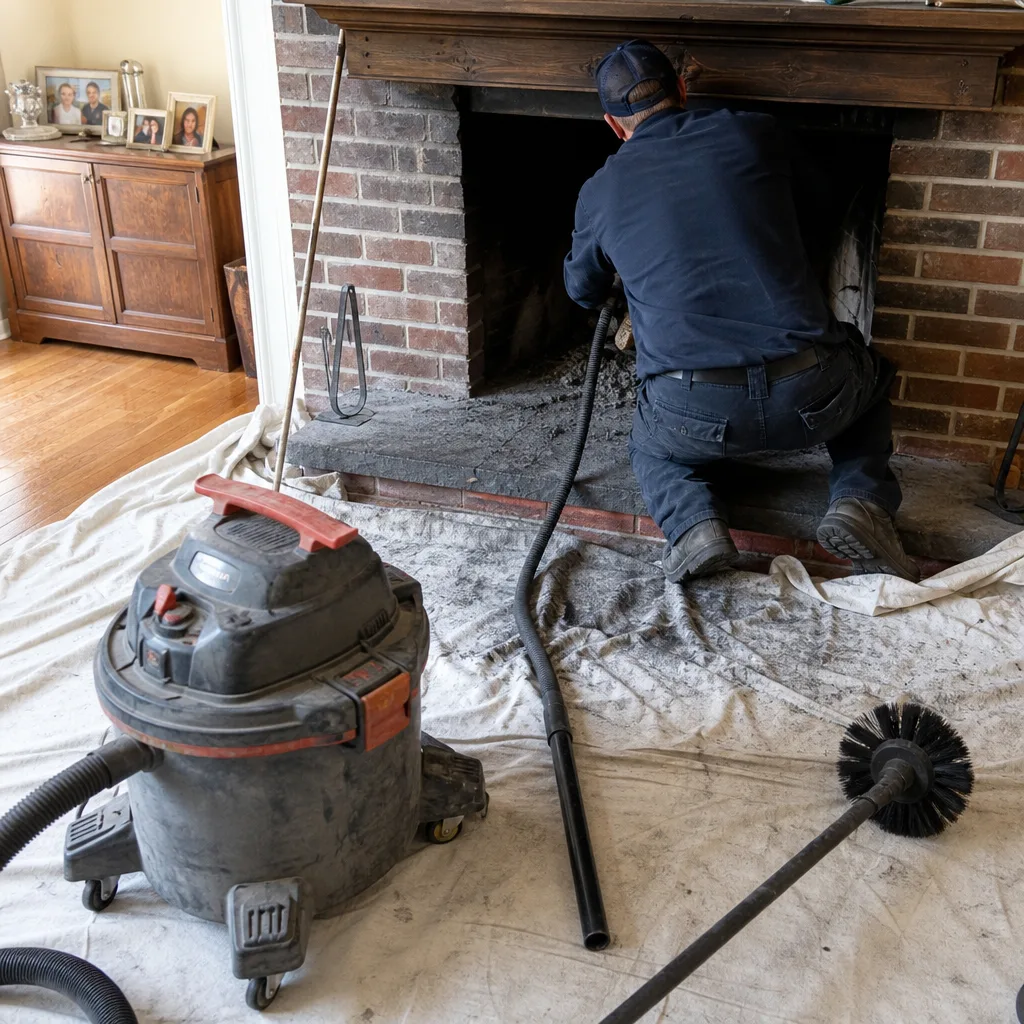 Before
 After
AfterFast, Reliable Chimney Cleaning & Sweep Across Great Falls
A chimney cleaning and sweep in Great Falls typically runs $249-$389 for a single flue with a standard masonry fireplace, and most jobs are done in 90 minutes to two hours. Multi-flue estate homes with two to five fireplaces usually land between $449 and $850 depending on flue count and creosote classification. That price includes a camera-scan inspection under NFPA 211 Level 2 and a documented photo record you keep. Call (571) 601-3174 for a written quote before anyone steps on your property.
We work Great Falls regularly, from the River Bend Road ridge lines down to the Route 7 corridor and the neighborhoods off Walker Road. The homes here aren’t like typical Fairfax County subdivisions. You’ve got 40-foot masonry chimneys, multiple flues, and woodlots that supply your firewood. That changes what a sweep actually involves. Our crews know what they’re walking into before they arrive.
Why Level Two Chimney Leesburg Is Great Falls’s Preferred Chimney Cleaning & Sweep Company
Great Falls homeowners tend to research before they call. They want to see a written price, a written scope, and a written warranty before work starts. That’s how we’ve operated since 2009. Clause 1 of the Haven Standard requires a written price before any work begins. No exceptions, no “call for a quote” runaround. The price you approve is the price you pay.
Our Chimney Cleaning & Sweep team has completed more than 38,000 chimney inspections and cleanings, and every single one included a camera down the flue and a photo record when the work was done. That practice became Clause 4 of the Haven Standard. It’s not an upsell here. It’s the default.
Corrine Halstead oversees our operations, and every tech assigned to a Great Falls job is background-checked and uniformed. You’ll get a text when the crew is on the way, and you’ll know the name of the person at your door before they arrive.
Response time to Great Falls is typically one to three business days for scheduled sweeps, with faster availability during shoulder season in early fall before burning ramps up. We are honest about lead times. If you call in late September, you’re competing with every other Great Falls homeowner who just remembered their fireplace exists.
Our Chimney Cleaning & Sweep Services in Great Falls
Level 1 Inspection
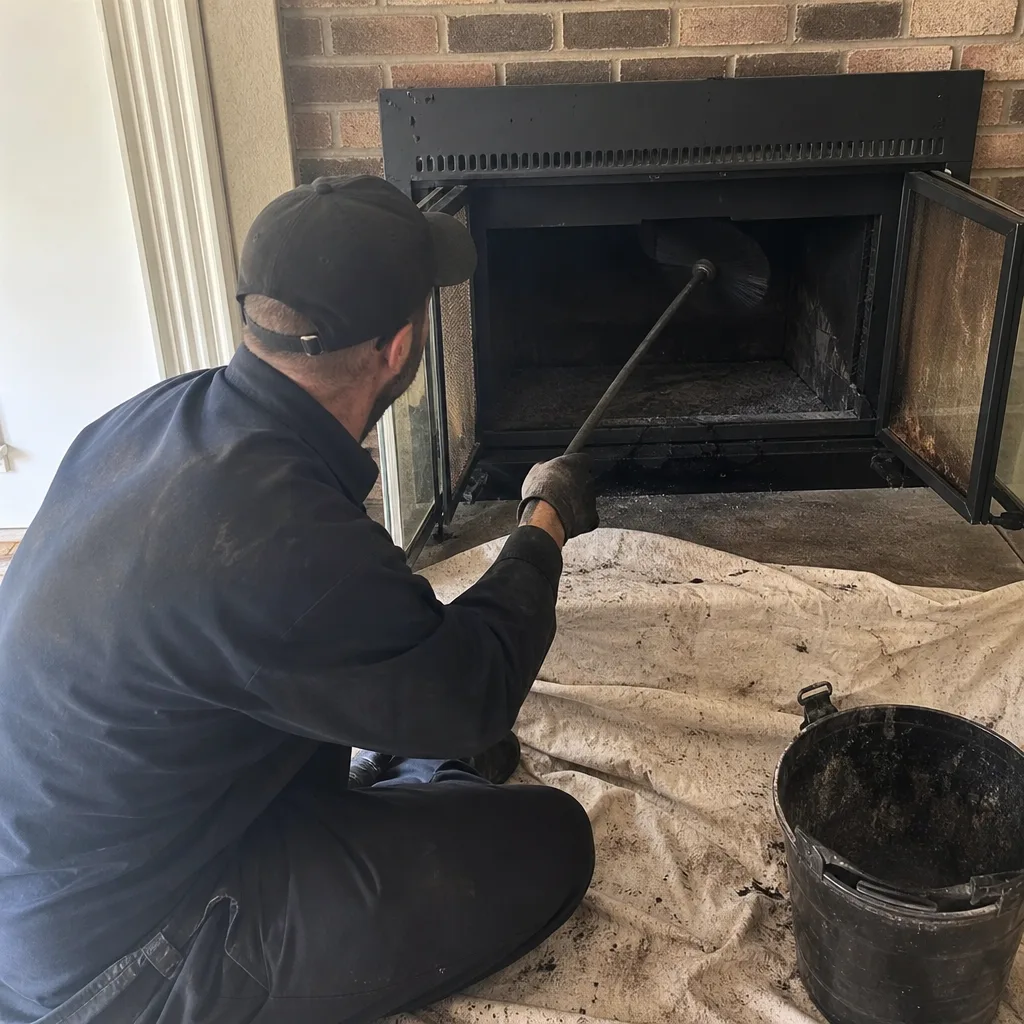
A Level 1 inspection is what we recommend for chimneys that see regular use and haven’t changed since the last sweep. We check the accessible portions of the flue, the firebox, the damper, and the exterior for obvious issues. For Great Falls homes burning seasoned wood without incident, this is usually paired with the annual sweep and takes about 20 extra minutes.
Level 2 Inspection
We push harder on this for Great Falls properties. Large custom homes often change hands, get gas inserts installed, or sit through years of thermal cycling on 40-foot chimneys. A Level 2 inspection puts a camera down the entire flue, checks the smoke chamber, and examines mortar joints for the spalling and cracking that develops on 1980s brick colonials after decades of freeze-thaw cycles. If you’re buying a home off Walker Road or Springvale Road, or you’ve converted a fireplace to gas, this is the inspection you want. It’s included with every sweep we do.
Creosote Removal
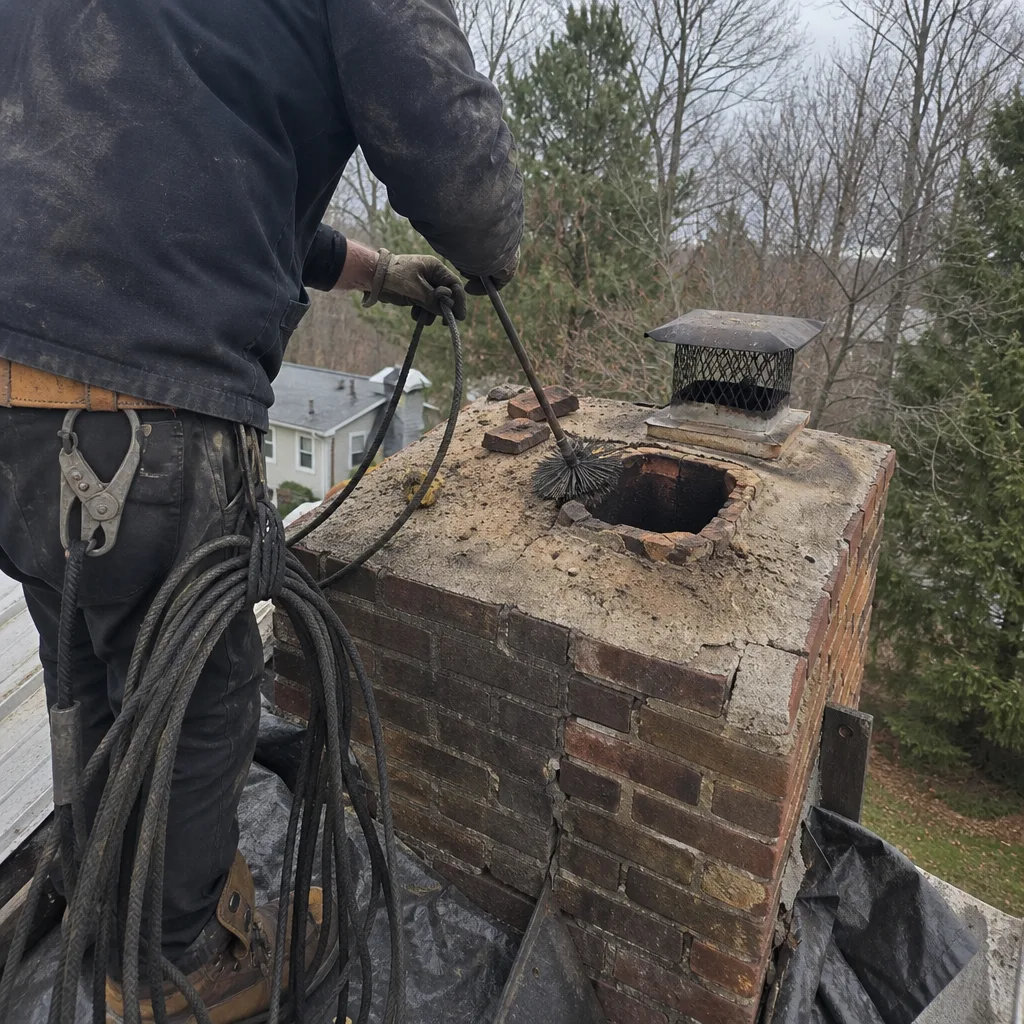
Third-degree creosote glaze is the thing that scares us on Great Falls properties. It forms when green or under-seasoned hardwood burns at low temperatures, and it hardens into a tar-like glaze that a standard brush cannot remove. We use mechanical rotary whips with flexible rods to break it up, then vacuum it out from the bottom. This is not a rare occurrence here. Homes burning self-sourced oak and hickory see stage-2 creosote by February that would take a typical suburban home a full year to accumulate.
Soot Removal
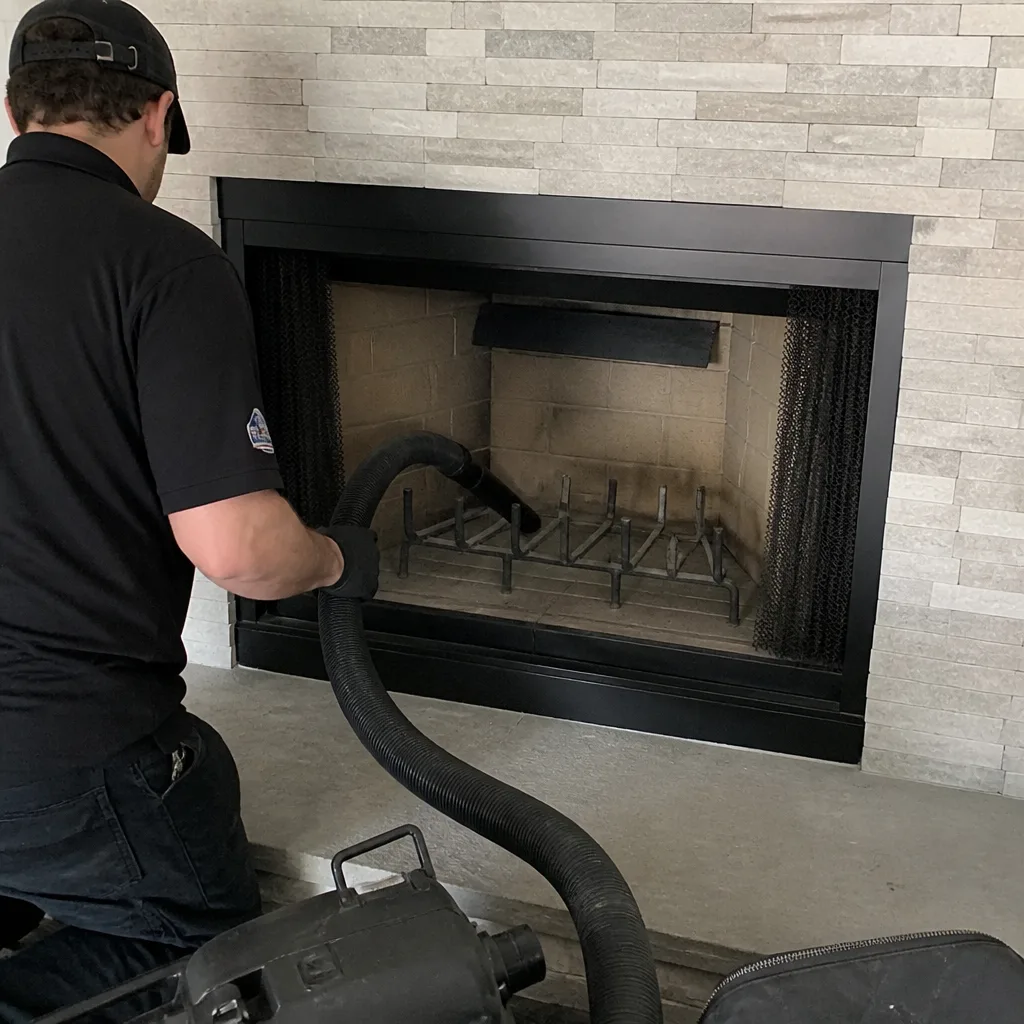
Soot is the lighter, powdery byproduct of drier, hotter fires. It’s what you typically find in gas fireplaces and wood-burning stoves that run hot. Soot removal is faster and less involved than creosote removal, but in Great Falls we rarely see soot without at least some stage-1 creosote mixed in. Our standard sweep handles both. We don’t charge extra for soot that comes out with the normal brush and vacuum process.
Annual Sweep
For Great Falls homes with two or more active fireplaces, we recommend an annual sweep without exception. The woodlot factor changes the math. When you’re burning storm-felled hardwood from your own property, the 12-to-18-month seasoning window almost never happens in practice. A chimney cleaned in October can be carrying dangerous creosote loads by mid-February. We’ll say that plainly, and we’ll document it with photos so you can see it for yourself.
What happens when you call
- 1
A real person answersNo phone trees - you reach a local pro.
- 2
You get an upfront price rangeHonest numbers before anyone is dispatched.
- 3
A background-checked tech heads outLicensed & insured, dispatched right away.
- 4
You approve before work beginsNothing starts until you say go.
BeforeAfterTrusted Brands We Service in Great Falls
We work on chimneys built with Olympia Chimney and Famco components regularly in Great Falls, and we stock common parts for quick turnaround. When a crown needs replacement or a damper needs a rebuild, we use materials from Copperfield and DuraFlex through Haven’s buying network. That’s not a sales pitch. It means we keep customer prices honest because we’re not paying retail markup on components. If your Great Falls home has a copper chimney cap, a stainless liner, or an older damper assembly, we can usually source the exact replacement within a few days.
Common Chimney Cleaning & Sweep Problems We See in Great Falls Homes
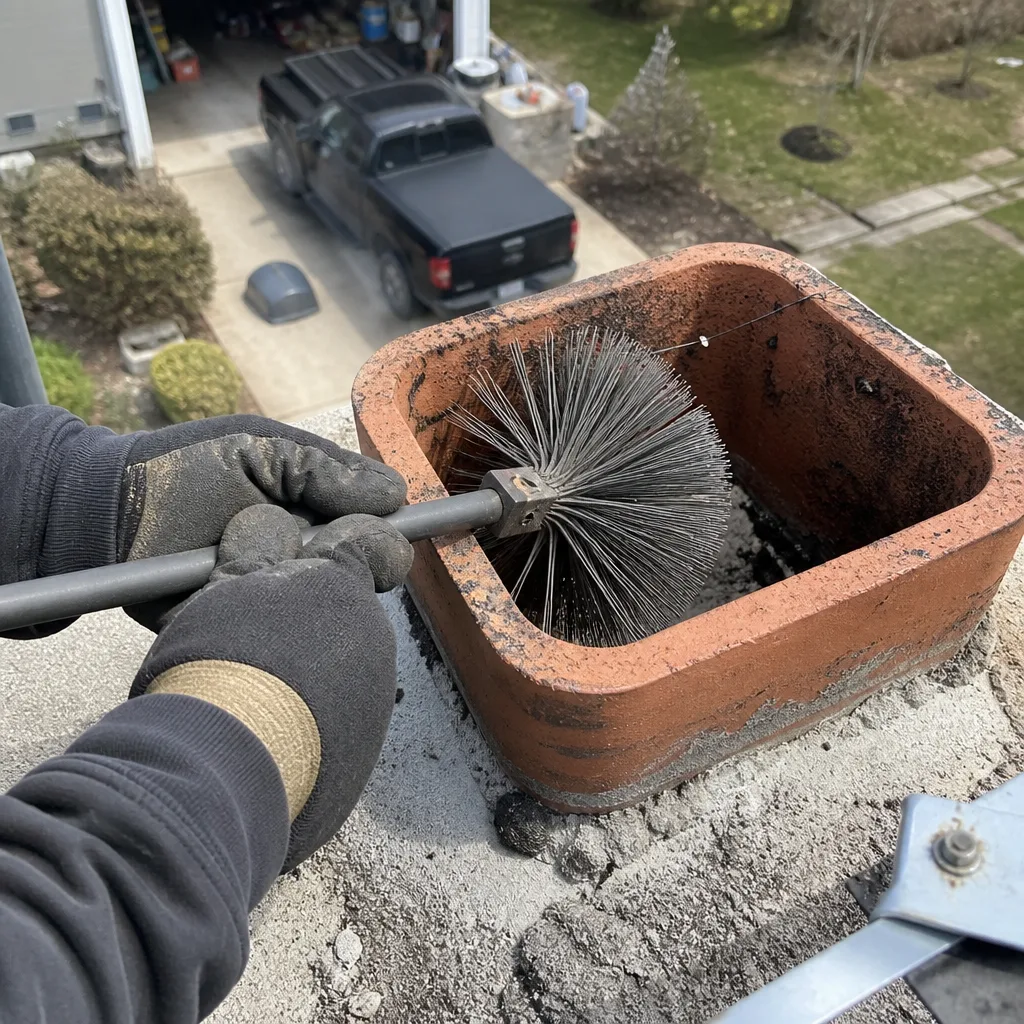
- Third-degree creosote glaze from unseasoned hardwood. Homeowners burn storm-felled oak and hickory within months of cutting it. That creosote glazes the flue walls and requires mechanical removal, not a standard brush sweep.
- Spalling and cracked mortar on 40-foot masonry chimneys. Decades of thermal cycling and freeze-thaw on 1980s brick colonials breaks down mortar joints. Moisture gets in, and the damage compounds fast.
- Downdraft and smoke spillback along ridge lines. Wind channeling off the Potomac River gorge affects homes along River Bend Road and nearby bluffs. A well-fitted cap or a flue extension often fixes it, but we diagnose it with a smoke test and camera pass first.
- Multiple flues, multiple problems. A house with three fireplaces might have one flue with stage-1 creosote, another with a cracked tile liner, and a third that’s been sealed off incorrectly. We inspect every flue on every visit and document each one separately.
Pricing for Chimney Cleaning & Sweep in Great Falls, VA
We Also Serve Cities Near Great Falls
If you’re in Great Falls or the surrounding area, we cover Reston, Herndon, Sterling, and Vienna as well. Same written-price standard, same camera-scan documentation, same 365-Day Done Right Promise. Dispatch is coordinated from our Washington, DC office, with crews serving Great Falls locally.
Serving Great Falls, VA - Our Local Coverage Area
We’re based in the Great Falls area and know this community well. Use the map below to see our service coverage - if you’re nearby, we can almost certainly help.
FAQs - Chimney Cleaning & Sweep in Great Falls
Why do Great Falls homes with multiple fireplaces need more frequent chimney inspections than typical suburban houses?
Because the creosote accumulates faster. Great Falls estate homes built in the 1970s through 1990s often have two to five masonry fireplaces, and the homeowners frequently burn wood from their own wooded lots. That wood is rarely seasoned the full 12 to 18 months. Each fireplace contributes to a faster accumulation across multiple flues, and a problem on one flue tells you very little about the other four. We document every flue separately with camera footage and photos. Call (571) 601-3174 if your house hasn’t had a full multi-flue inspection in the last year.
How does burning storm-felled oak or hickory from my own Great Falls property affect chimney cleaning schedules?
It shortens them significantly. Green oak and hickory produce heavy, wet smoke that condenses on flue walls as stage-1 and stage-2 creosote much faster than seasoned hardwood does. We’ve cleaned a Great Falls chimney in October and found stage-2 glaze by February when the customer burned self-sourced wood all season. For homes actively clearing and burning woodlot hardwoods, we recommend a mid-season Level 1 inspection in January or early February. It costs less than a full sweep and tells you whether the flue is still safe to burn.
What is the typical condition of 40-foot masonry chimneys on 1980s Great Falls colonials?
After 35 to 45 years of thermal cycling, most of them show spalling brick, cracked mortar joints, and some degree of crown deterioration. The height compounds the problem. A 40-foot chimney expands and contracts significantly across Northern Virginia’s humid-continental seasons, and moisture gets into those joints. We find cracked crowns on a large percentage of 1980s Great Falls colonials, and that crown failure is usually what allows water into the smoke chamber. Our camera inspection documents exactly what we find, and we’re happy to show you the footage so you can decide what needs fixing now versus what can wait.
Can wind channeling from the Potomac River gorge affect my Great Falls chimney’s draft?
Yes. Homes on ridge lines along River Bend Road and the bluffs above the Potomac experience localized wind channeling that pushes air down the flue and causes smoke spillback into the living space. We’ve diagnosed this on multiple Great Falls properties. The fix is usually a properly sized cap or a short flue extension, not a rebuild. But you need the camera and a smoke test to confirm the cause before spending money on the solution. That’s what we do. Call (571) 601-3174 and we’ll walk through what a draft diagnosis actually involves.
Is a chimney sweep alone enough after converting a Great Falls fireplace to gas or inserting a wood stove?
No. A sweep removes creosote and soot, but it doesn’t evaluate whether the existing flue is sized and lined correctly for the new appliance. When you convert a masonry fireplace to gas or insert a wood stove, the original flue was built for open-hearth wood burning. A gas appliance produces different exhaust temperatures and volumes, and an insert often requires a new stainless liner. We’ve seen plenty of Great Falls homes where a gas conversion was done without relining, and the old terra-cotta flue was cracked or improperly sized for the venting. A Level 2 camera inspection shows you exactly what’s going on before you burn anything else.
Get a Written Quote for Chimney Cleaning in Great Falls
Call (571) 601-3174 and you’ll talk to a live person who can schedule your sweep, answer questions about flue count and creosote classification, and give you a written price before anyone shows up. If you’d rather not talk, we’re fine with that too. But the written quote is the point. We won’t start work without one, and you shouldn’t let anyone else start work without one either.
Written by Corrine Halstead, Owner at Level Two Chimney Leesburg, serving Great Falls under the Haven Standard since 2009.
Chimney Cleaning & Sweep in Nearby Areas