
Level 1 sweep and inspection to the NFPA 211 annual standard - flue, crown, cap, and flashing checked and photographed
Chimney sweep logs do not sweep chimneys. They loosen some creosote - which then falls where a brush and vacuum still have to collect it.
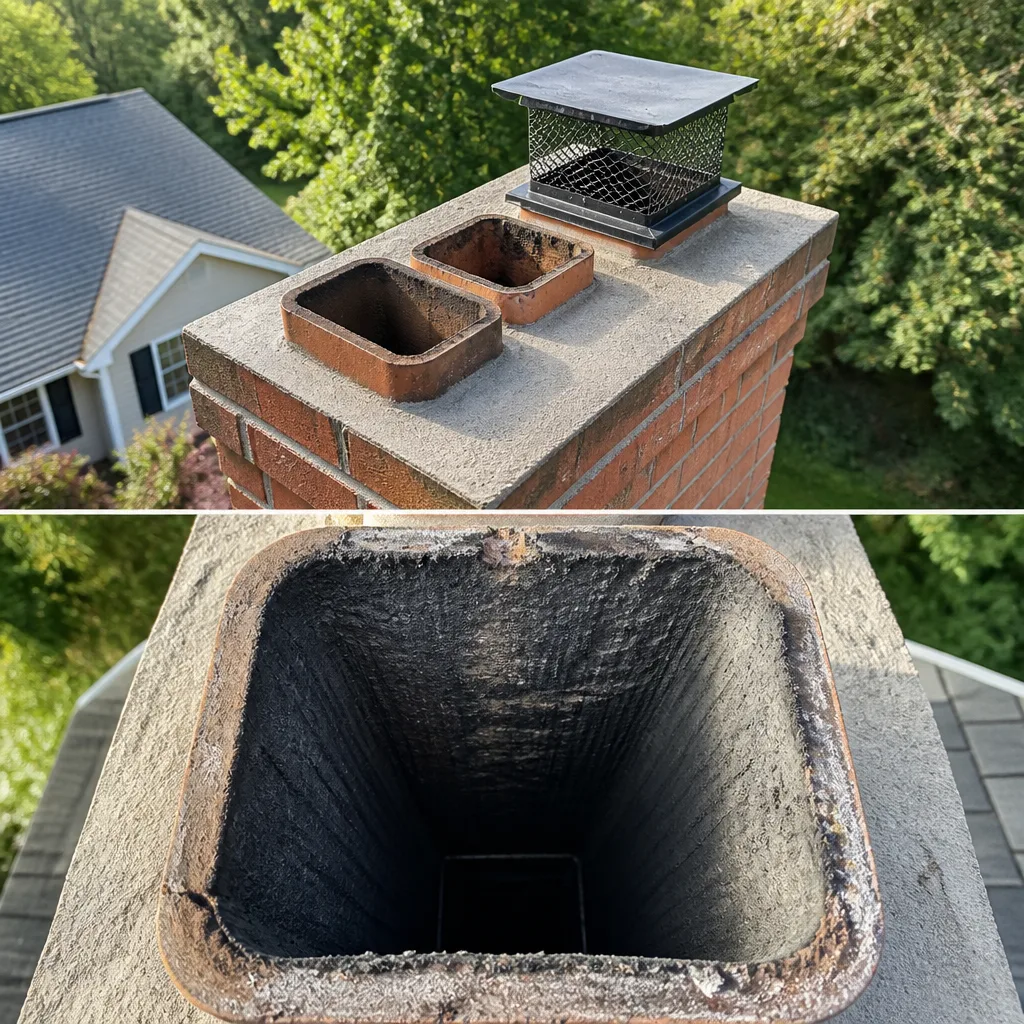
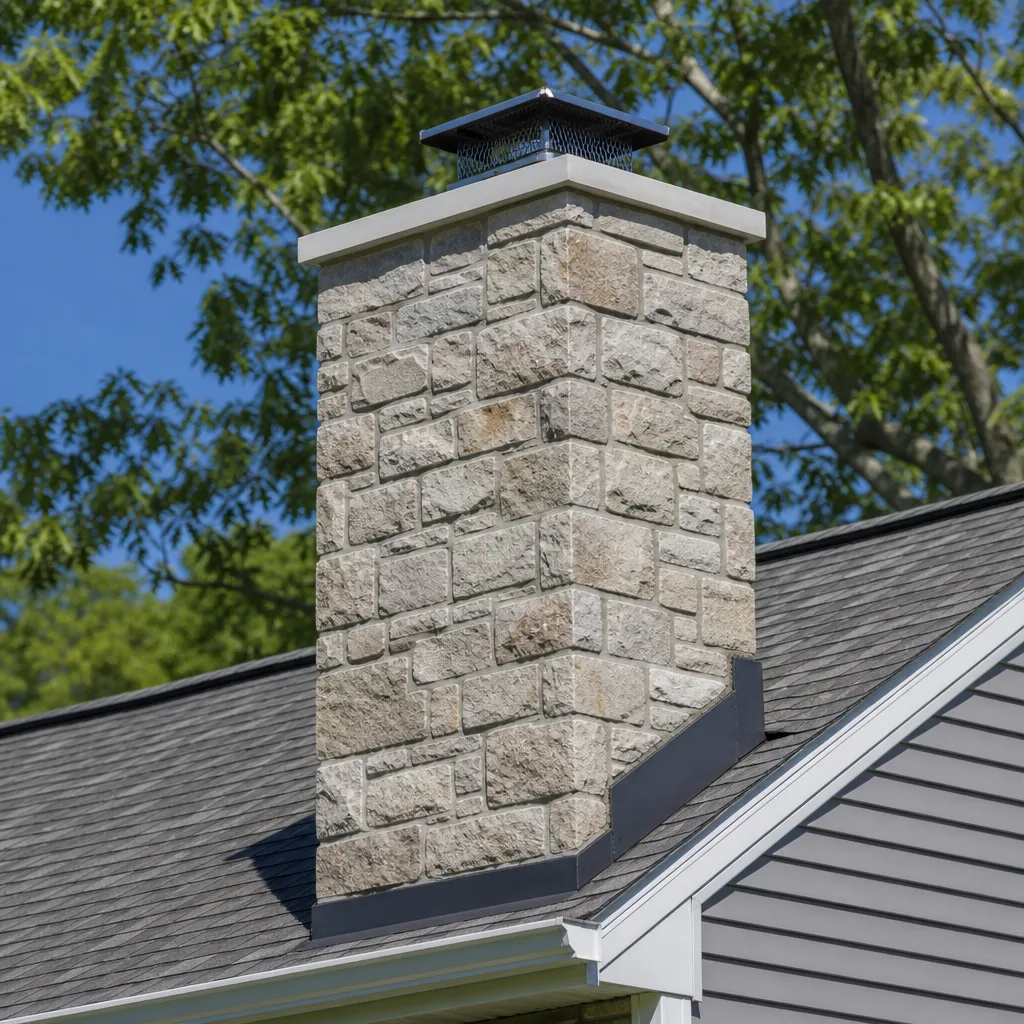
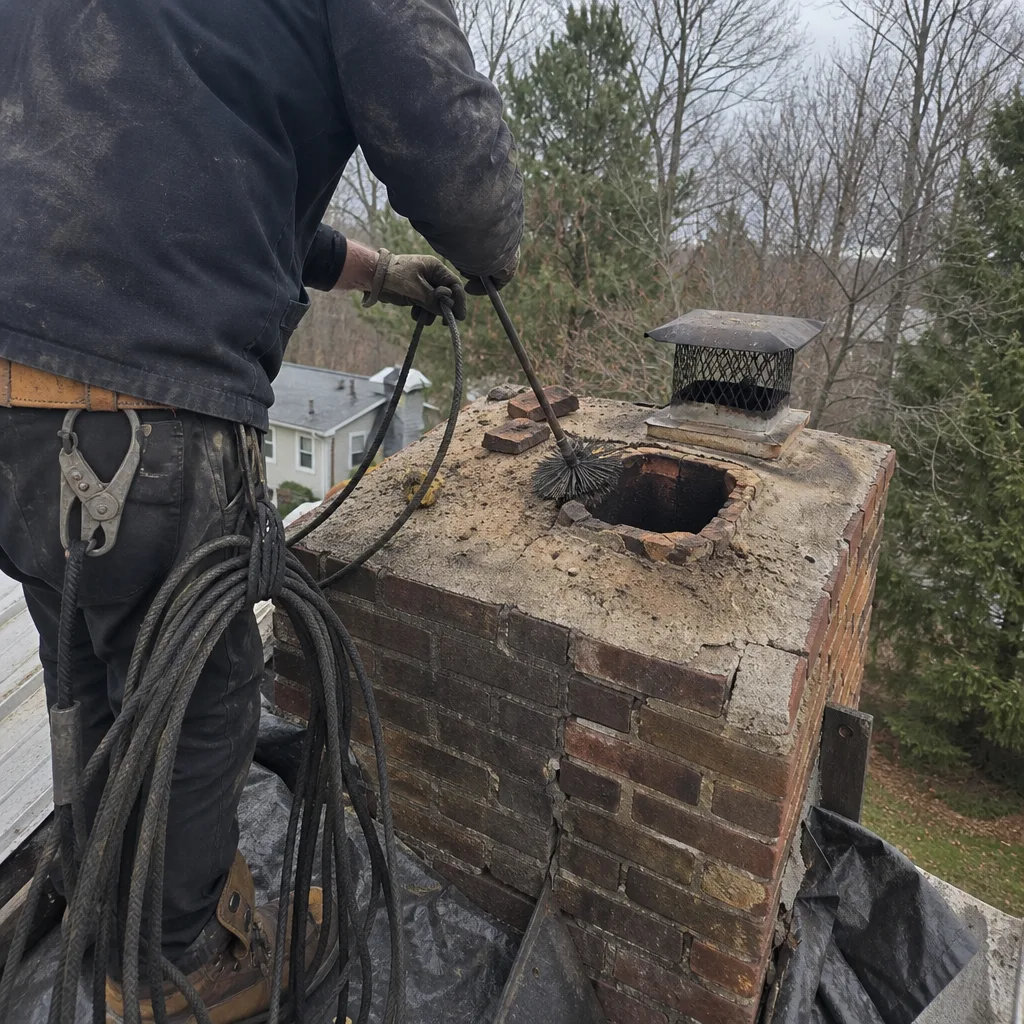 Before
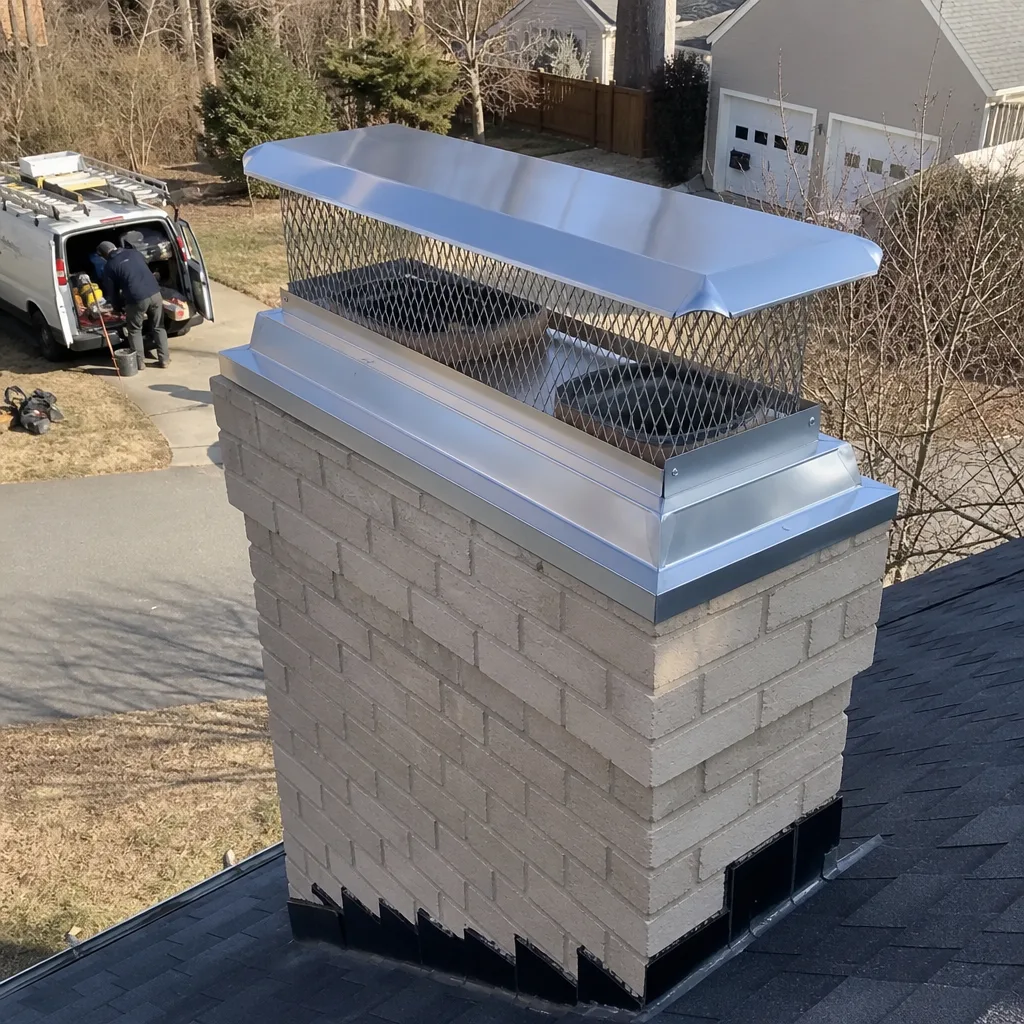 After
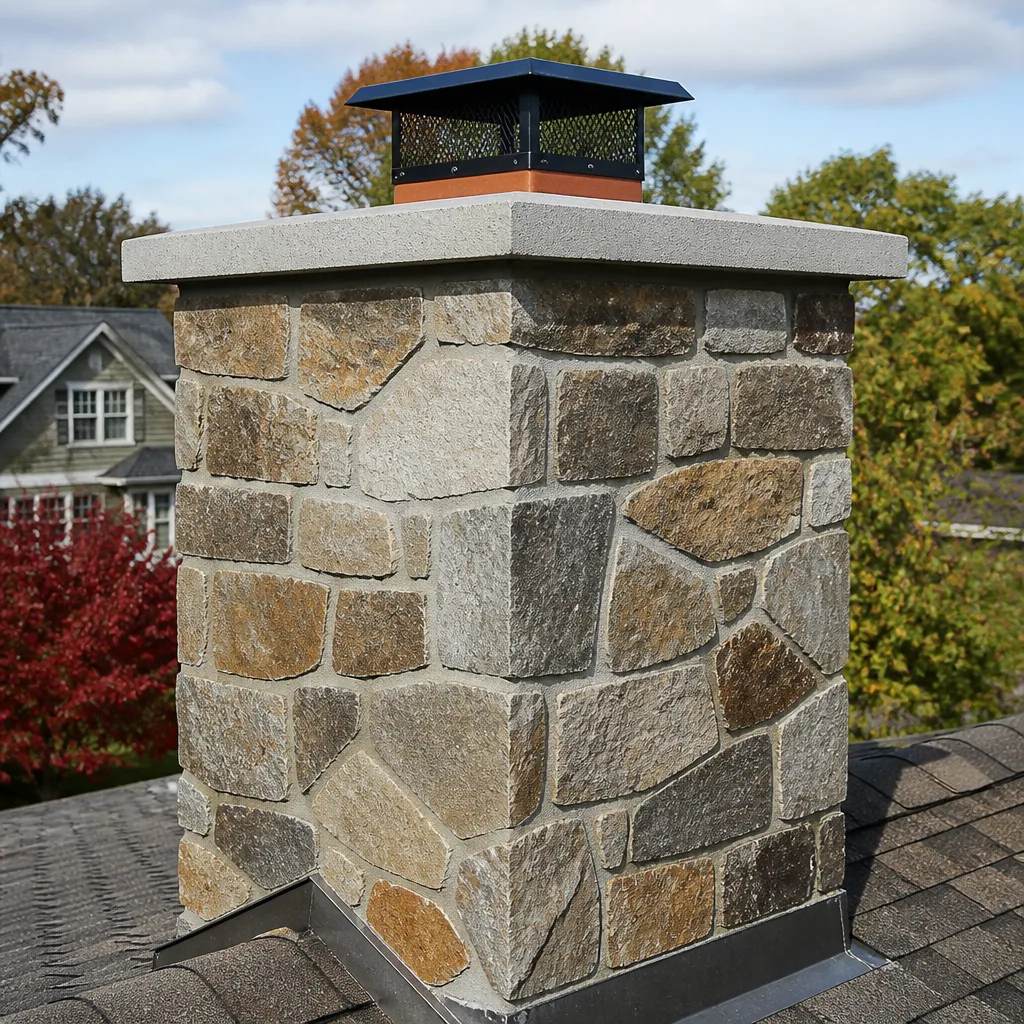
After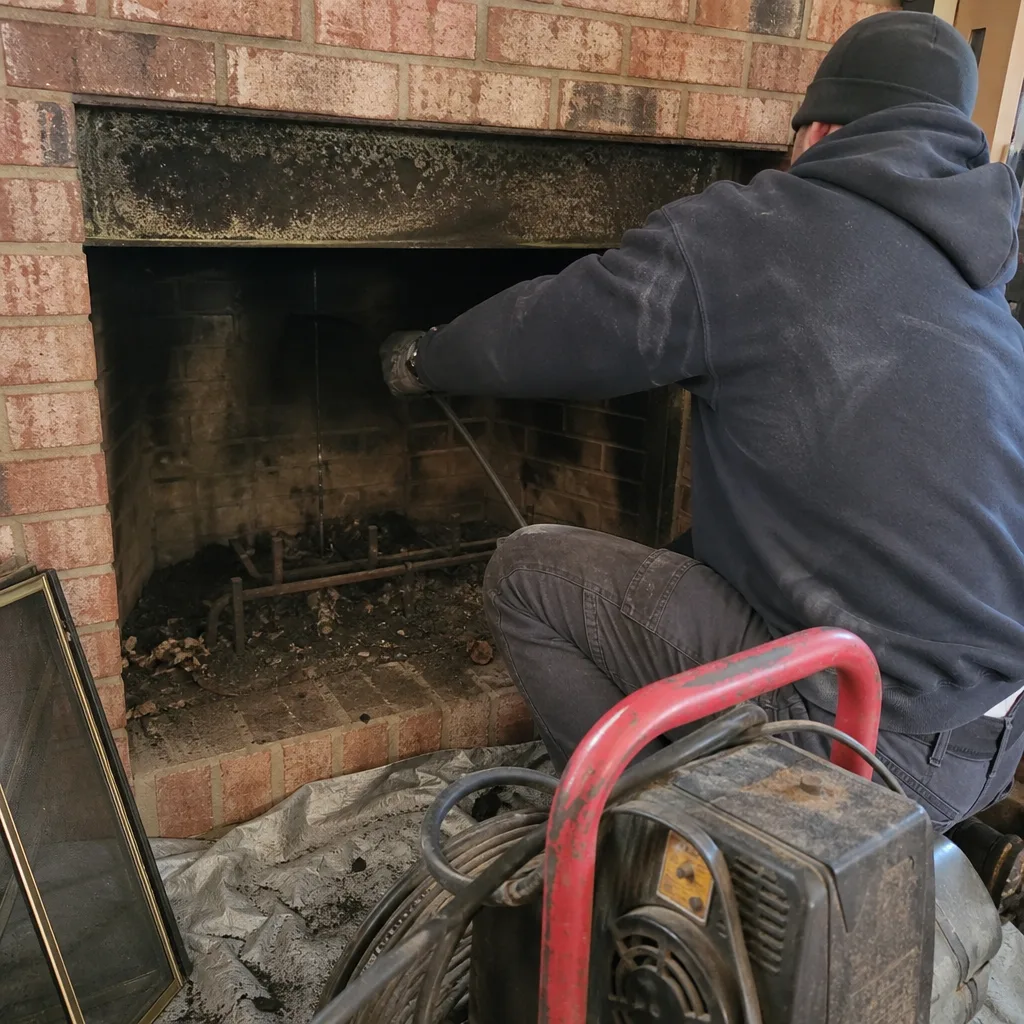 Before
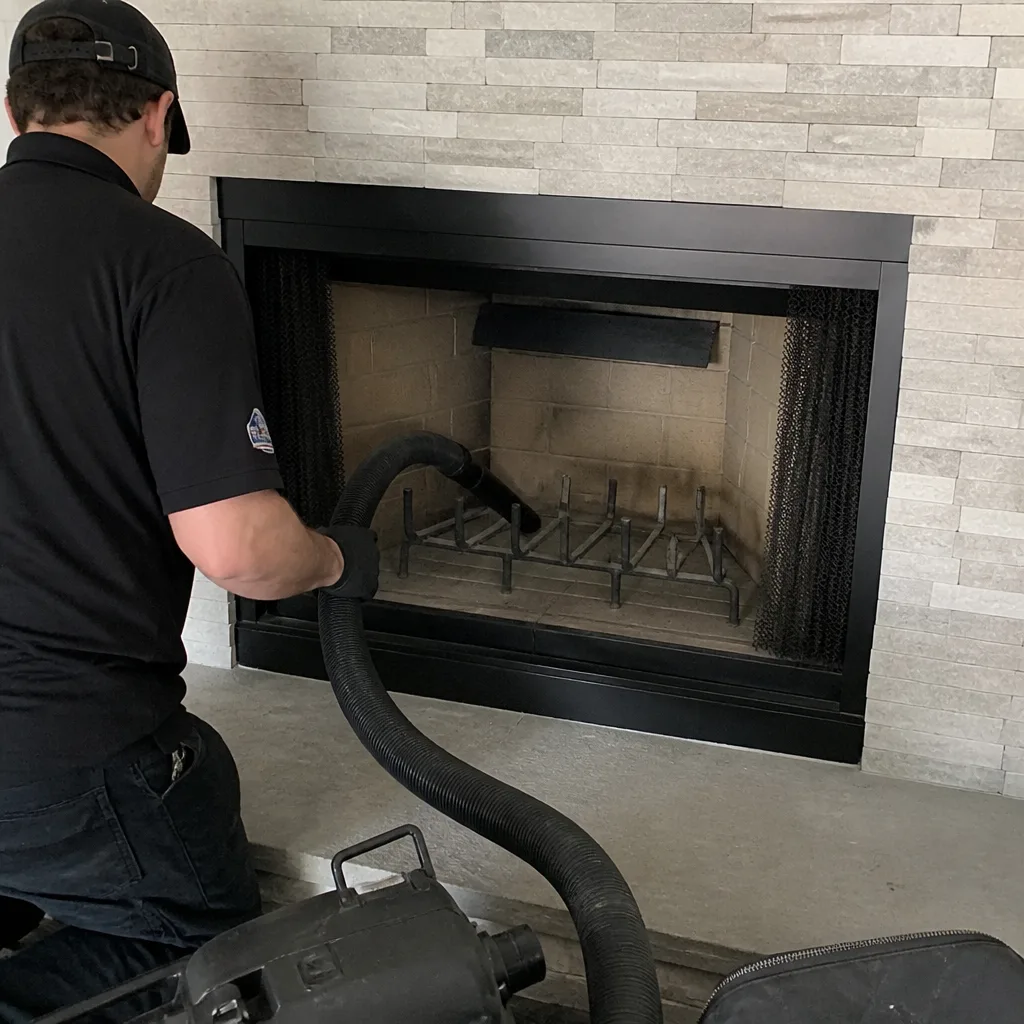 After
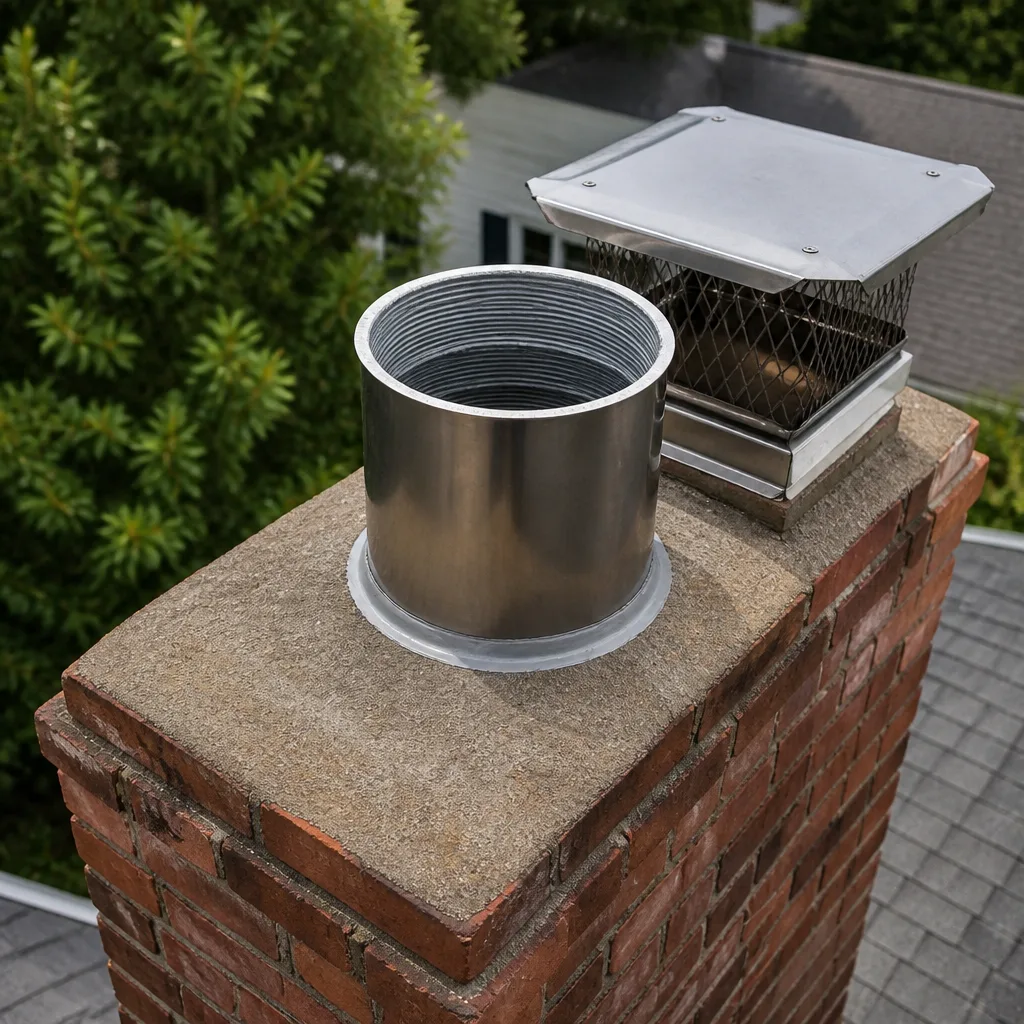
After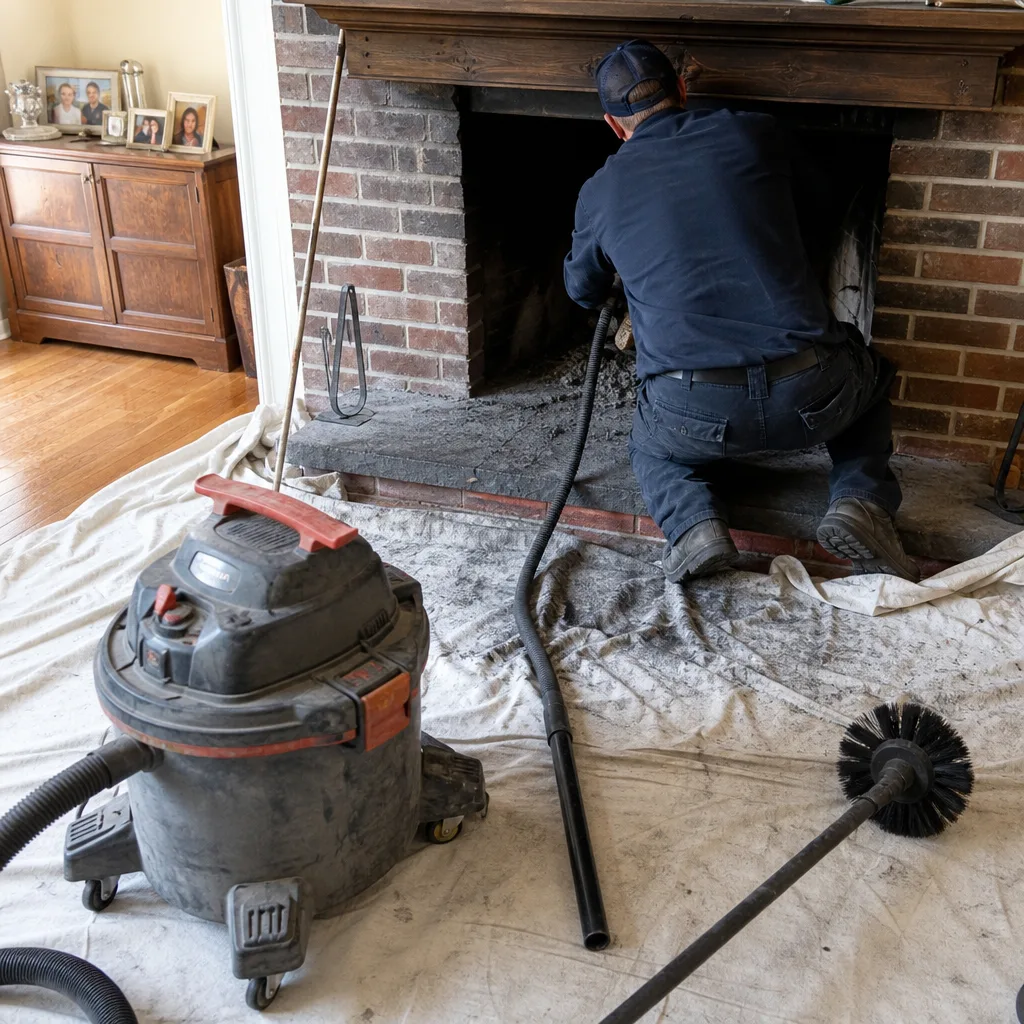 Before
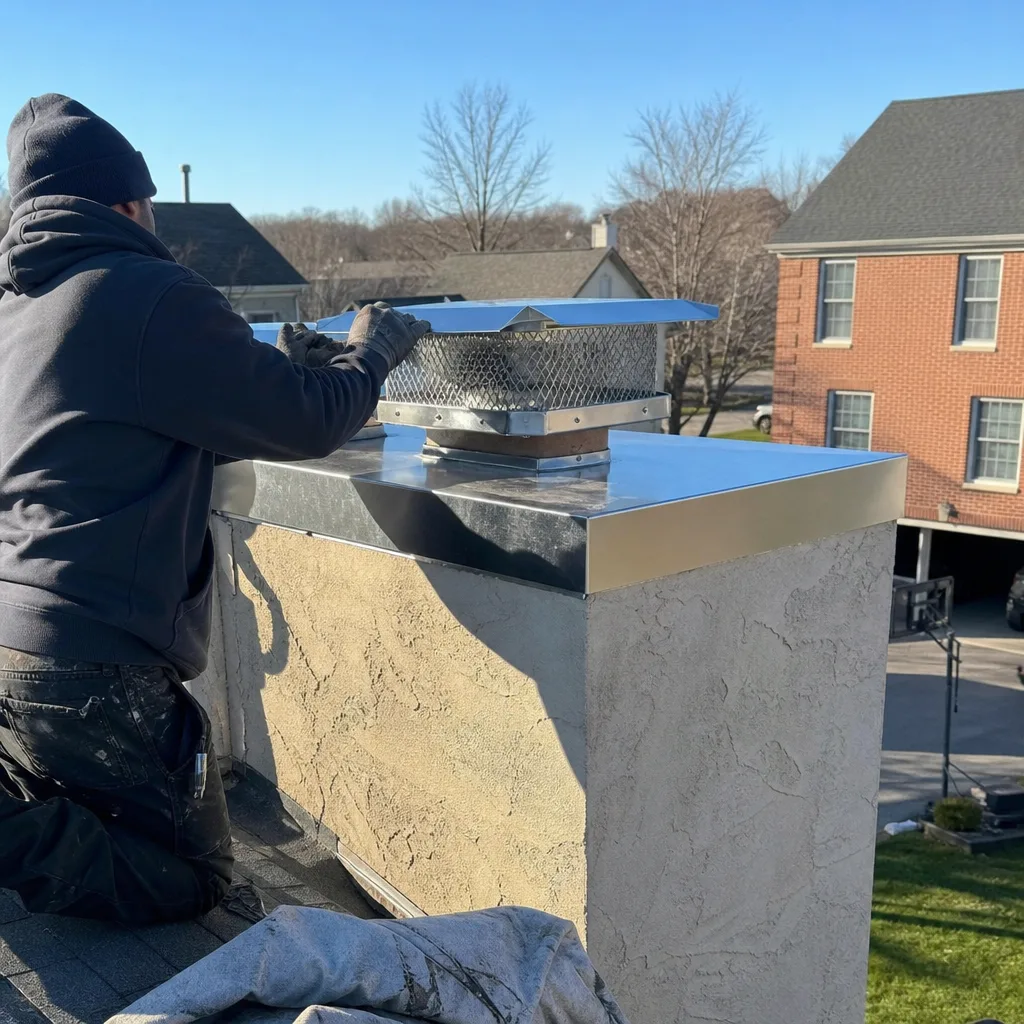 After
AfterMortar Repointing in Leesburg, VA
Mortar repointing is the process of removing deteriorated mortar from the joints between your chimney’s masonry units and packing in fresh, properly mixed mortar to restore a weathertight seal. In Leesburg, most chimneys built before 2000 need at least partial repointing by the time they hit 20 to 25 years of service – the freeze-thaw cycles we see between November and March are genuinely hard on mortar, and the clay-rich soil that shifts under foundations here accelerates the cracking. Caught early, repointing is a targeted repair that costs a fraction of our Chimney Repair services; left alone, open joints let water track into the masonry core and the damage compounds fast.
At Level Two Chimney Leesburg we’ve been doing this work since 2009, and we do it the way it should be done: camera-scan inspection first, a written price and written scope before anyone picks up a grinder, and a documented photo record when the job is complete. If you want a straight answer about what your chimney needs, call us at (571) 601-3174 – a live person answers, every day of the week. This page sits under our broader Chimney Repair in Leesburg service, so if you’re dealing with more than just mortar joints, that’s a good place to read next.
When You Need Mortar Repointing
The signs are usually visible from the ground if you know what you’re looking at. Any one of these is worth a closer look; more than one means the work is already overdue.
- Mortar joints that are recessed more than a quarter inch. Run your finger along the joint – if it sinks in noticeably, the mortar has eroded past the point where it’s still shedding water. In the older brick chimneys common in Leesburg’s Tuscarora and Stratford neighborhoods, we regularly find joints eroded to half an inch or more.
- Crumbling or powdery mortar that comes away with light pressure. Soft mortar that crumbles to the touch has lost its binding strength. At that stage it isn’t holding anything together; it’s just filling space until the next rainstorm pushes it out.
- White staining (efflorescence) on the brick face. Efflorescence is salt residue left behind when water moves through masonry and evaporates on the surface. It’s a reliable indicator that water is getting in through the joints – not just running down the outside.
- Spalling brick edges near the joints. When mortar fails and water enters, the freeze-thaw cycle forces the brick face to flake or pop off. Spalling near joint lines almost always means the mortar failed first. Leesburg sees roughly 40 freeze-thaw cycles per winter on average, which is enough to propagate a small crack into a structural problem within two or three seasons.
- Visible gaps or missing mortar sections. Open joints – where you can see daylight between bricks – are past the early-intervention stage. Water enters freely, and so do insects. We’ve opened chimneys in the Potomac Crossing and Stratford Club areas and found full wasp nests established behind joint gaps that were no bigger than a pencil.
- A draft problem or smoke backing up into the firebox. Severe joint deterioration high on the chimney stack changes the flue’s air draw. If your fireplace has started smoking into the room and nothing else about the firebox has changed, the exterior masonry condition is worth inspecting.
Our Mortar Repointing Process
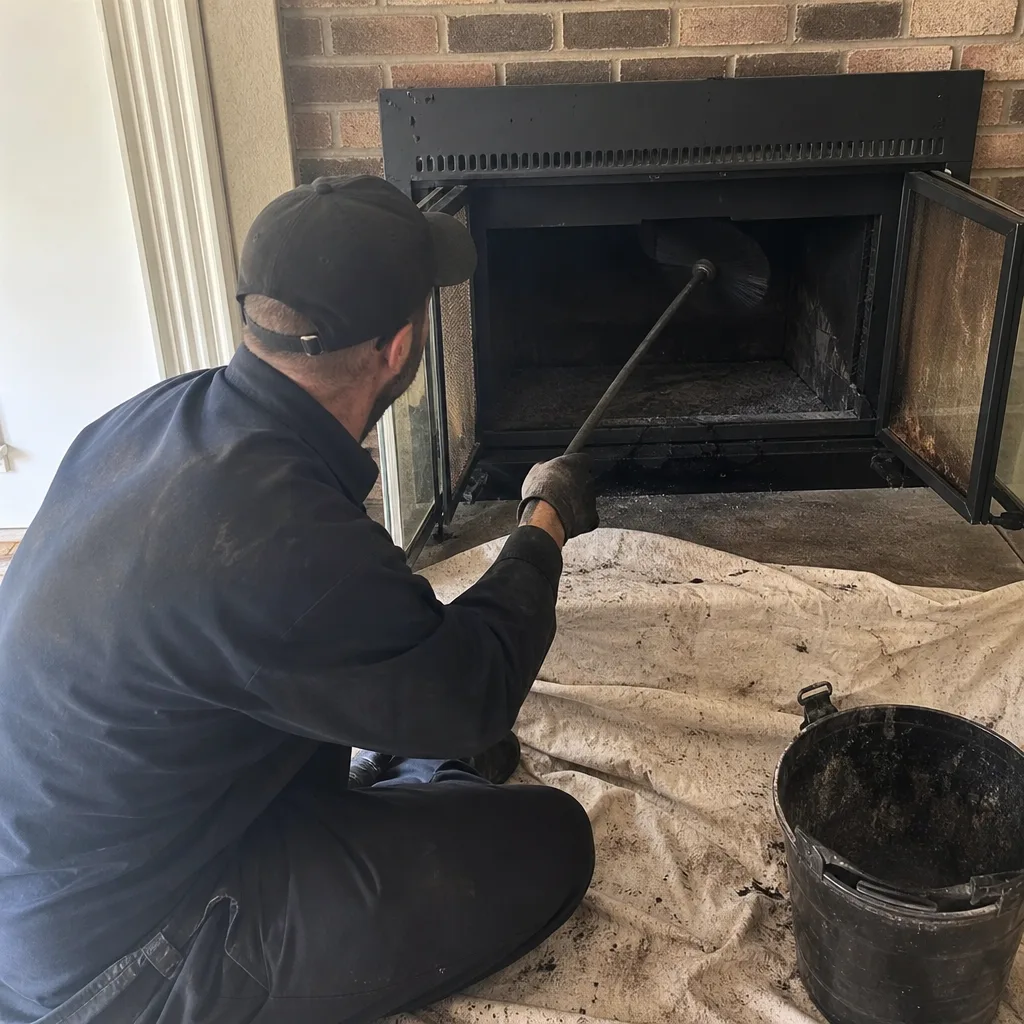
We don’t hand a customer a price until we know exactly what the chimney needs. That order of operations matters – it’s how we avoid the situation where a tech starts work, discovers the problem is bigger than the estimate, and then surprises you with a higher number. Here’s how a repointing job runs from first call to final photo.
- NFPA 211 Level 2 camera inspection. Before any mortar work is quoted, a camera goes down the flue and a technician walks the exterior. We’re looking at liner condition, crown integrity, and the full extent of joint deterioration – not just what’s visible from the roofline. The inspection produces photos and a written condition report. This step has been standard at Level Two since 2009, long before most area companies adopted camera documentation.
- Written price, written scope, written warranty – delivered before work starts. Under Haven Standard Clause 1, you receive all three in writing before anyone touches your chimney. The price is fixed to the documented scope; if we find additional damage during the work that wasn’t visible in inspection, we stop and discuss it before proceeding. No surprises.
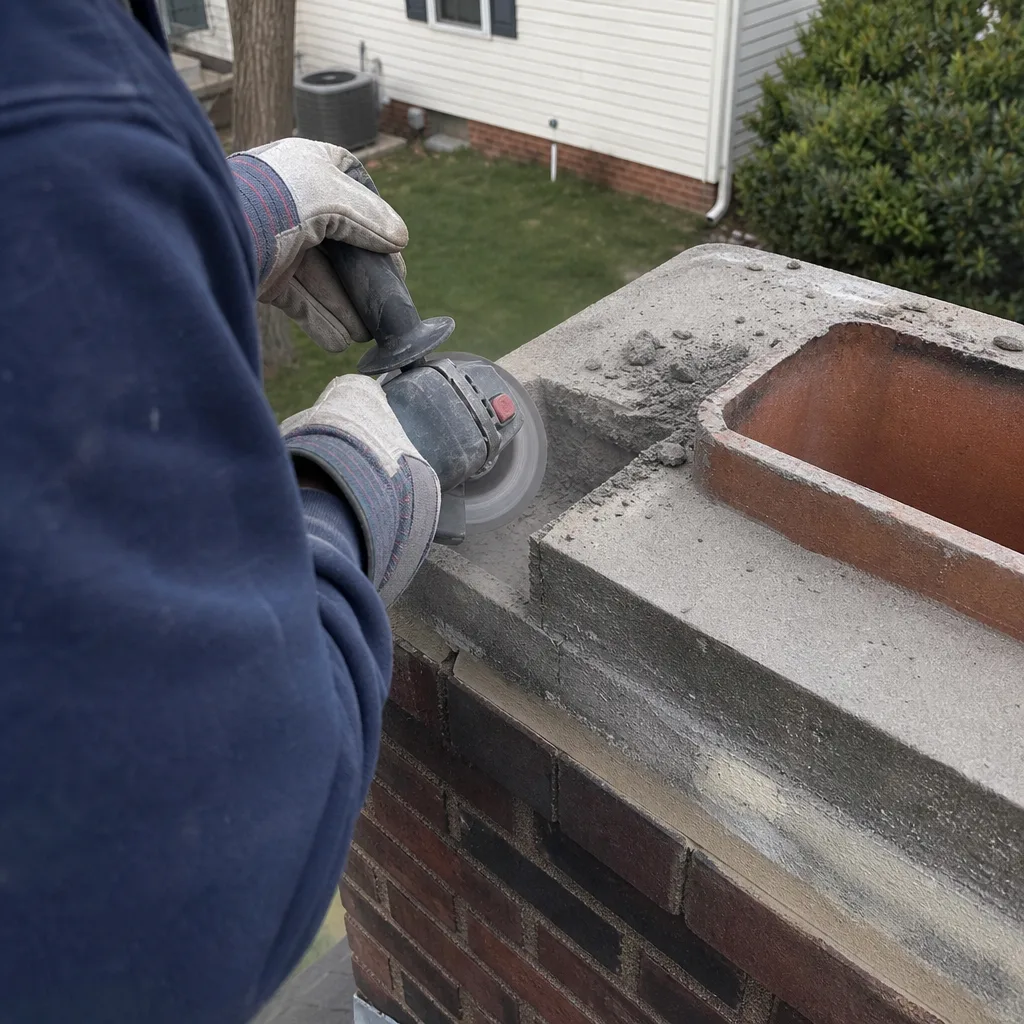
- Joint preparation: grinding and raking. We cut out deteriorated mortar to a minimum depth of three-quarters of an inch – usually an inch or more where the joint has eroded badly. A grinder or oscillating tool is used to remove the old material cleanly without damaging the brick faces. This step is the one most shortcuts skip; packing new mortar over old doesn’t bond and fails within a season.
- Mortar mixing and application. We match the mortar mix to the age and type of your masonry. Older chimneys – anything built before roughly 1940 – typically require a lime-based mortar that’s softer than the brick, so the joint absorbs movement rather than transferring stress into the masonry unit. Applying a hard Portland mix to soft historic brick is a common mistake that causes spalling. We source materials through the Haven buying network, including supply from Olympia Chimney, specifically to ensure consistent mix quality.
- Tooling and curing. Once the fresh mortar reaches initial set, the joints are tooled to match the original profile – typically a concave or weathered joint on Leesburg-area chimneys. This sheds water rather than catching it. Tooled joints also compress the mortar against the brick edges, improving the bond. Curing time varies with temperature; we schedule accordingly and don’t rush it.
- Final inspection and documented photo record. When the work is complete, we photograph every repaired section and deliver the full photo record to you. Haven Standard Clause 4 makes this documentation standard on every job – not something you have to request. You end up with a timestamped record of your chimney’s condition before and after, which is useful for insurance purposes and for any future inspector who works on the property.
BeforeAfterMortar Repointing Pricing in Leesburg
Mortar repointing in Leesburg typically runs between $400 and $1,800 for most single-stack residential chimneys, depending on how much of the chimney needs work and how accessible the stack is. For a full breakdown, see How Much Does Chimney Repair Cost? (2026 Price Guide) - Leesburg, VA. Partial repointing of the top two or three courses – the section that takes the most weather exposure – usually falls between $400 and $750. Full repointing of a standard two-story chimney from crown to roofline runs $900 to $1,800. Chimneys taller than two stories, or those requiring a full scaffold setup rather than a ladder, add to that range.
| Scope of Work | Typical Price Range |
|---|---|
| Partial repointing – top courses only (1-2 ft of stack) | $400 – $750 |
| Mid-section repointing – spot repairs across 3-6 ft | $650 – $1,100 |
| Full chimney repointing – roofline to crown, single stack | $900 – $1,800 |
| Double-stack or oversized chimney, full repointing | $1,600 – $3,200 |
| Repointing combined with crown repair or cap replacement | Quoted as combined scope – ask for line-item breakdown |
A few things move the price up or down in the Leesburg market specifically. Chimneys in the historic areas around downtown Leesburg and the older sections of Catoctin Circle sometimes require custom lime-mortar mixes rather than standard bagged product, which adds modest material cost. Properties in newer developments like River Creek or Lansdowne on the Potomac tend to have chimneys with better original mortar, so deterioration is usually more localized – that’s a smaller scope and a lower price. Roof pitch also matters: steeper roofs require more setup time and safety equipment, and that’s priced honestly into the written quote, not buried in a line item you discover later.
We give you a written price before any work starts – that’s not a marketing point, it’s how we operate on every single job. If you’ve already received a written estimate from another company, bring it to us. We offer a free second opinion on any written estimate, no appointment required.
Call (571) 601-3174 to schedule your inspection and get a written quote. The estimate is free, and the price won’t change once it’s in writing.
Why Leesburg Chimneys Need Repointing More Often Than Most
It’s not just age. The Loudoun County area sits in a climate band that gets genuine winter cold without the consistent below-zero temperatures that would keep the ground frozen solid. Instead, Leesburg gets repeated partial thaws followed by refreezes – sometimes multiple cycles in a single week between December and February. Each cycle pushes a small amount of water into a hairline crack, freezes it, expands it slightly, and thaws again. Over ten winters, a joint that looked fine at year one has lost a meaningful amount of material by year ten.
The Potomac River corridor also brings humidity that doesn’t fully dry out between rain events in spring and fall. Mortar that stays damp doesn’t cure properly after freeze damage, and it’s slower to shed water. We see this pattern most in chimneys on the east-facing slopes around Balls Bluff and properties that back to water on the Potomac. It’s not unusual for us to find three-eighths inch joint recession on a chimney that’s only 15 years old in those locations, where a similar chimney in a drier inland position would look fine at 20.
None of that is alarming – it just means the inspection interval matters, and catching deterioration at the quarter-inch mark rather than waiting for open joints saves a significant amount of money. The NFPA 211 Level 2 inspection we run on every visit is specifically designed to catch this kind of incremental damage before it crosses into structural territory.
The 365-Day Done Right Promise
Every repointing job Level Two Chimney Leesburg completes carries the 365-Day Done Right Promise. If the work isn’t right within a year of completion – joint failure, mortar shrinkage, adhesion problems – we come back and make it right. That promise is stamped on every job under the Haven Standard, not offered selectively. Corrine Halstead built the service around the idea that a written warranty should mean something, and the documentation we leave with every customer is the evidence trail that makes it enforceable on both sides.
We’re not the only chimney company serving Leesburg, and we won’t pretend otherwise. What we can tell you is that we’ve completed more than 38,000 chimney inspections and cleanings since 2009, every one with a written price before the work started and a documented record when it was done. That’s the practice we’ve run for 15 years, and it’s the reason the Haven Standard exists – it started here, with jobs like this one.
FAQs – Mortar Repointing in Leesburg
How much does mortar repointing cost in Leesburg, VA?
Mortar repointing in Leesburg runs between $400 and $1,800 for most residential chimney stacks, depending on how much of the chimney needs work, the height and pitch of the roof, and whether a specialty lime-mortar mix is required for older masonry. Partial top-section repointing typically falls in the $400-$750 range; full repointing of a standard single-stack chimney runs $900-$1,800. We put the exact number in writing before any work begins – call (571) 601-3174 and we’ll schedule an inspection and give you a written quote at no charge.
Is mortar repointing a DIY job, or does it need a professional?
The physical act of raking out old mortar and packing in new is learnable, but the two things that make repointing work long-term – getting the mortar mix right for the specific masonry and cutting the joints to adequate depth – are where most DIY attempts fail. Using a mortar that’s too hard on older brick transfers freeze-thaw stress into the brick face rather than the joint, and that causes Spalling Brick Repair that’s much more expensive than the original repointing would have been. For a chimney specifically, the height and safety requirements also make professional work the practical choice for most homeowners. We’re happy to walk you through what we found and why we recommend what we recommend, in plain terms, before you commit to anything.
How do I know if my chimney needs repointing or full brick replacement?
Repointing is appropriate when the mortar joints are deteriorated but the brick units themselves are structurally sound – no deep cracking through the body of the brick, no significant spalling of the brick face, no sections where the masonry has shifted out of plane. Full or partial brick replacement becomes necessary when the masonry units themselves are damaged beyond surface spalling, or when water intrusion through failed joints has gotten behind the brick and caused the backing structure to fail. Our camera inspection and exterior assessment documents both, and the written report we give you describes exactly what we found in those terms. You don’t have to guess which applies to your chimney. See the full picture of what Level Two Chimney Leesburg covers if you want context on where repointing fits in the broader repair picture.
How long does mortar repointing last on a Leesburg chimney?
Properly done repointing on a Leesburg chimney should last 20 to 30 years under normal weather conditions. The variables that shorten that lifespan are the ones we watch for: chimneys without a functioning cap that lets water pool on the crown, chimneys where the crown itself is cracked and allowing water into the top courses, and chimneys with a missing or undersized flashing that lets water run behind the stack at the roofline. Repointing the joints while those conditions exist will extend the joint life somewhat, but the underlying water source keeps working. That’s why we document the full system condition before quoting – and why the written scope we give you addresses the complete picture, not just the section of mortar that’s most obviously failing.
If your chimney shows any of the signs described on this page, the right next step is a camera inspection and a written assessment – not a guess based on what’s visible from the driveway. Call (571) 601-3174 to schedule. A live person will answer, the inspection comes with a full photo record, and the written price you receive before any work starts is the price you pay. That’s how we’ve run every job since 2009, and it’s not changing.
Written by Corrine Halstead, Owner at Level Two Chimney Leesburg, serving Leesburg.