
Last updated September 20, 2026
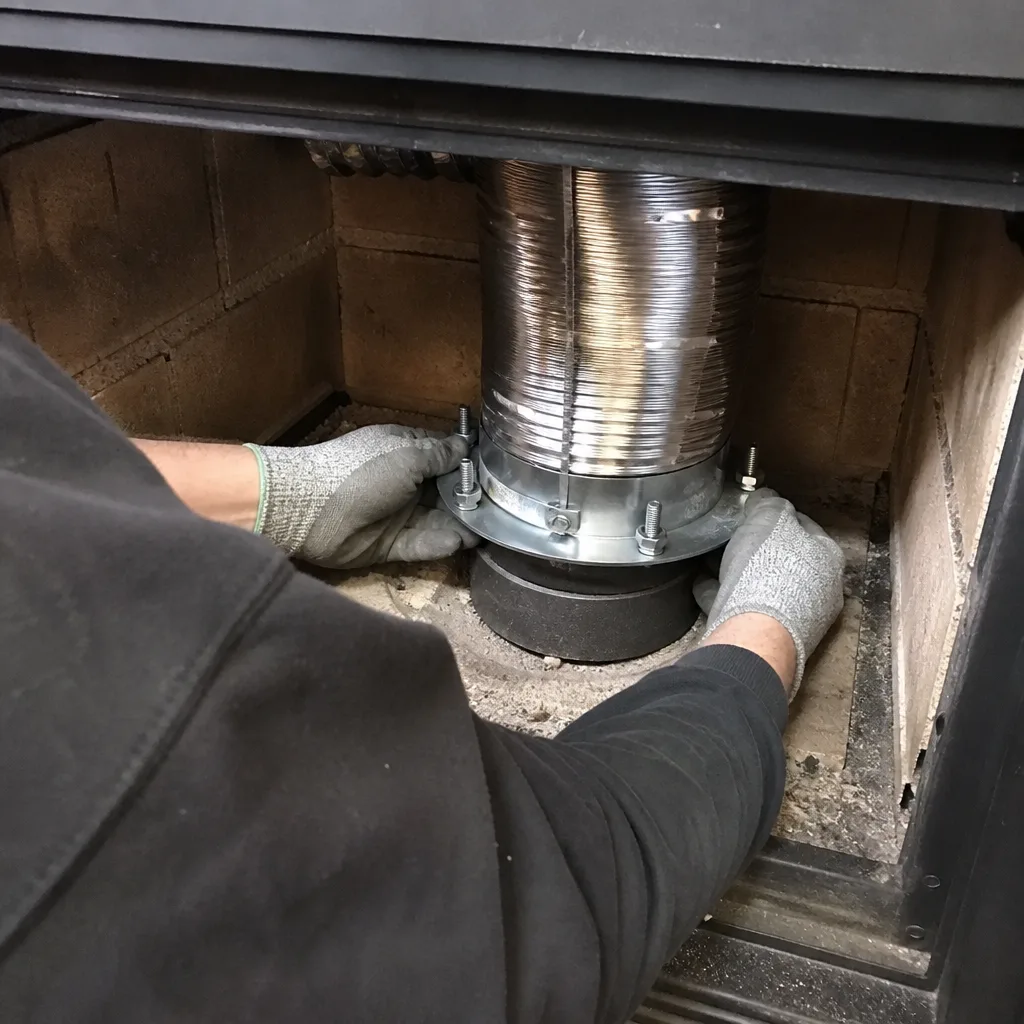
Level 1 sweep and inspection to the NFPA 211 annual standard - flue, crown, cap, and flashing checked and photographed
Chimney sweep logs do not sweep chimneys. They loosen some creosote - which then falls where a brush and vacuum still have to collect it.
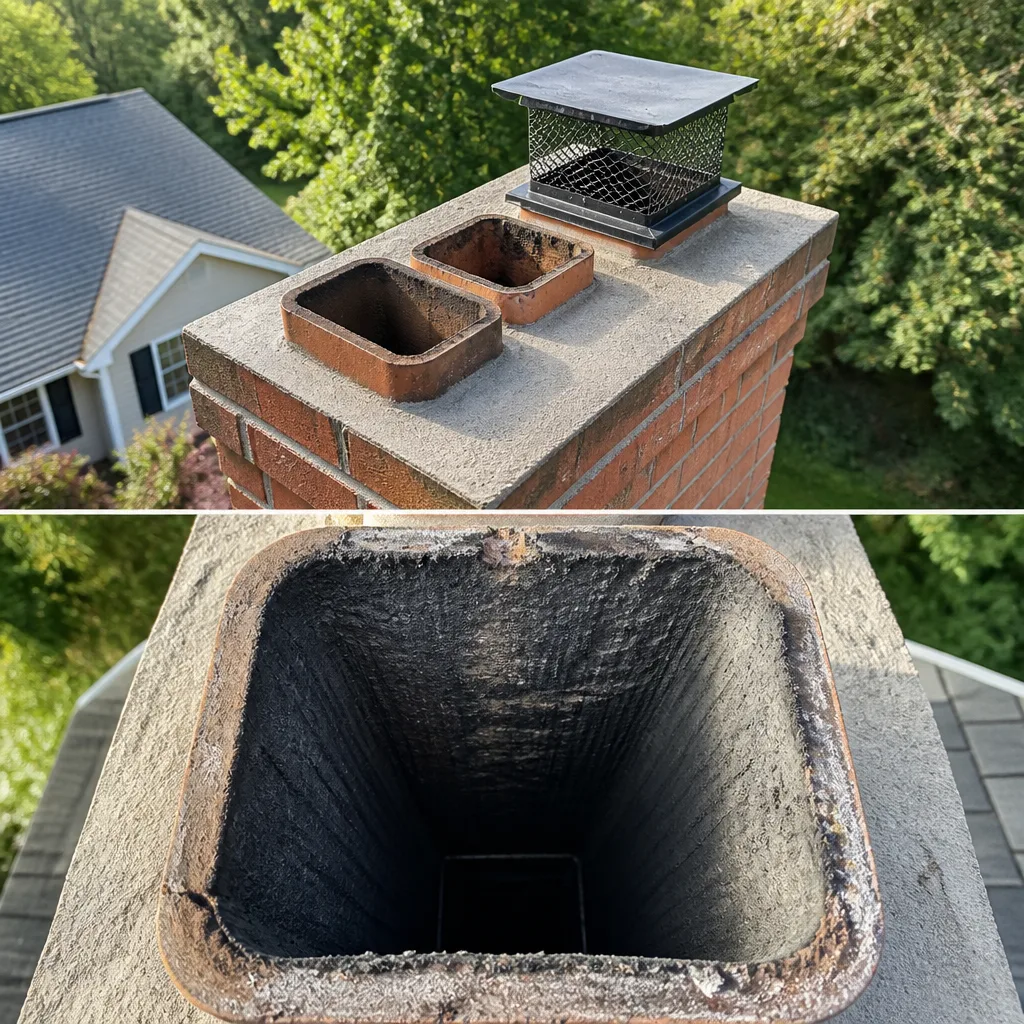
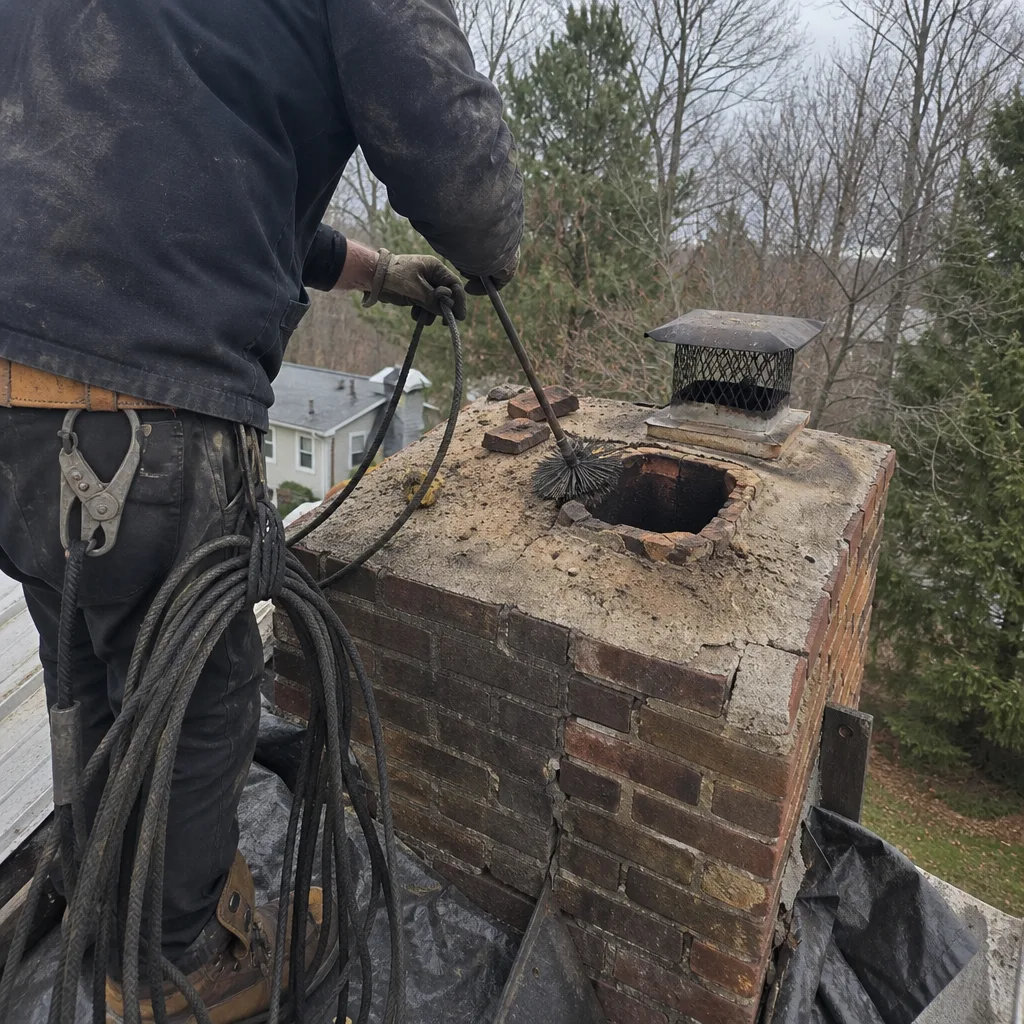 Before
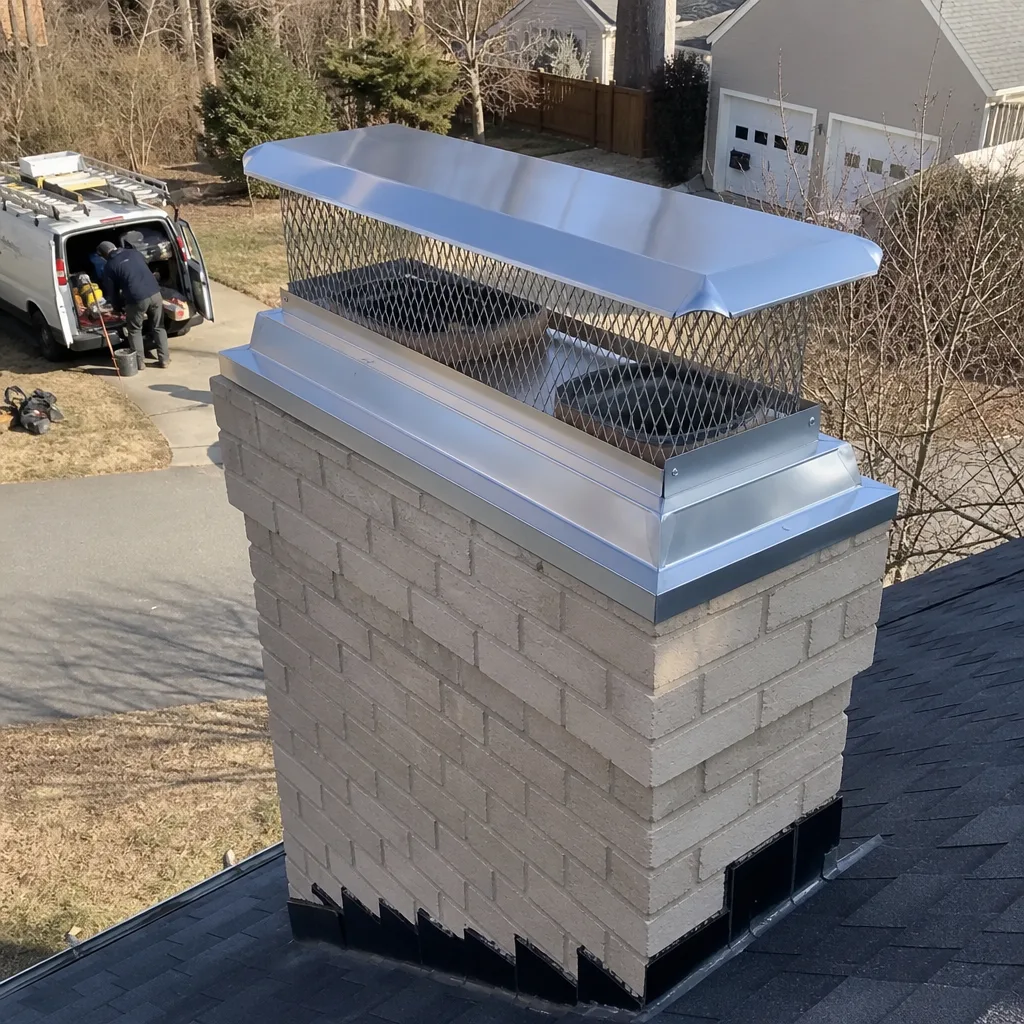 After
After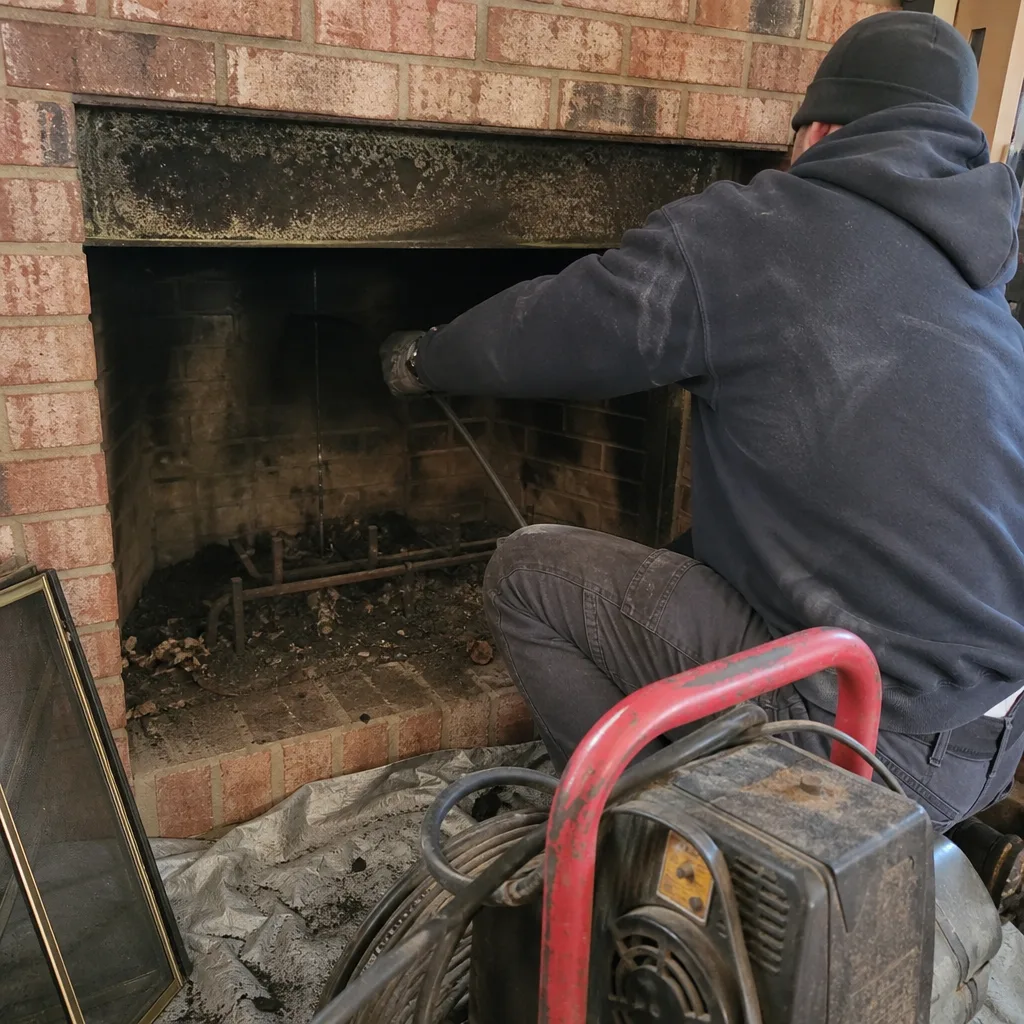 Before
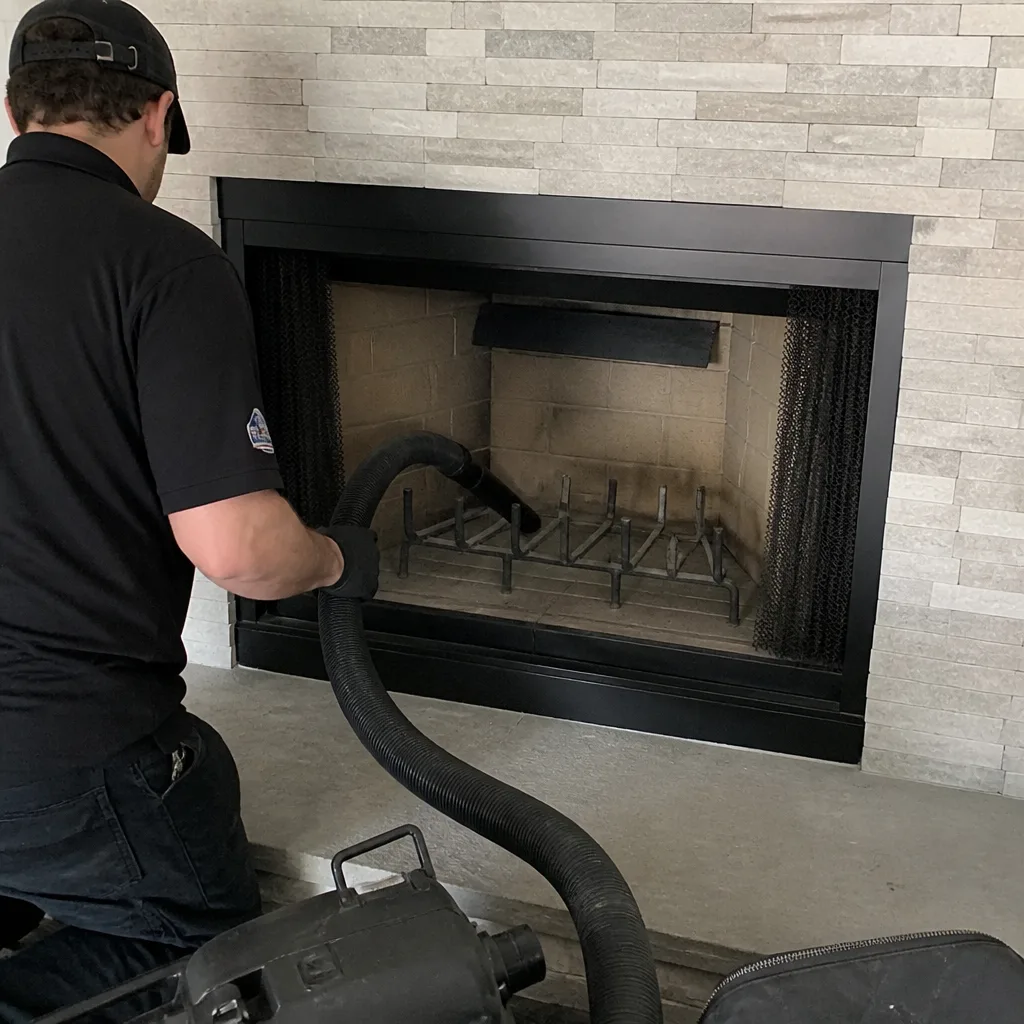 After
After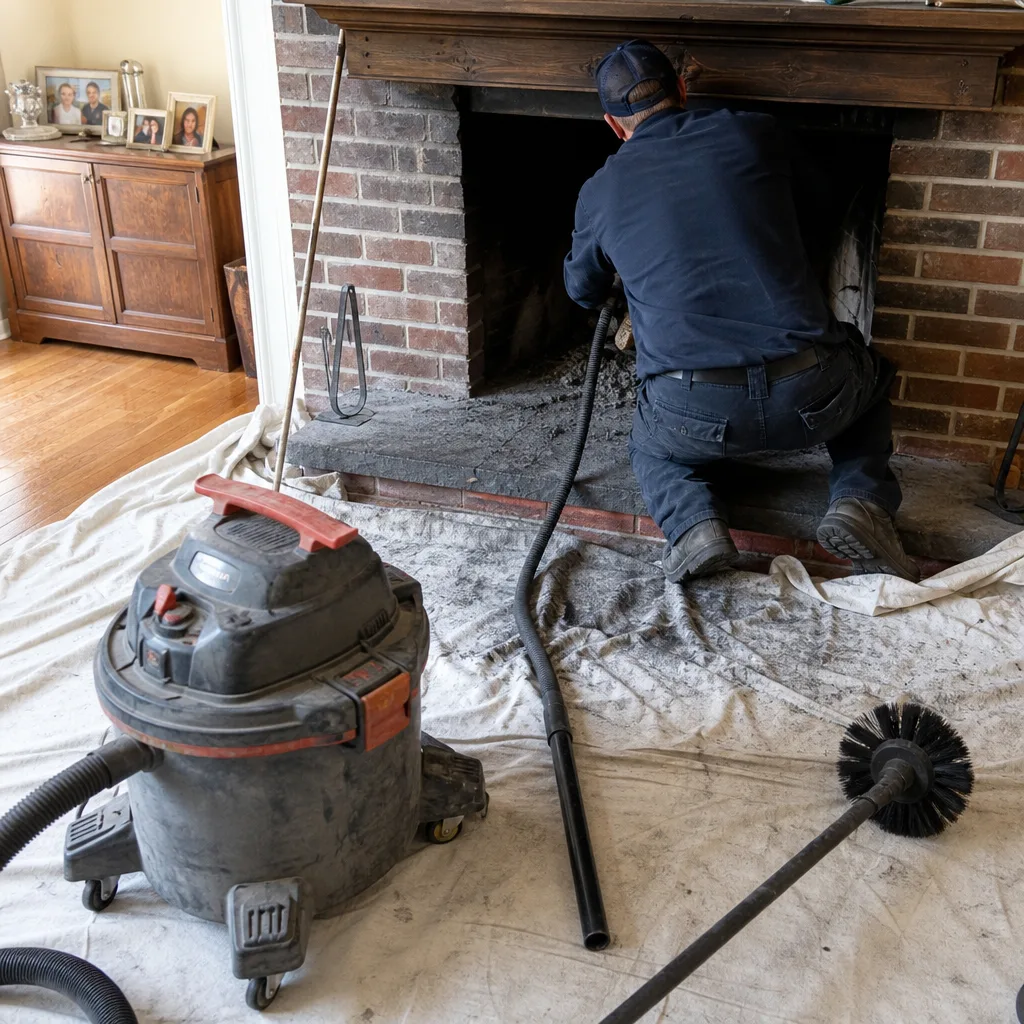 Before
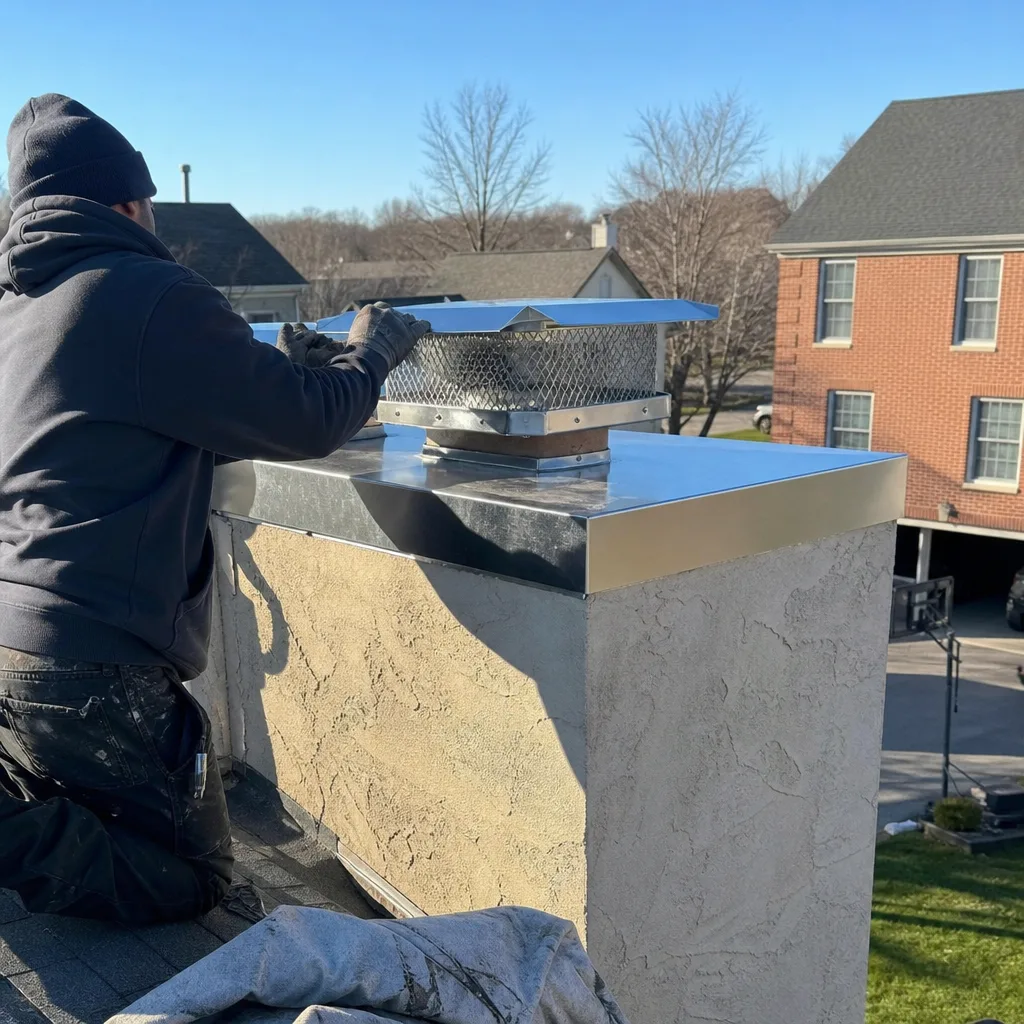 After
AfterChimney Cleaning Warning Signs: A Leesburg Homeowner’s Reference Guide
White efflorescence streaking down the brick exterior is not a cosmetic problem. It is dissolved mortar salt traveling with water through a compromised crown, and it appears months before the interior damage that triggers a repair quote. Most Leesburg homeowners never see it because most chimney sweep marketing focuses on what’s visible from the hearth. This guide is different. It separates warning signs by where you actually observe them: firebox-visible, roofline-visible, exterior masonry-visible, and camera-only findings that require a professional inspection to surface. By the end, you’ll know which signs demand a same-week call, which can wait for the next scheduled sweep, and why the six camera-only signals routinely go unnoticed until a cleaning brings them to light.
Quick Answer
Chimney warning signs in Leesburg fall into four categories: firebox-visible (smoky fires, creosote flakes, animal debris), roofline-visible (damaged caps, spalled crowns, flue-tile cracks), exterior masonry-visible (efflorescence, rust stains, mortar erosion), and camera-only findings (liner cracks, smoke chamber voids, back-wall separation). Stage 2 creosote looks like shiny black flakes and smells like a campfire in a cold firebox; Stage 3 appears as tar-like glaze and demands immediate attention. A same-week call is warranted for Stage 3 creosote, active water entry, or animal blockage; everything else should be noted for the next scheduled sweep before burning season.
Table of Contents
- Firebox-Visible Warning Signs
- Roofline-Visible Warning Signs
- Exterior Masonry-Visible Warning Signs
- The Six Camera-Only Findings
- Creosote Stages: What Stage 2 and Stage 3 Actually Look Like
- What Specific Smells Tell You About Chimney Failure
- Triage: Same-Week Calls vs. Next-Sweep Notes
- Common Mistakes to Avoid
- When to Call a Professional
- Frequently Asked Questions
- The Bottom Line
BeforeAfterFirebox-Visible Warning Signs
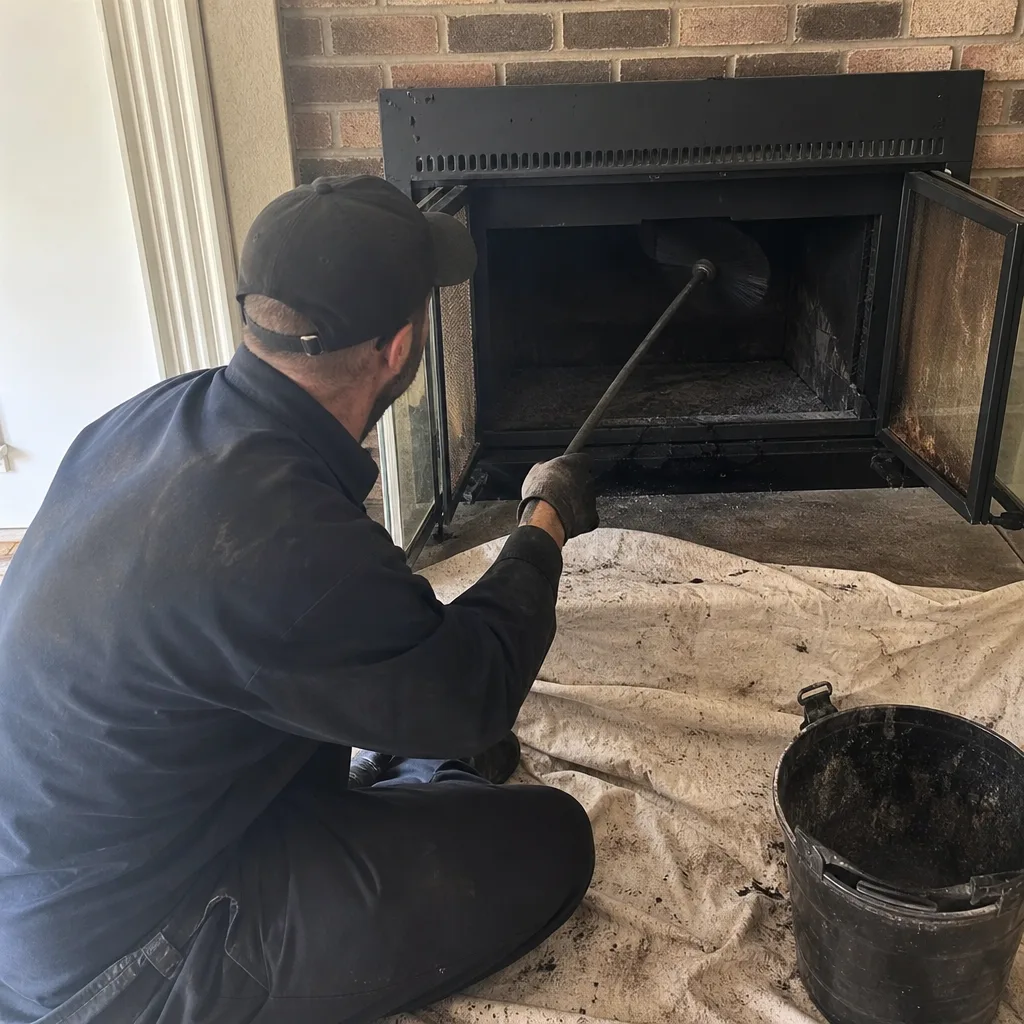
These are the signals you can spot from your living room floor. They’re the ones every chimney guide covers, but most guides stop here, which is precisely the problem. A firebox can look perfectly fine while the flue above it is failing. Still, these signs matter because they’re your first line of observation.
Smoky fires that used to draw well. A fireplace that has drafted properly for years and suddenly pushes smoke into the room is telling you something changed: a partial blockage, a cold flue, or a damper that isn’t opening fully. In Leesburg, where fall weather swings from warm afternoons to cold evenings, a cold flue is more common than most homeowners think. If the smoke problem persists after the chimney warms up, you have an obstruction or a drafting problem worth investigating.
Creosote flakes falling into the firebox. If you tap the damper and black flakes rain down, you’re looking at Stage 2 creosote buildup. This is the stage where creosote transitions from a sooty powder to a hard, shiny glaze that resists standard brushing. Leesburg homeowners who burn unseasoned wood or run low, smoldering fires hit Stage 2 faster than they expect.
Animal presence or debris in the firebox. Nesting material, twigs, or the distinct smell of wildlife inside the firebox means a chimney cap is missing or damaged. Squirrels, birds, and raccoons find Leesburg chimneys attractive shelter, and a nest creates both a fire hazard and a carbon monoxide risk by blocking the flue.
Visible water stains on the firebox walls. Rust-colored streaks or white mineral deposits on the firebox brick indicate water entry from above. This is never a firebox problem; it’s a crown or flashing problem that happens to be showing up where you can see it.
None of these firebox-visible signs should be ignored, but none of them tell the full story either. The flue liner, smoke chamber, and crown are where the serious failures occur, and those require looking elsewhere or going inside with a camera.
Roofline-Visible Warning Signs
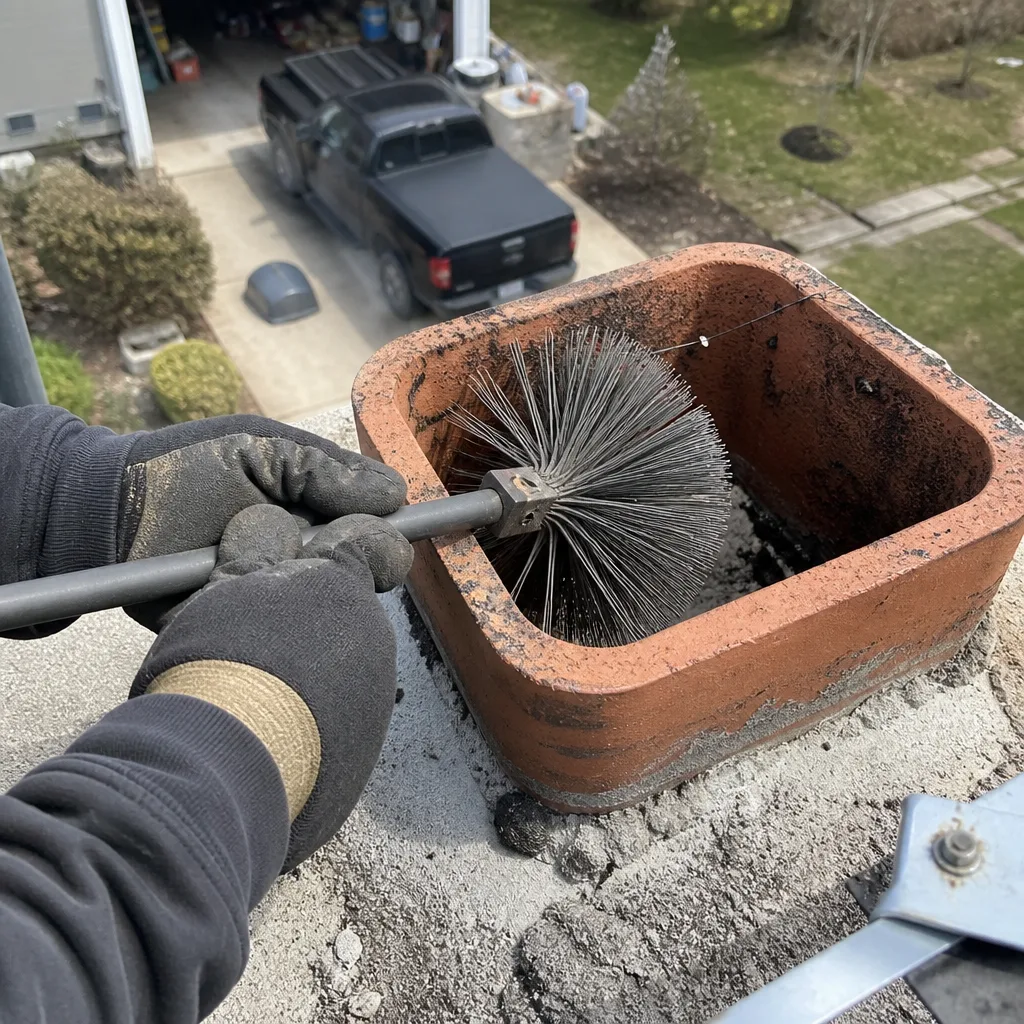
You don’t need to climb the roof to observe these. A pair of binoculars from the yard or a clear photo from a second-story window is enough. And in our experience across Leesburg homes, some of the most expensive repairs we quote start with something the homeowner could have seen from the ground months earlier.
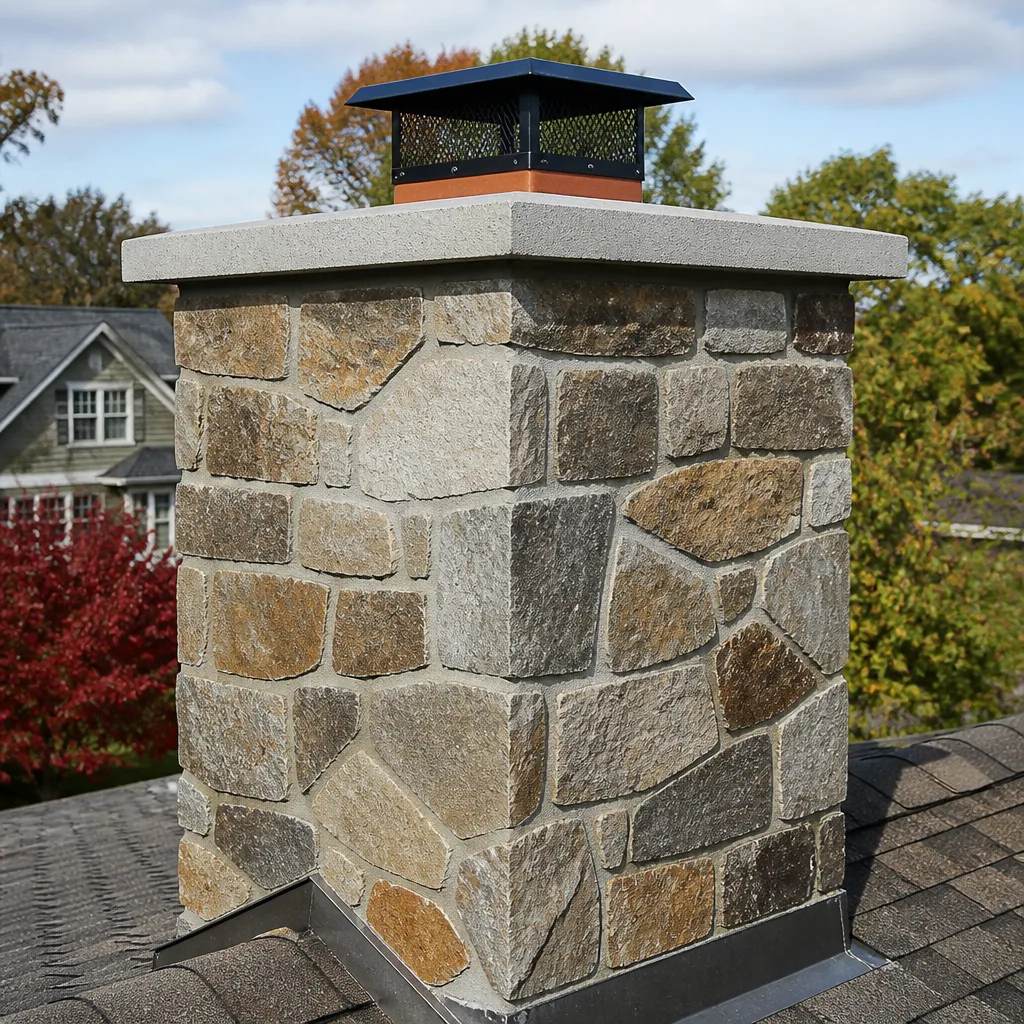
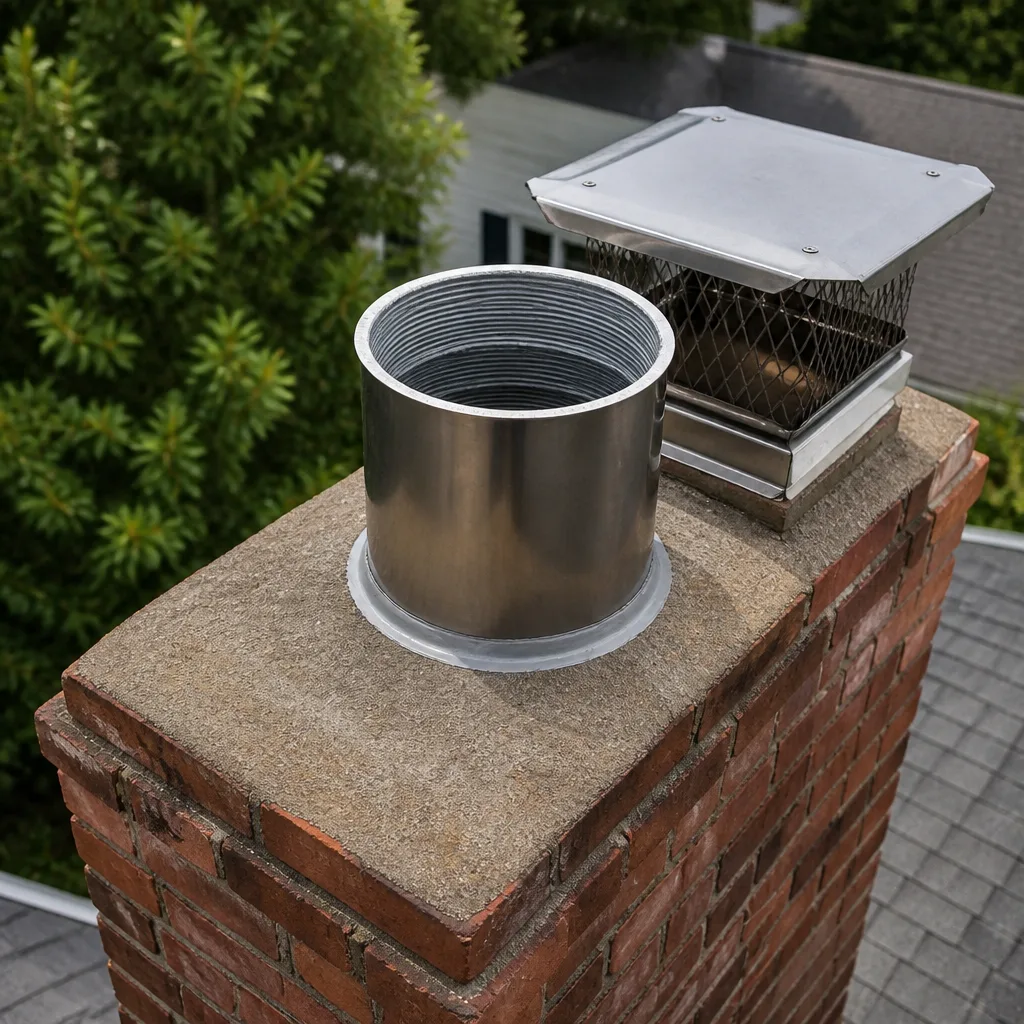
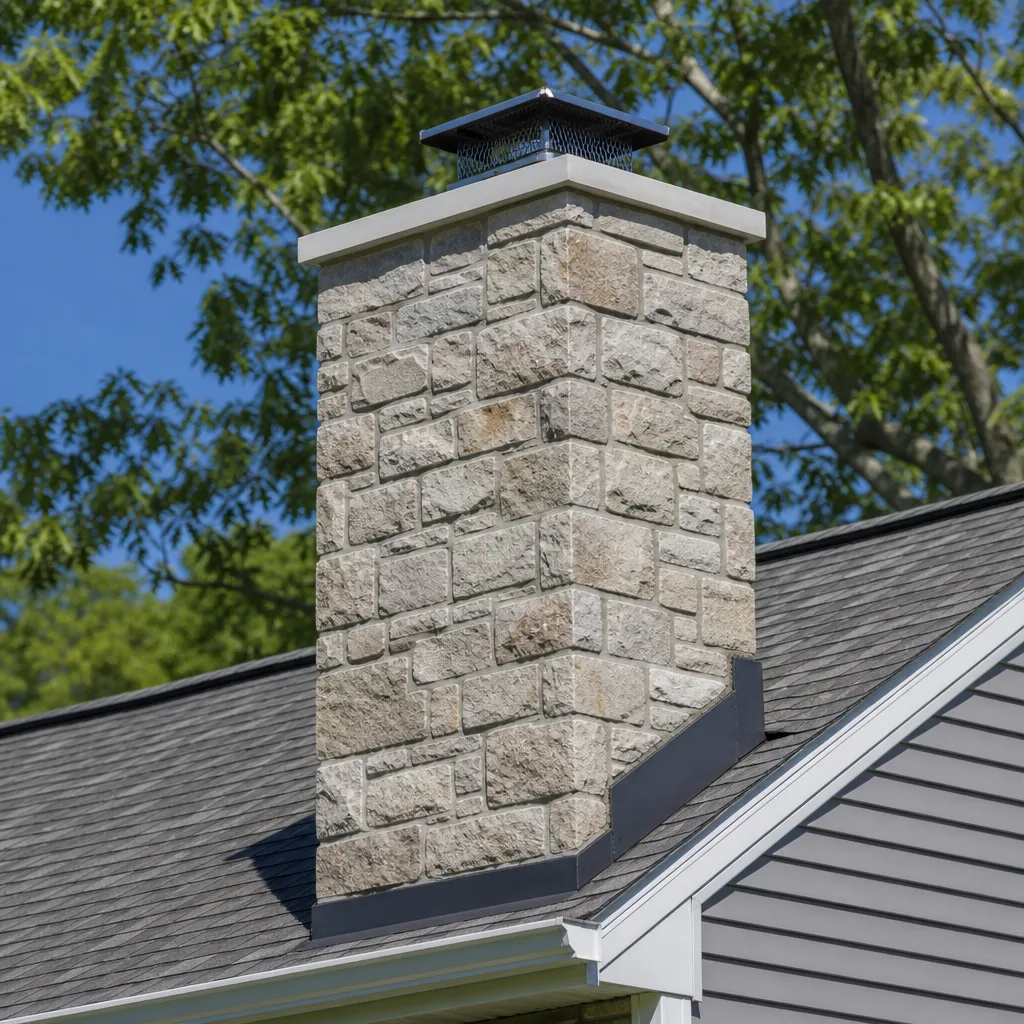
A damaged or missing chimney cap. The chimney cap is the first line of defense against water, animals, and debris. A rusted-out cap or one that has blown off entirely during a Loudoun County wind event leaves the flue open to everything. The fix is straightforward and inexpensive compared to what happens if a cap is missing through a full season. We install caps from Olympia Chimney and Famco, selected because they hold up to Mid-Atlantic weather.
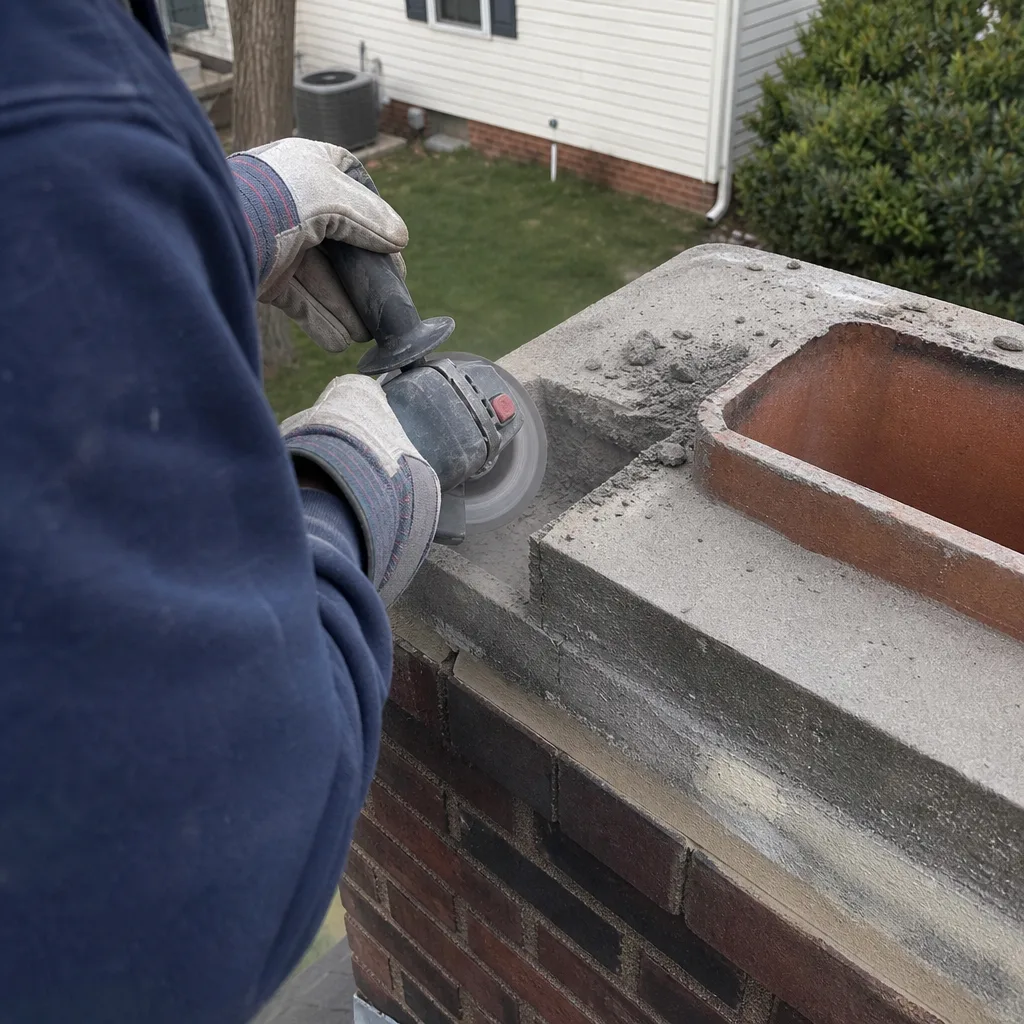
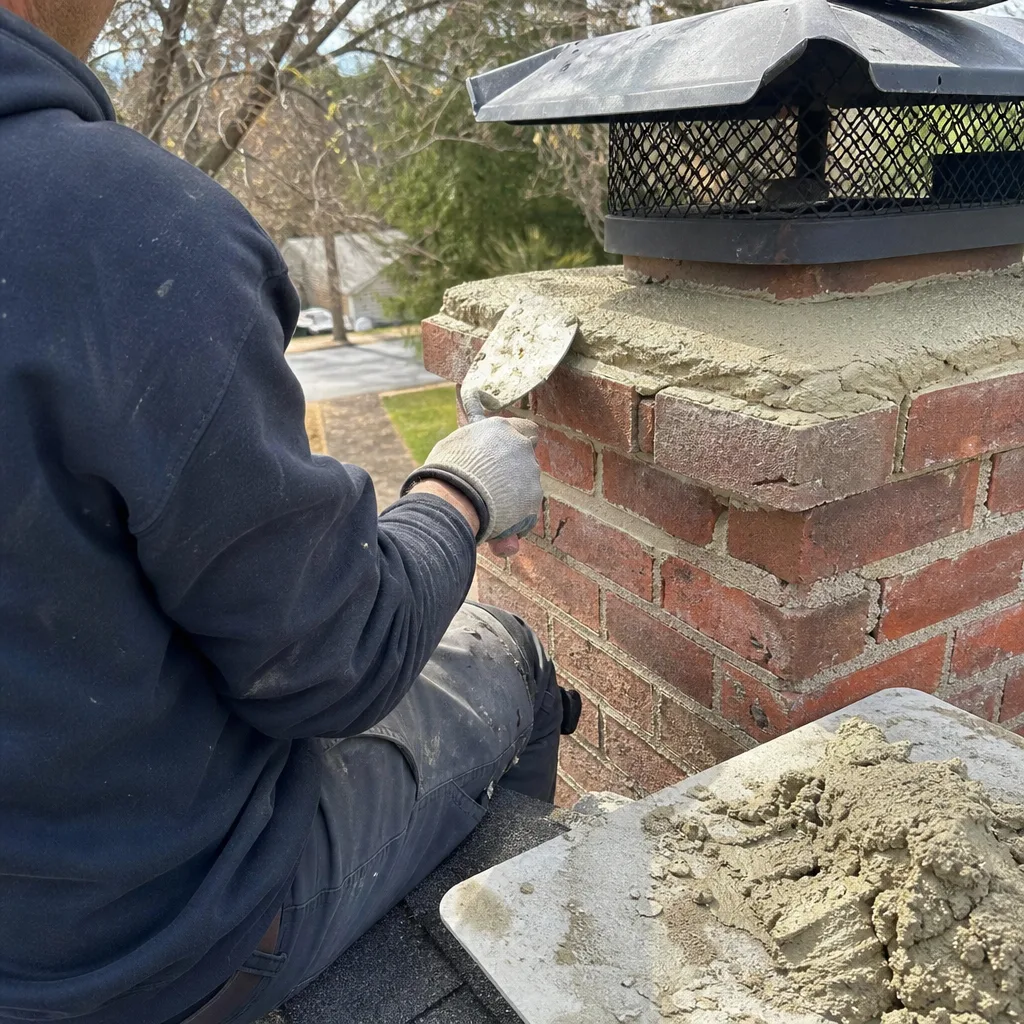
Spalled or cracking crown. The crown is the concrete slab at the very top of the chimney. When it cracks, water gets inside the masonry. When it spalls, pieces of concrete actually break away. Either condition accelerates freeze-thaw damage, which matters a lot in Leesburg, where winter temperatures routinely cross the freezing line. A cracked crown is a repair we’d schedule before burning season starts.
Staining below the roofline flashing. Dark streaks on the chimney exterior where it meets the roof line indicate the flashing has failed and water is running down the chimney chase. This often shows up as interior staining on the ceiling near the fireplace, but exterior observation catches it sooner.
Flue tile fragments in the yard or on the roof. If you find thin, curved pieces of terra cotta on the ground near the chimney or in gutters, the flue liner is actively deteriorating. This is a significant finding. Fragments in the yard mean the liner has been shedding material, and it’s time for a Chimney Repair in Leesburg evaluation before the problem compounds.
Exterior Masonry-Visible Warning Signs
This is where the guide diverges from the standard list. Most Leesburg homeowners are told to watch for smoke and creosote, but exterior masonry signals appear earlier and often predict interior damage before it happens. The white streaking mentioned in the opening is the classic example.
Efflorescence. Efflorescence is the white, chalky residue that appears on brick surfaces when water moves through masonry and evaporates, leaving dissolved salts behind. It is not a stain and it will not wash off permanently with a hose. It is visible evidence of water transport, which means the crown, the flashing, or the mortar joints are allowing moisture into the chimney system. In our experience, efflorescence on a Leesburg chimney appears six to eighteen months before the interior damage it causes becomes visible during a routine sweep.
Rust stains and spalling brick faces. When water reaches the steel components inside a chimney, it oxidizes, and the rust stains the exterior as it emerges. Spalling, where the face of a brick literally pops off, is freeze-thaw damage. Both of these conditions mean water intrusion is well established, not beginning.
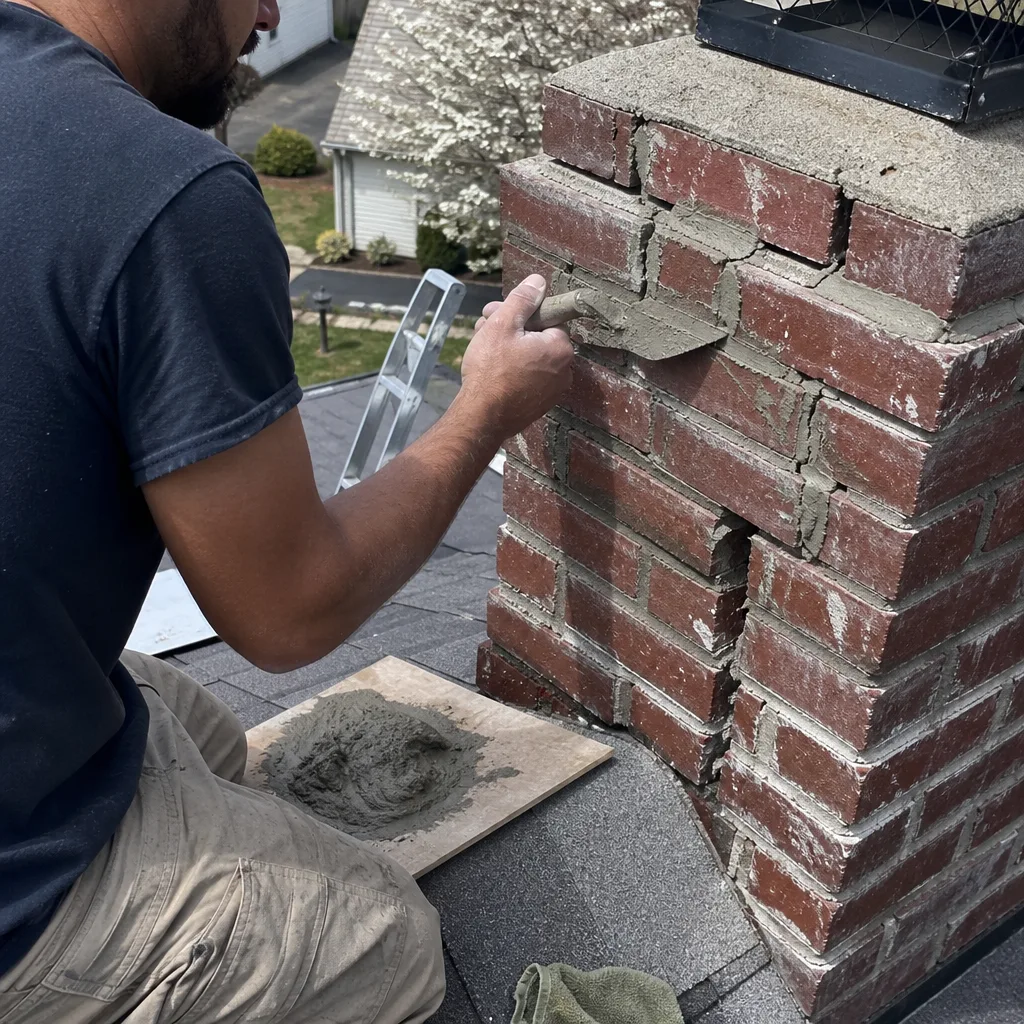
Mortar joint erosion. Run your hand (or a glove) across the mortar joints. If it crumbles, the chimney is losing structural integrity. In Leesburg’s climate, with repeated freeze-thaw cycles, eroded mortar joints allow more water deeper into the system. Repointing is a manageable repair if caught early, and it’s one we quote with a written scope before any work starts.
Lean or separation from the house. A chimney that has pulled away from the house framing by any visible degree is a structural issue that requires immediate professional evaluation. This is rare, but when we see it in older Leesburg neighborhoods, it usually traces back to decades of water intrusion at the roofline.
The Six Camera-Only Findings
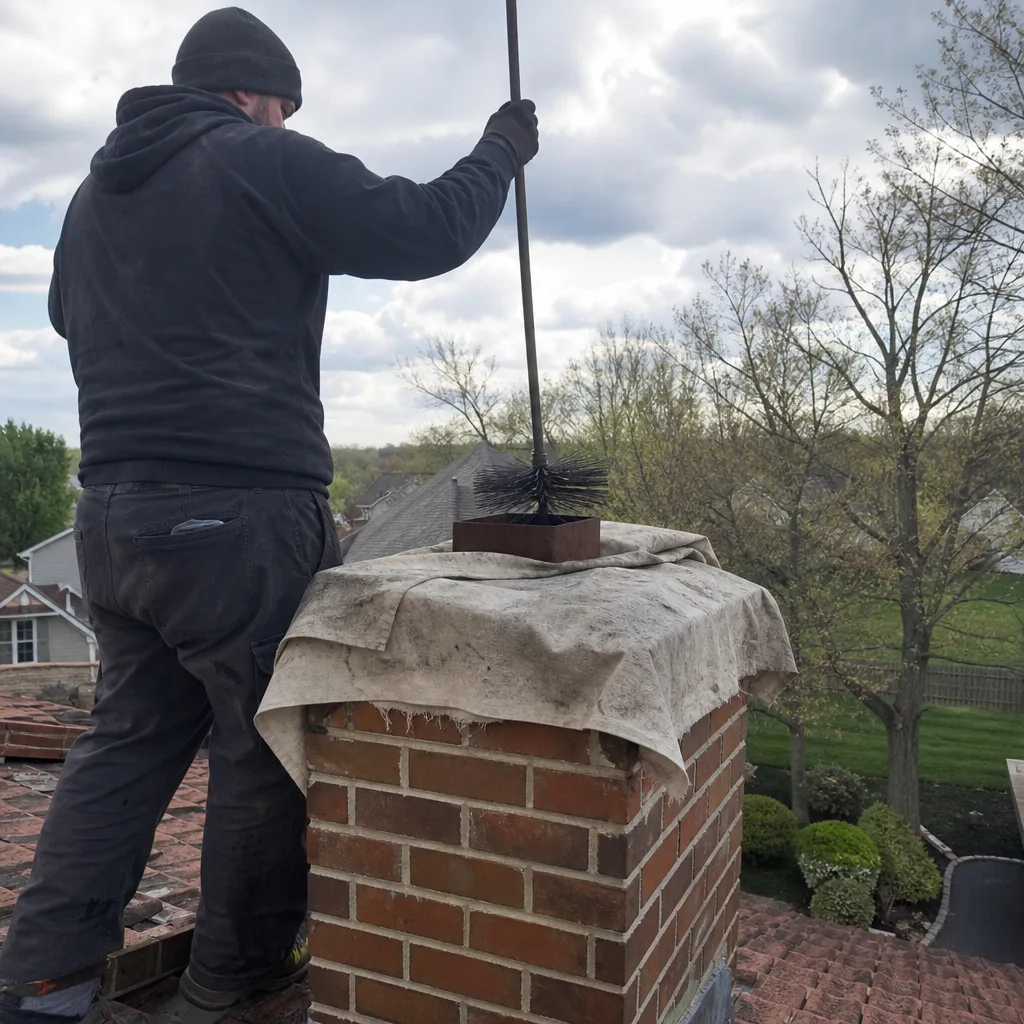
Here is the core of this guide, and it’s what separates a visual inspection from a proper Chimney Cleaning & Sweep in Leesburg that includes camera documentation. These six findings appear in chimneys that look clean from the firebox and intact from the roofline. They show up only when a camera goes down the flue.
1. Liner cracks
Hairline cracks in a clay tile liner are invisible to the naked eye from below. They allow heat and combustion gases to reach the surrounding masonry, and they will expand with each heating cycle. A camera scan catches them early, when a repair is still straightforward.
2. Spalled tile sections
When a section of clay tile has flaked off from heat stress, the chimney loses its smooth interior surface. This creates turbulence in the draft and leaves a rough surface for creosote to accumulate. If the camera shows spalled tiles, the liner is no longer doing its job even if the rest of the flue looks clean.
3. Offset joints
Offset joints are the seams where flue tile sections meet. When those joints separate or shift, the liner loses its continuity and gases can escape between sections. Offset joints are a prime spot for creosote accumulation, and they’re impossible to assess without camera footage.
4. Smoke chamber voids
The smoke chamber sits above the firebox and below the flue, funneling smoke upward. Voids in the smoke chamber’s parged surface mean the chimney’s interior is uneven, and that’s where creosote builds and heat concentrates. This is a finding we see regularly in Leesburg homes built before modern parging standards.
5. Smoke shelf blockage
The smoke shelf catches debris falling down the chimney. When it fills with creosote and animal material, it restricts airflow and can push smoke back into the room. A camera scan is the only way to confirm whether the smoke shelf is clear.
6. Firebox back-wall separation
Behind the firebox back wall, the masonry can separate from the chimney structure due to repeated heating. This creates a void where heat and gases can enter the house framing. It’s the kind of finding that never appears in a visual inspection and only surfaces when we document the full chimney with a camera.
All six of these findings require a trained professional to identify and assess. At Level Two Chimney Leesburg, camera documentation has been standard on every visit since 2009. That photo record is what the homeowner keeps, and it’s the evidence that backs up any repair recommendation we make. No one should be asked to approve a liner or smoke chamber repair without seeing the image for themselves.
Creosote Stages: What Stage 2 and Stage 3 Actually Look Like
Most guides will tell you creosote is dangerous. Few will tell you what the stages actually look and smell like, so you can calibrate urgency before a sweep surfaces the problem.
Stage 1 creosote is a fine, sooty powder. It’s easily removed with standard brushing, and it’s what a chimney accumulates during normal operation with seasoned wood. This is the expected finding in a chimney that’s swept annually. Nothing urgent here.
Stage 2 creosote is the inflection point. It looks like shiny black cornflakes or hard, bubbled deposits. It often has a distinct campfire smell that lingers in the firebox even when the chimney is cold. Stage 2 resists routine brushing; it requires rotary tools or chemical treatment to remove completely. If you notice a persistent tar-campfire smell in a cold firebox, you are likely looking at Stage 2 or worse, and we’d recommend scheduling a sweep before your next burn.
Stage 3 creosote is what we call glazed creosote. It appears as a thick, tar-like coating that has baked onto the flue walls. It is highly concentrated fuel, and a chimney fire in a flue coated with Stage 3 creosote is a serious event that can compromise the liner and the surrounding structure. Stage 3 is a same-week call. A standard sweep alone will not remove it; it requires specific treatment approaches, and we’ll document the before and after with the camera so you can see exactly what was addressed.
What Specific Smells Tell You About Chimney Failure
Smell is a diagnostic signal that most chimney maintenance guides overlook entirely. In our work across Leesburg, we’ve learned to map specific odors to specific failure modes, and homeowners can use the same mapping to figure out what they’re dealing with before anyone shows up.
Musty or moldy smell, especially after rain. This maps to water entry. The scent is usually strongest near the firebox or in the room directly above the fireplace. It means water is traveling down the chimney system and into building materials. The source could be a failed crown, damaged flashing, or a cracked cap. This is not a burning-season issue; it’s a structural issue that compounds with every rain event.
Tar-campfire smell in a cold firebox. This maps to Stage 2 or Stage 3 creosote. A clean chimney should not smell strongly when it’s cold. If the firebox smells like last season’s fires months after the last burn, creosote has built up to a point where it’s off-gassing. The stronger the smell, the more likely you’re dealing with Stage 3.
Animal smell, often described as musky or urine-like. This maps to nest presence or a trapped animal. It’s not just unpleasant; it’s a flue blockage risk. We remove nests and dead animals regularly in Leesburg, and the fix is always the same afterward: install or repair the cap so it doesn’t happen again.
Triage: Same-Week Calls vs. Next-Sweep Notes
Every warning sign on this page fits into one of two categories, and putting them in the right category saves you money and prevents unnecessary alarm.
Same-week calls
- Stage 3 creosote confirmed or strongly suspected. If the cold firebox smells like a campfire and the flue hasn’t been cleaned in years, don’t burn again until a professional has looked. This is a fire hazard, not a maintenance item.
- Active water entry. Efflorescence that’s wet to the touch, new water stains, or a musty smell that appears after rain. Water intrusion compounds fast in Leesburg’s freeze-thaw winters. What’s a $400 crown repair this month can become a $4,000 masonry rebuild after a winter of freeze cycles.
- Animal blockage. An animal smell or visible nesting material means the flue is partially or fully blocked. Carbon monoxide risk is real here.
- Flue tile fragments found. This indicates active liner failure. The chimney should not be operated until the liner is evaluated.
- Visible smoke backup inside the home. A drafting failure can indicate a serious structural issue or blockage. Get it checked before using the fireplace again.
Next-scheduled-sweep notes
- Stage 2 creosote. You’re going to need a sweep soon, but this is not a three-alarm fire. Schedule it before burning season; don’t burn through another winter first.
- Minor efflorescence with no active moisture. Note it and monitor. If it stays dry, it can wait for the next inspection to assess the crown.
- A missing cap with no signs of animal entry yet. Don’t wait indefinitely, but a week or two won’t change the outcome. The cap is an inexpensive fix compared to what it prevents.
- Standard creosote buildup from normal use. This is the routine annual sweep, and it’s the cheapest chimney service you’ll ever buy.
The triage framework matters because uniform alarm is its own problem. Homeowners who are told everything is an emergency stop believing any of it. We’d rather tell you plainly when something can wait, because that’s the only way “this can’t wait” retains its meaning.
Common Mistakes to Avoid
- Burning unseasoned wood and wondering why the chimney needs cleaning so often. Leesburg has plenty of firewood sellers, and not all of it is properly seasoned. Wood with a moisture content above 20% produces dramatically more creosote. Buy a moisture meter or buy from a supplier who can show you the wood’s age.
- Waiting to replace a damaged chimney cap. A $150 cap becomes a $600 animal removal plus a $2,000 flue cleaning when a raccoon or squirrel sets up residence. Replace the cap when it fails, not after the occupant arrives.
- Ignoring efflorescence because it looks cosmetic. Efflorescence is the earliest visible indicator of water intrusion. By the time you see interior damage, the repair bill has multiplied. Treat the white streaking as the warning it is.
- Burning a fire to get rid of the smoke smell. If the chimney smells, burning a fire masks it and adds more creosote to an already compromised flue. The smell is data. Act on it before building another fire.
- Skipping the camera inspection because the chimney “looks fine.” The six camera-only findings in this guide all exist in fireplaces that looked fine from the living room. If a sweep company doesn’t offer camera documentation, ask why.
- Handing over thousands of dollars for a liner or masonry repair sight unseen. No Leesburg homeowner should approve a repair they can’t see with their own eyes. A photo record is the minimum standard. We’ve been delivering one on every job since 2009, and it’s Clause 4 of the Haven Standard we work under.
- Neglecting the chimney in a home you just bought. If you purchased your Leesburg home between 2015 and 2025 and haven’t had the chimney inspected, do it before your first burn. The previous owner’s maintenance record, or lack of one, is now your fire safety record.
When to Call a Professional
Any of the same-week findings above warrants a professional inspection before you burn again. The threshold is simple: if you can see water entering, smell Stage 2 or Stage 3 creosote, or see evidence of animals in the flue, stop using the fireplace and make the call. For everything else, schedule your sweep before burning season starts and make sure the company you choose provides camera documentation and a written price before work begins; see How to Hire a Chimney Cleaning Contractor in Leesburg: A Step-by-Step Guide for what to ask. Level Two Chimney Leesburg offers free estimates in Leesburg, with a written scope, written price, and a documented photo record on every visit. Call (571) 601-3174 and we’ll send a background-checked technician with a named appointment and a text when they’re on the way.
Frequently Asked Questions
A standard chimney sweep and camera inspection in Leesburg typically runs $189 to $349, depending on the chimney’s height, accessibility, and creosote stage. Stage 2 or Stage 3 creosote removal, which requires rotary tools or chemical treatment, adds $75 to $200. Every quote from Level Two Chimney Leesburg is written and delivered before any work begins, so you’ll know your exact price before we start. Call (571) 601-3174 for a free estimate.
You should never approve a liner replacement without seeing camera footage of the liner’s condition. Cracks, spalled sections, and offset joints are visible on a camera scan, and a reputable sweep will show you the images and explain what they mean before quoting a repair. If someone recommends a liner without offering camera proof, get a second opinion. We offer a free second opinion on any written estimate from another company.
The NFPA 211 standard recommends an annual inspection and cleaning when the chimney is in regular use. In Leesburg, where burning season runs November through March, that means one sweep per year before the season starts. Homes that burn unseasoned wood or use the fireplace as a primary heat source may need a mid-season check as well.
Creosote builds up in stages. Skipping one sweep moves you from Stage 1, which is routine maintenance, toward Stage 2 and Stage 3, which require specialized removal and present a genuine chimney fire risk. A chimney fire can crack the liner and transfer heat to the house framing. The annual sweep is the cheapest chimney service you will ever buy, and it’s the one that prevents the expensive ones.
You can brush Stage 1 creosote from an accessible flue with the right equipment, but you cannot see what you’re cleaning without a camera, and you cannot safely address Stage 2 or Stage 3 buildup with homeowner tools. Most importantly, you cannot document the condition of the liner, smoke chamber, and smoke shelf from below. That’s what a camera inspection provides, and it’s the signal difference between knowing the chimney is safe and hoping it is. For more guides & resources on chimney maintenance, visit our blog.
Musty smell after rain means water is entering the chimney system. The source is usually a cracked crown, failed flashing, or a damaged cap. In Leesburg’s climate, that water will freeze and expand through the winter, accelerating the damage. This is not a burning-season issue; it’s a masonry integrity issue, and it’s worth addressing before the next freeze cycle. Call (571) 601-3174 for a free estimate with camera documentation of the source.
The Bottom Line
Warning signs appear in four places: firebox, roofline, exterior masonry, and inside the flue where only a camera sees them. The standard list covers the first category and stops there. The six camera-only findings, the ones that appear in otherwise clean-looking chimneys, are the reason camera documentation has been standard on every Level Two Chimney Leesburg visit since 2009. If you see water, smell Stage 2 creosote, or find evidence of animals, make the call this week. If you haven’t been swept before burning season, schedule it now. The cheapest chimney repair is the one you catch before it starts. Call (571) 601-3174 for a written, no-pressure estimate.
Written by Corrine Halstead, Owner at Level Two Chimney Leesburg, serving Leesburg since 2009.